Misaka's coin makes an immense power feel casual
A flicked coin is more than a signature attack: it turns Misaka’s extraordinary ability into an everyday gesture. That ease reveals both her confidence and the scale of the city built around her.

Character readings, scene analysis, and the choices that shape an anime.

A flicked coin is more than a signature attack: it turns Misaka’s extraordinary ability into an everyday gesture. That ease reveals both her confidence and the scale of the city built around her.


As a Japanese visitor and Ibe’s assistant, Eiji arrives in New York with a purpose and a point of view of his own. His early connection with Ash makes the city feel newly visible without reducing Eiji to either an expert or a bystander.

Hanon’s easy sociability and Rina’s reserve give Lucia different ways to feel at home in the human world. Their shared mermaid identity turns friendship into practical solidarity without making either girl a simple romantic foil.

Fern’s insistence on ordinary routines gives Frieren’s immense lifespan a shape the viewer can feel. Their early apprenticeship turns time from an abstract difference between elf and human into the shared work of a day.

On the Bebop, food belongs to the same strained economy as fuel, repairs, and unpaid bounties. Jet Black’s practical labor gives the crew a routine that feels less like domestic harmony than a home assembled, meal by meal, from necessity.

NERV’s command rooms organize danger with rank and procedure. At Misato’s apartment, clutter, jokes, and shared routines make care feel more improvised—and show how hard it is to turn authority into guardianship.

Homura enters Madoka’s life with a warning that sounds protective and a manner that keeps others at arm’s length. The opening episodes make that contradiction a source of suspense as well as a test of trust.

The Future Gadget Laboratory feels like a home because Mayuri attends to its ordinary life. Her gentle routines and careful noticing give the cramped workspace a human scale, turning its odd experiments into part of a shared day.

Kageyama’s precision can put a ball exactly where he wants it, yet volleyball depends on another player being able to meet it. His early partnership with Hinata tests whether control can become cooperation.

Reigen is a fraud who sells expertise he does not possess, yet Mob sometimes receives real guidance from him. Their early mentor relationship is compelling because its usefulness and its exploitation coexist, leaving neither side as a simple excuse for the other.

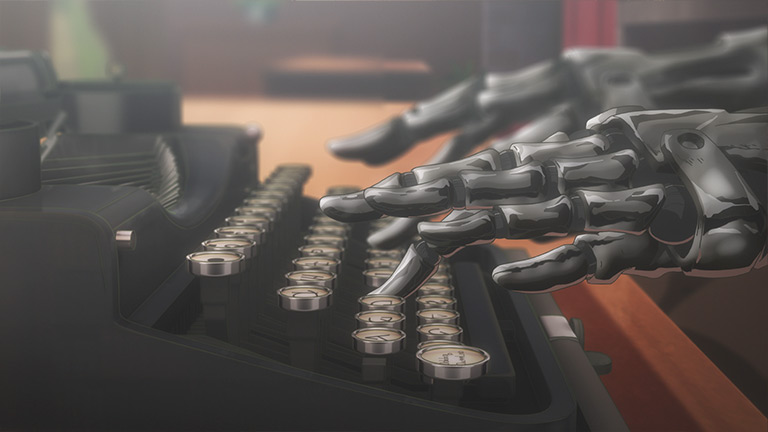
Violet’s prosthetic hands and disciplined bearing make writing visible as a bodily task. The anime’s attention to motion turns the space between machine-like precision and emotional expression into part of her character, without reducing either side to a simple metaphor.

Kakihana’s hopes for romance are bound up with the version of himself he presents online. His dating profile gives Odd Taxi a sharp way to examine loneliness, status, and the risk of treating an appealing image as proof of a better life.

Shinya Kogami is among the Bureau’s most capable field officers, yet the system places him under the supervision of a newly arrived Inspector. Their early partnership turns that mismatch into a study of how institutions separate skill from status.

Fuu’s search gives a wandering trio a destination, but the promise holding them together is practical and precarious. The quest’s vague shape lets hunger, money, and unequal commitment become part of its meaning from the start.

Isaac and Miria’s comic confidence changes the temperature of every room they enter. Their partnership suggests that apparent foolishness can unsettle the rules other people rely on, even in a world of serious criminal plans.

Haruko’s charisma is inseparable from her refusal to respect anyone’s quiet. Her guitar-driven entrance and sudden place in the Nandaba home turn attention into a force that can entertain, unsettle, and overrun the people it lands on.

Old Home does not make Haibane Renmei’s unexplained world easier by solving it. It makes the uncertainty livable through shared rooms, work, and small obligations, showing how a community is built from repeated acts before anyone can offer a complete account.

In Serial Experiments Lain, communication rarely feels weightless. Sound, wires, gaps between people, and the bodies framed around machines give connection a physical unease that complicates the promise of effortless contact.

Mononoke’s paper-like surfaces and compressed spaces make looking feel unsettled. Its visual flatness does not simplify the world; it turns color, pattern, and perspective into clues about how safety can fail.

Anthy’s quiet courtesy might seem easy to interpret until the academy names her as a prize. The Rose Bride role turns ordinary gestures into uncertain signals, inviting viewers to notice how little freedom the title appears to allow.

Mytho’s absent heart gives Princess Tutu a rescue story with an uneasy question at its center: what does it mean to help someone feel? The early premise treats emotion as necessary, but never as a simple reward.

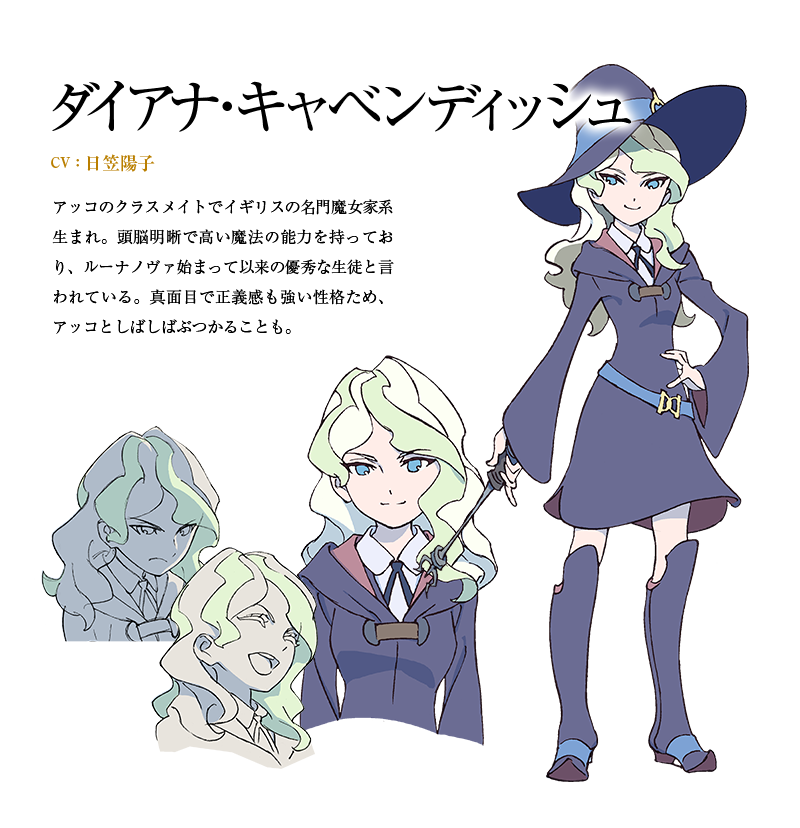
Diana’s early contrast with Akko can look like a simple contest between natural talent and raw enthusiasm. A closer view reveals how discipline and school prestige shape what competence looks like at Luna Nova—and why Akko cannot dismiss Diana as merely a rival.

Tsubame Mizusaki’s ambition to animate grows from a close interest in how people move. In the series’ early episodes, ordinary gestures become a way to think about character before a drawing is complete.

Around the Kawamoto sisters, Rei encounters a household whose rhythms are made through shared space, ordinary sounds, and hospitality. Their table changes how time feels in his day without turning a meal or a welcome into a simple solution to loneliness.