Mytho's missing heart makes rescue a difficult story
Mytho’s absent heart gives Princess Tutu a rescue story with an uneasy question at its center: what does it mean to help someone feel? The early premise treats emotion as necessary, but never as a simple reward.
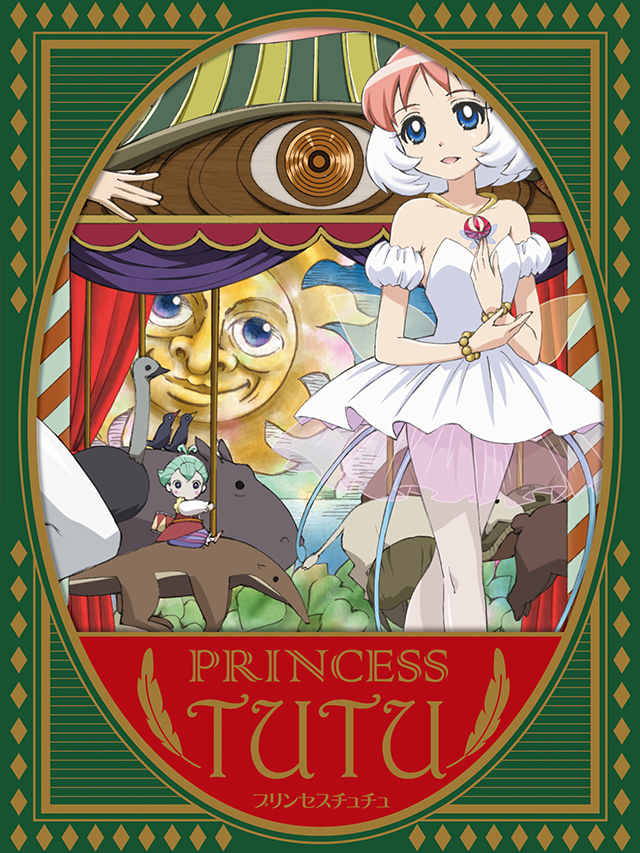
Coverage: Early premise and emotional-restoration setup only; no later revelations or ending.
A prince defined by an absence
Mytho enters the story as a figure whose missing heart has left him without ordinary access to emotion. The phrase sounds like a fairy-tale problem with a clean solution: find what is lost, return it, and restore the person. Yet the premise makes the absence visible in his relations with others. Mytho can be present and still seem difficult to reach, so the question is not only how to repair him but what kind of connection is possible while he remains altered.
That framing matters because Mytho is not simply a puzzle for Ahiru to solve. His condition shapes how she sees him and how she imagines dance might matter. The story places care beside uncertainty: she wants to help, but wanting does not automatically tell her what the right help is. Mytho’s missing heart turns rescue into a relationship rather than a task with an obvious endpoint.
Feeling is not the same as happiness
The early premise gives emotional restoration a broad range. To feel again is not to receive only pleasant sensations; emotion includes vulnerability, pain and conflict as well as warmth. That possibility complicates the usual rescue fantasy in which a restored character is simply happier. If Mytho regains access to feeling, he may also encounter experiences that are difficult to bear. The value of the change cannot be measured by cheerfulness alone.
This makes the language of a heart especially useful. A heart can suggest affection, but it also stands for the capacity to be moved at all. Restoring it therefore raises a harder question than whether Mytho can smile. What matters is whether he can participate in an emotional life, with all the demands that participation places on him and on those who care about him. Princess Tutu’s premise leaves room for restoration to be consequential rather than merely comforting.
The limits of helping someone else
Ahiru’s concern gives the premise its human pressure. She wants Mytho to have something he lacks, but another person’s inner life cannot be handled like a costume or a lesson. Even a compassionate effort can carry an assumption about what the other person ought to feel. The story’s setup invites us to notice that difficulty: care has to begin somewhere, yet it cannot substitute for the person being cared for.
Mytho’s emotional distance also changes the meaning of response. If he cannot react in familiar ways, those around him may be tempted to treat silence as a verdict or as proof that their actions have failed. The premise encourages a more patient reading. A person’s value is not exhausted by how readily he returns affection, and the absence of an expected reaction does not make care pointless. At the same time, care cannot guarantee a particular response.
A rescue measured by restored possibility
The most compelling promise in Mytho’s premise is not that restoration will make him easy to understand. It is that he might regain the possibility of understanding and being understood through feeling. That is a modest but profound change. It does not promise that emotions will align neatly, or that the people around him will always know what to do. It makes room for a fuller relationship precisely because a fuller emotional life may be unpredictable.
Seen this way, the missing heart is not a shortcut to a sentimental ending. It establishes the stakes of helping someone return to the complicated work of feeling. The early story asks readers to value that return without reducing it to happiness, gratitude or romance. Mytho’s rescue matters because it concerns his capacity to have an inner life of his own, not because it makes him a more satisfying object for someone else’s hopes.
Primary work & further reading
Primary work: Princess Tutu. Character and story readings are editorial interpretations. The publisher reference below identifies the work and its premise.