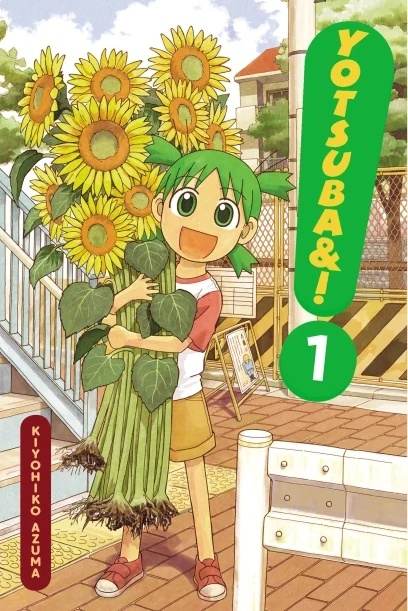
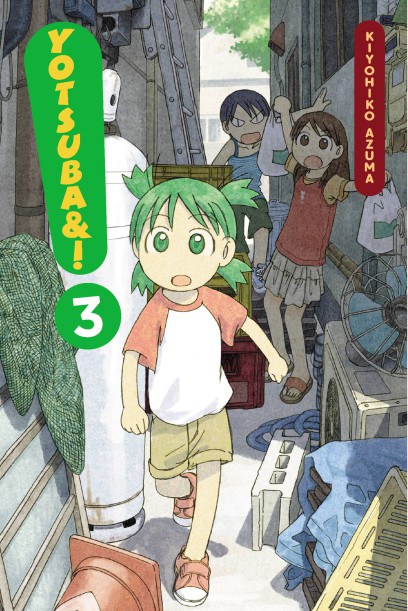
Koiwai's parenting leaves room for a child's logic
Yotsuba&! finds much of its warmth in the space Koiwai gives his daughter to interpret ordinary life in her own way. Their comic exchanges show care as a mix of practical boundaries, patient attention, and play.
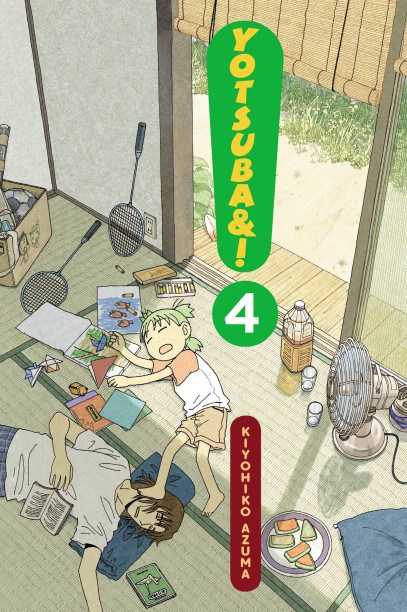
Coverage: Discusses Koiwai and Yotsuba’s everyday parent-child dynamic in the series’ ordinary domestic and neighborhood situations.
Care begins with taking her seriously
Koiwai’s parenting is shaped by a useful tension: he recognizes that Yotsuba is a child, but does not treat every thought she has as disposable. Her ideas can be mistaken, startling, or comically confident. His response often leaves room for her to finish thinking and for the situation to reveal what her interpretation means. That patience is a form of attention. It lets the comedy arise from the gap between their perspectives rather than from an adult simply dismissing hers.
This does not mean Koiwai pretends Yotsuba already understands the world. The difference between what she believes and what is happening remains available to the reader, and his adult perspective remains part of the scene. What he offers is engagement rather than automatic correction. The distinction matters: the manga’s warmth comes from a parent taking a child’s account seriously enough to respond, while still knowing that care sometimes means explaining, redirecting, or stepping in.
Playful explanations keep the world open
Koiwai can meet Yotsuba’s curiosity through an explanation that is playful in tone, allowing an ordinary question to remain an occasion for connection. The exchanges work because play does not require him to erase the difference in their knowledge. He can join the imaginative energy of a moment without asking the reader to mistake it for literal truth. That balance makes their humor feel relational: what matters is not just the answer, but how father and daughter share the question.
A playful response also leaves Yotsuba’s logic visible. Instead of reducing her misunderstanding to a punchline and moving on, the story lets the reader follow how she reached it. Koiwai’s openness creates space for that process. He does not need to turn every encounter into a formal lesson, and the story does not insist that each comic exchange deliver a universal parenting principle. In this household, explanation can be part of play because both characters remain present to the moment.
Boundaries are part of the freedom
Yotsuba’s independence is appealing, but the series does not treat it as self-sufficiency. Koiwai is the parent responsible for the practical shape of her life, and their everyday relationship depends on his attention as much as on her energy. Limits and guidance belong to that relationship. They help distinguish freedom to explore from a world in which a child is left to manage everything alone. The humor can soften the edges of adult responsibility, but it does not make that responsibility disappear.
The boundaries are most legible when read alongside Koiwai’s willingness to indulge curiosity. He is not portrayed as choosing between being permissive and being caring; his role is more responsive than that simple opposition allows. Sometimes the moment can unfold playfully, and sometimes ordinary care calls for a firmer answer. The manga’s scenes gain texture from holding both possibilities in view. Yotsuba can press against adult assumptions without the story suggesting that every limit is an enemy of childhood.
A relationship built from small responses
Koiwai’s character emerges through accumulated responses rather than a grand declaration of parental philosophy. He shares space with Yotsuba’s questions, adapts to her way of encountering the day, and remains responsible for the realities she cannot manage on her own. Those actions give their relationship its shape. He is neither an all-knowing interpreter who explains the world from above nor a comic foil who exists only to be baffled by her. His attention keeps him involved in what she is doing.
That steady involvement explains why the manga can make everyday parenting funny without treating care as a joke. Koiwai’s patience gives Yotsuba room to be herself, while his adult role provides the support that makes that room meaningful. The balance does not function as advice for every family or circumstance; it is a feature of these particular characters and the tone of their world. His parenting leaves space for a child’s logic because he listens to it, plays alongside it, and still takes responsibility for the boundary around it.
Primary work & further reading
Primary work: Yotsuba&!. Character and story readings are editorial interpretations. The publisher reference below identifies the work and its premise.