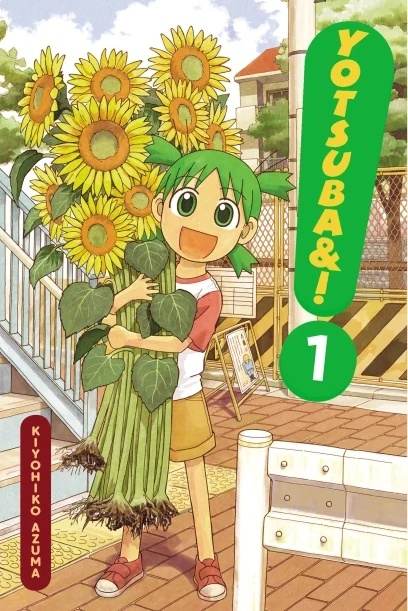
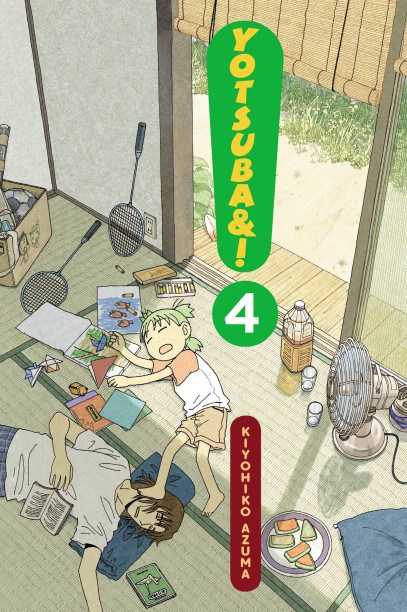
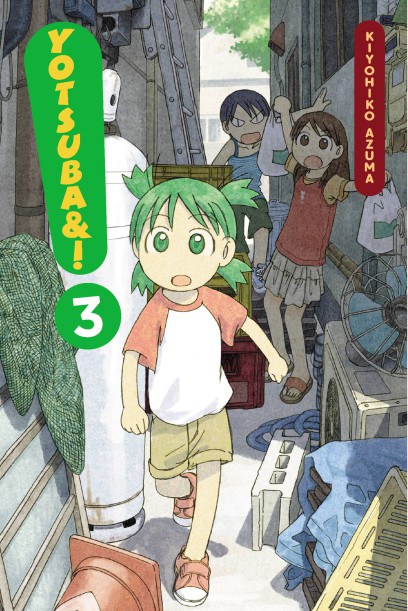
The Ayase sisters give Yotsuba three kinds of neighbor
Yotsuba’s connection with the Ayase family shows how a neighborhood can welcome a newcomer through several distinct kinds of attention. The sisters’ contrasting ages and temperaments make community feel like a relationship, not a single gesture.
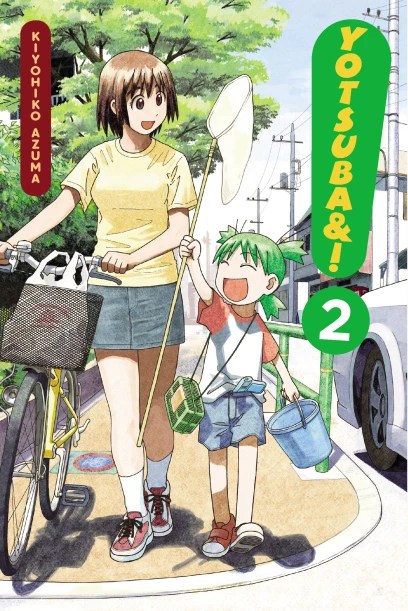
Coverage: Covers the Ayase sisters’ established roles and contrasting responses to Yotsuba in the neighborhood; no later developments.
Three personalities, one neighborhood
The Ayase sisters do not function as a single unit simply because they belong to the same family. Their different ages and established personalities give Yotsuba more than one way to meet the neighbors next door. In the series’ everyday scale, that difference matters: a newcomer does not enter a community through an abstract welcome, but through particular people, each with a distinct manner of responding.
Yotsuba’s presence makes those differences easier to see. Her directness and restless curiosity invite reactions that reveal what each sister notices and how she handles an unexpected child in her orbit. The sisters are not just variations on the same friendly neighbor. Their contrasting responses make the Ayase household feel like a small social world, where familiarity can take several forms and no one person has to represent the whole idea of neighborliness.
Asagi’s ease and the warmth of familiarity
Asagi’s older-sister presence contributes a relaxed kind of familiarity to Yotsuba’s neighborhood life. She is not required to meet every moment with the intensity of a child’s discovery; her greater age gives her a different vantage on what is happening. That contrast helps the comedy. Yotsuba can approach an ordinary situation as if it has just opened a new field of possibility, while Asagi’s manner signals that people nearby have their own rhythms and ways of being at ease.
This difference can make Asagi feel welcoming without turning her into a substitute parent or a guide whose purpose is to manage Yotsuba. Their relationship belongs to the broader world of neighbors, where interest and play can coexist with independence. Asagi’s role suggests one kind of community: people who can make room for a newcomer through familiarity and shared time, without needing to transform every encounter into a lesson or a formal act of care.
Ena’s kindness at a child’s scale
Ena offers a different point of connection because she is closer to Yotsuba’s age and can meet her at the level of play. Their relative closeness does not make them identical. Ena has her own temperament, and her gentler manner creates a counterpoint to Yotsuba’s vivid spontaneity. The relationship gains its character from that contrast: a child can respond to Yotsuba’s energy warmly without matching its volume or becoming a passive audience for it.
Ena’s presence also makes the neighborhood feel shared between children, not solely organized by adult introductions. She can participate as a peer in a way Asagi cannot, even though both are part of the same household. That distinction deepens the series’ sense of community. Yotsuba is not merely being watched over; she is finding someone with whom her child-sized view of the day can have company. Ena represents the neighbor who joins in from near enough to understand play on its own terms.
Fuka and the space between them
Fuka completes the sisters’ range through a more reserved, practical presence. Her responses can bring a measure of composure to Yotsuba’s exuberance, adding a different kind of friction to the family’s interactions. That friction need not be hostility. It can simply mark the fact that people do not all answer a child’s arrival with the same degree of enthusiasm or the same style of attention. The comedy benefits from that varied social weather.
Taken together, the sisters make the Ayases feel like neighbors rather than a welcoming committee with one shared script. Asagi brings older-sister ease, Ena offers a close-in peer connection, and Fuka’s more restrained presence adds another register to the relationship. Their differences give Yotsuba several paths into the neighborhood, each defined by who is on the other side of the encounter. The story’s portrait of community is modest but persuasive: belonging grows through repeated contact among distinct people, not through a single universal response.
Primary work & further reading
Primary work: Yotsuba&!. Character and story readings are editorial interpretations. The publisher reference below identifies the work and its premise.