Witch Hat Atelier makes tools part of its ethics
In Witch Hat Atelier, magic takes shape through ink, pen and drawn lines. Those tools make the craft imaginable as a skill, while also raising a sharper question: what responsibilities come with being able to make wonders?
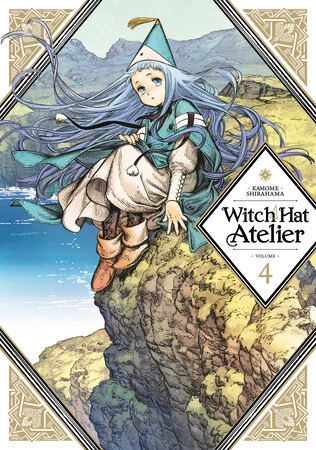
Coverage: Opening chapter and early apprenticeship concepts about magic, tools and learning; no later political revelations.
Magic with a visible method
Witch Hat Atelier gives magic a material grammar. Ink, a pen and a surface for drawing place the craft in the hand, where a reader can see marks being made rather than receiving magic as an invisible force that simply belongs to the gifted. This choice changes the way a spell feels. Its effect may be wondrous, but its creation has steps, and those steps depend on attention. The tools make the process concrete without making every act of magic safe or easy.
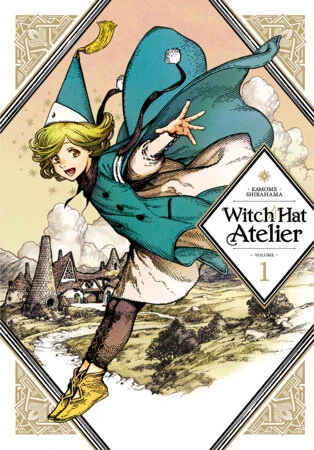
That visibility is especially important in Coco’s first encounter with the craft. She has grown up thinking that magic lies beyond the reach of someone like her, then discovers that drawing has a role in making it. The revelation is not that tools solve the problem of learning. It is that the supposed barrier looks different when the method is visible. A person can watch, imitate and make marks, but each action still demands understanding. The materials invite participation while making the quality of that participation matter.
A pen turns looking into doing
The pen is not simply a symbol of imagination. In the story, it is a means by which an observed form can become an attempted spell. That link gives drawing its double edge: the same hand that studies a design can reproduce it, and a person without sufficient knowledge may act before they understand what the act entails. Coco’s discovery makes this danger immediate. Her ability to draw matters, but ability alone does not provide the judgment that safe practice requires.
This is why the tools shape the story’s ethical question. If magic depends on something teachable and repeatable, then access to it is not only an issue of talent. It is also an issue of who understands the method, who can teach it, and how students learn to use it. The opening chapters hold that tension close to the page. A line is both a mark made by an individual hand and part of a craft that must be learned in relation to others. The story treats making as consequential, not private wish fulfillment.
Restrictions give skill its stakes
Rules around magic can easily read as barriers that exist only to make a fictional world seem mysterious. Here, the relationship between tools and consequences gives restrictions a more practical meaning. If a drawing can cause a real effect, then limits on who may draw, and under what conditions, shape what people can safely attempt. The story does not require readers to memorize a catalogue of rules to grasp this point. It shows instead that an incomplete grasp of the method can make an enthusiastic attempt dangerous.
Restrictions also sharpen the contrast between knowing a technique and being ready to apply it. A tool can extend a person’s ability, but it cannot supply the experience that person lacks. That distinction helps keep the craft from becoming a shortcut to power. Coco’s eagerness can open a path into learning, but the early story makes room for the fact that access must be accompanied by instruction. The ethical stakes grow directly from the way magic works: when marks do things, making them responsibly is part of what it means to know the craft.
The craft makes care visible
There is a visual pleasure in watching a drawn mark become part of a spell, but the pleasure also trains attention. The reader can notice the hand and materials involved, the sequence of making, and the gap between an effect and the work that produced it. Magic becomes something to consider rather than a spectacle to consume. That focus is well suited to a manga about learning: the page can linger on the process and let the visible labor support the idea that practice changes how a person understands what she sees.
The tools, then, carry the story’s ethics because they make power tangible. Ink and pen let magic appear approachable, while the consequences of using them insist that approachability is not the same as harmlessness. A craft can be learned, but learning asks for patience, guidance and judgment about action. That is the argument built into Witch Hat Atelier’s material magic. The wonder survives contact with the tools; it gains a responsibility that follows the line from the maker’s hand to its effect.
Primary work & further reading
Primary work: Witch Hat Atelier. Character and story readings are editorial interpretations. The publisher reference below identifies the work and its premise.