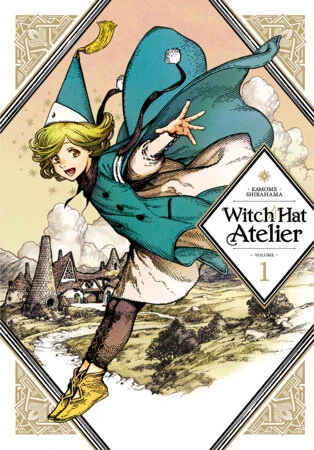
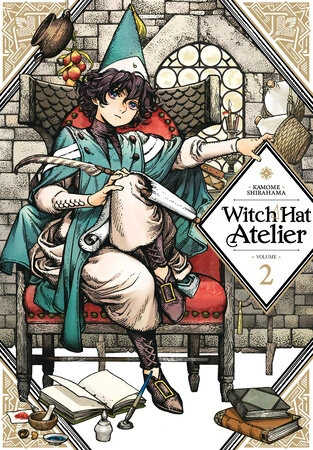
Coco begins her lessons in Qifrey's atelier
Qifrey welcomes Coco’s curiosity, but his mentorship also asks her to slow down, observe and practice with care. Their early lessons turn the thrill of discovery into a responsibility she must learn to carry.

Coverage: Early apprenticeship material through Coco’s initial lessons with Qifrey; excludes later revelations about his past and motives.
A teacher who takes curiosity seriously
Qifrey’s importance as a mentor begins with the way he responds to Coco’s interest. He does not treat her desire to learn as a childish nuisance, even though she has arrived at magic through a dangerous and incomplete understanding. That combination matters. To take a student seriously is not to approve every choice she makes; it is to recognize that her questions deserve an answer and that her actions need guidance. Qifrey gives Coco a place in which her curiosity can become study.
His welcome also changes the terms of Coco’s ambition. Before learning the secret of magic, she could admire the craft from outside it. Under Qifrey, wanting to become a witch means accepting the daily work of an apprentice. This is not a sudden transformation into mastery. It is a shift from imagining what she might do to learning the habits that would make action safer and more considered. The relationship gives her hope, but grounds that hope in instruction rather than in a promise that desire alone will suffice.
Careful practice as part of the craft
The early teaching makes practice feel like more than rehearsal for a future performance. Because magic relies on drawn forms and tools, an apprentice’s actions have consequences even while she is learning. Careful attention is therefore part of what the student is learning, not an optional virtue added after technical skill. Qifrey’s role includes making the process legible: the craft can be studied, but it cannot be reduced to copying a shape without understanding what one is doing.
That emphasis gives correction a particular weight. When Coco has already discovered how to make magic by observing and attempting it, instruction has to address both her talent for looking and her tendency to move ahead of her knowledge. Qifrey’s teaching does not require the story to dismiss the impulse that brought her here. Instead, it suggests that the impulse needs structure. Practice can preserve curiosity by giving it somewhere productive to go, while repetition teaches a student to notice differences that excitement alone might blur.
Wonder survives the lesson
There is a useful distinction between making magic ordinary and making it learnable. Qifrey’s mentorship does not drain the marvelous quality from Coco’s new world. It makes the marvel more exact. Once she learns that magic is connected to tools and drawn marks, a spell can be approached as work rather than as a spectacle that happens beyond explanation. The reader’s sense of wonder can then attach to the thought and care involved in making something, not only to the finished effect.
That distinction suits Coco, whose appetite for magic has always been energetic. A teacher who only praised her excitement would leave her exposed to its risks; one who only emphasized rules could make learning feel like a reprimand. Qifrey’s early position lies in treating fascination as a starting point for discipline. The story does not claim that careful teaching removes every hazard. Rather, it makes learning itself an ethical practice: the apprentice has to become attentive to how she acts, because the craft responds to action.
Mentorship without a guarantee
Qifrey’s instruction is persuasive partly because it does not make him an all-knowing answer to every difficulty. In the early apprenticeship, he offers direction and a framework for learning, not a guarantee that Coco will never make a mistake. That limit keeps the relationship focused on education. Coco still has to observe, attempt, and develop judgment; a mentor cannot do the work of attention in her place. His guidance matters because it helps those efforts take a more responsible form.
The early lessons consequently give Coco’s dream a practical shape without shrinking it. Becoming a witch means learning to handle tools, to respect what a drawn spell can do, and to accept that ability grows through deliberate practice. Qifrey’s mentorship makes wonder into a discipline because it lets curiosity continue while asking it to mature. The result is neither blind enthusiasm nor obedience for its own sake. It is the beginning of a craft in which the student’s care belongs to the magic she hopes to make.
Primary work & further reading
Primary work: Witch Hat Atelier. Character and story readings are editorial interpretations. The publisher reference below identifies the work and its premise.