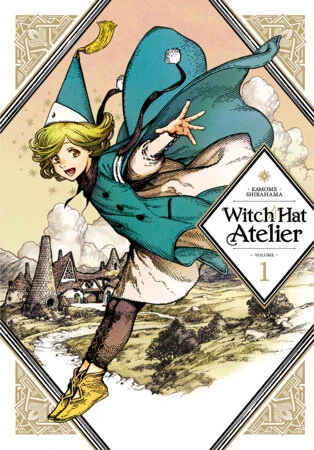
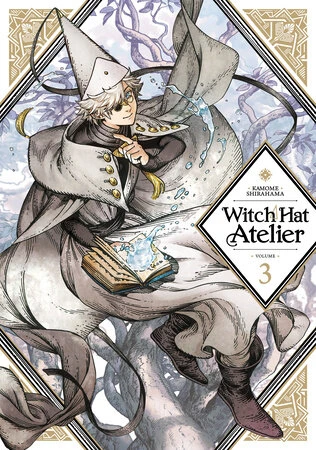
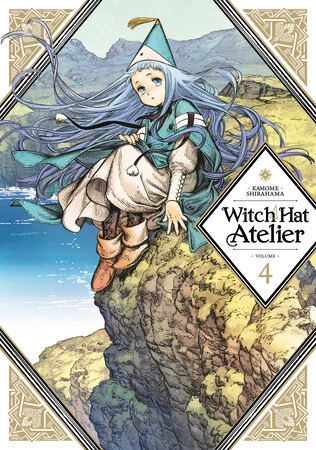
Agott's precision gives Coco a difficult mirror
Coco and Agott enter apprentice life with sharply different experience. Their early friction lets the manga examine what precision can offer a newcomer—and how easily it can become a measure of worth.
Coverage: Early apprenticeship and apprentice interactions; excludes later family details and competition outcomes.
Two apprentices, unequal beginnings
Coco arrives at apprenticeship with wonder, curiosity and a determination to learn, but little of the background that would make the craft familiar. Agott, by contrast, carries herself as someone accustomed to the standards of witch training. Their difference is not a simple divide between a gifted student and a weak one. It is a difference in starting experience, and the manga makes that difference visible in how they approach the work. Agott’s precision belongs to a world Coco has only just entered.
That contrast complicates the idea that all apprentices are being measured on equal terms. They may share a learning environment, but they do not share the same preparation or confidence. Coco has to absorb the language and habits of a craft while also catching up on what others may take for granted. Agott can look like a standard Coco ought to meet, yet her presence also reveals how much of that standard is built through earlier experience. The friction between them becomes a way to see the hidden labor inside apparent ease.
Precision as a form of knowledge
Agott’s exactness matters because magic is a craft in which how something is made affects what it can do. Her attention to proper work can therefore read as more than fastidiousness. It reflects an understanding that small acts of care belong to the process. In the early apprenticeship, this gives her a credibility Coco cannot yet claim. Agott is not simply criticizing from the outside; she has learned to take the work seriously, and that seriousness shapes her expectations of herself and of others.
At the same time, precision can be intimidating when its history is invisible. A student who sees only the finished competence may mistake it for a natural advantage, or take every correction as a verdict on her own ability. Coco’s position makes that risk plain. She is learning both the craft and how to read the people around her. Agott’s precision offers a useful mirror because it shows Coco what disciplined attention might look like, but the reflection is uncomfortable: Coco can see the distance between them before she knows how to cross it.
Tension that exposes assumptions
Early tension between Coco and Agott works best when it remains tied to their different circumstances. Agott’s standards can press on Coco, who must learn quickly in a setting where others already know more. Coco’s enthusiasm, meanwhile, can test Agott’s assumptions about what an apprentice should understand or how learning ought to proceed. The manga allows their difference to generate strain without reducing either girl to a single trait. Coco is not merely an interruption to order; Agott is not merely a rival whose purpose is to be disliked.
Their interactions also expose a question about fairness: what counts as a reasonable expectation for someone who has just begun? High standards can protect a craft that carries risks, but standards applied without attention to a student’s starting point can turn teaching into an unfair comparison. Agott’s perspective gives the story a voice for seriousness about practice. Coco’s situation asks the reader to consider how that seriousness should respond to a newcomer. Neither question cancels the other, and the unresolved pressure makes their early relationship more revealing than a straightforward friendship or rivalry would be.
A mirror, not a measuring stick
Agott gives Coco a difficult mirror because she reflects both the appeal and the cost of disciplined practice. Coco can look at Agott and see the assurance of someone who has already learned how to belong in this world. She can also encounter the limits of using another person’s progress as a measure of her own. The comparison may make her shortcomings feel larger, but it cannot capture the difference between their beginnings. A mirror shows a face; it does not explain the time that formed it.
That distinction gives the early tension room to develop. Agott’s precision can challenge Coco to take practice seriously, while Coco’s presence can make Agott’s standards meet a student whose circumstances are unlike her own. Their relationship helps the manga argue that skill matters, but the route to skill matters too. A newcomer cannot acquire experience by being judged as though she already had it. Agott remains a meaningful point of comparison precisely because Coco must learn from what she sees without mistaking someone else’s starting place for her own.
Primary work & further reading
Primary work: Witch Hat Atelier. Character and story readings are editorial interpretations. The publisher reference below identifies the work and its premise.