Takuan challenges the kind of strength Takezo understands
When Takuan enters Takezo’s early story, the conflict shifts from whether the fugitive can overpower his pursuers to whether power is the only measure he recognizes. Their encounter makes self-command feel more difficult than winning a fight.
Coverage: Covers Takuan’s early encounter with Takezo and the resulting challenge to Takezo’s self-image; no later outcomes.
The monk refuses the terms of a contest
Takezo’s early encounters are shaped by the assumption that danger demands force. Against that expectation, Takuan’s presence changes the kind of conflict at hand. The monk does not meet Takezo as another rival eager to prove strength, so the familiar scale of the confrontation stops working. Takezo can be physically formidable and still find himself unable to control what the meeting means. Takuan’s authority comes from refusing to let the strongest person in the room define every question.
That refusal makes the encounter more unsettling than a straightforward defeat would be. A rival who wins a contest confirms its rules; Takuan’s challenge questions the rules themselves. He draws attention away from how much harm Takezo can do and toward what Takezo’s habits say about him. The shift is not an abstract lesson pasted over the action. It grows from the mismatch between a young man prepared to answer pressure with violence and a monk who treats that response as evidence to examine.
Takezo’s self-image is built from resistance
Takezo has reason to understand himself through survival. In the wake of battle and during his flight, danger has been immediate; responding quickly can mean the difference between escape and capture. Yet the skill that serves him in a crisis can become a narrow definition of the self. If he thinks of himself chiefly as someone who cannot be restrained, then any limit looks like an attack and any dependence like weakness. Takuan’s challenge makes that identity visible without treating it as a settled truth.
The manga’s emphasis falls on the difference between having strength and being governed by it. Takezo can take pride in his physical capability, but pride cannot tell him whether his actions are admirable or merely effective. Takuan presses on that distinction by confronting the meaning Takezo assigns to his own conduct. His attention is not on an imagined, peaceful version of the fugitive who never feels anger. It is on the person already present, whose choices have consequences even when he believes he is only answering circumstance.
Takuan makes restraint an active demand
Restraint can sound passive when strength is treated as the obvious form of agency. Takuan’s encounter suggests the opposite: refusing to act on the first impulse may require more control than acting violently. For Takezo, the hard question is not whether he can suppress every powerful feeling. It is whether he can notice that a feeling or an imposed label is directing him, then choose what to do with it. This places responsibility inside a moment that might otherwise be dismissed as instinct.
The challenge also complicates what authority looks like. Takuan is a monk, but the encounter’s force does not depend on treating him as a magical source of wisdom or a mouthpiece for a tidy moral. His difference from Takezo is practical: he does not accept physical dominance as the final measure of a person. That stance gives him leverage over the conversation, because it asks Takezo to consider the parts of himself that cannot be demonstrated by defeating someone. The terms of strength expand to include judgment.
A fictional Musashi begins with a question
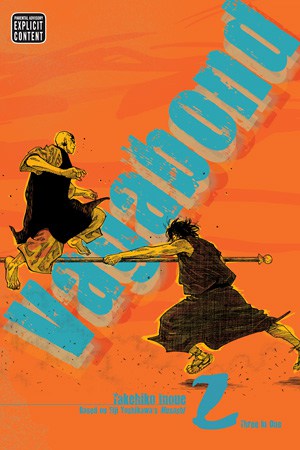
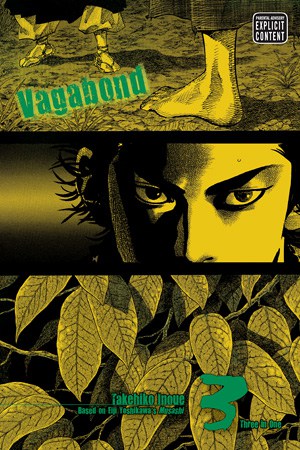
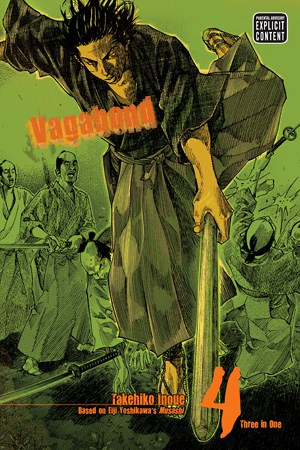
Vagabond is Takehiko Inoue’s fictional manga account of the life journey associated with Miyamoto Musashi, drawing on Eiji Yoshikawa’s literary Musashi. The encounter with Takuan belongs to that crafted narrative. It can be read for what it reveals about the manga’s character and themes; it should not be treated as documentary proof about the historical swordsman or a verified record of a real monk’s instruction. That boundary keeps the interpretation grounded in the work actually on the page.
Within the fiction, Takuan’s importance is that he confronts Takezo with a measure of strength the young fugitive does not yet know how to use. A sword arm can force an outcome, but it cannot settle whether the person holding it is free of his own reflexes. The monk’s challenge does not erase Takezo’s power; it asks whether he can take responsibility for it. That question makes the encounter an early turning point in self-perception: strength remains his, but its meaning is no longer his to assume without reflection.
Primary work & further reading
Primary work: Vagabond. Character and story readings are editorial interpretations. The publisher reference below identifies the work and its premise.