Thors's restraint gives Vinland Saga an argument to return to
Thors’s strength matters because he refuses to treat violence as the only proof of strength. In the opening family portrait, his restraint becomes a standard the story can test against a world that rewards force.
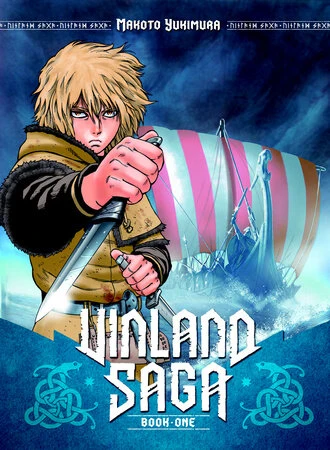
Coverage: Covers Thors’s role in the opening premise and his approach to force; excludes later fate details and subsequent arc outcomes.
Strength measured by what he refuses
Thors enters the story with the stature of a formidable warrior, but the opening does not make his value depend on a desire to fight. His presence at home gives strength a different setting: it can mean protecting a family, carrying responsibility, and choosing how to respond when provoked. The contrast matters because the surrounding culture offers an easier measure. A man proves himself by force, and a warrior’s reputation can speak louder than his judgment.
Thors’s restraint challenges that measure without pretending danger has disappeared. He understands the world’s capacity for violence; his refusal is not presented as ignorance of it. Instead, the story places emphasis on the choice to keep power from becoming the first answer. That choice makes his strength harder to celebrate in the usual heroic terms. It is quiet, and therefore vulnerable to being misread by people who see caution as weakness.
A father in the rhythms of home
The family scenes give Thors a character beyond his old reputation. At home, he is not a legend standing apart from ordinary life but a father embedded in it. The everyday texture of the household makes his responsibilities concrete: other people rely on him, and the meaning of his decisions reaches beyond his own pride. This domestic setting does not erase the warrior he has been. It shows what his formidable capacity might now serve.
That shift in scale also affects how the reader understands courage. Public violence offers visible tests, while care is often repetitive and unannounced. Thors’s position in the family asks whether strength can be expressed through steadiness rather than spectacle. The question is not whether a parent can make the world safe by sheer will. It is whether a person who knows the cost of fighting can still choose to value the fragile life that force threatens.
Restraint under a warrior culture
The opening’s social world makes Thors’s refusal feel consequential because violence is woven into its expectations. Reputation, obligation, and the demands placed on men can pull a person back toward conflict even after he has turned away from it. In that setting, restraint is not a private preference insulated from pressure. It becomes a position that others can question, and one that may carry practical risks.
The story gains an argument by refusing to make that position effortless. Thors does not stand outside the culture as a lecturer who can simply announce a better code. His past gives the surrounding world reasons to expect something from him, while his present life gives him reasons to resist. That friction keeps his choices from becoming an abstract lesson. His restraint has weight because it must exist among people who may not recognize it as strength.
An opening standard, not a simple answer
Thors’s example establishes a question that can return throughout a story about warriors: what should strength be used for? The opening does not need him to supply a complete philosophy in order to make the question stick. His conduct creates a standard against which violence can be measured. A victory may establish dominance, but it cannot by itself show that the victor has protected anything worth keeping.
His role is most powerful when read as an invitation to judge, rather than as a guarantee that restraint will solve every conflict. He gives the story a reason to distinguish the ability to fight from the wisdom to fight. In a world that repeatedly makes force seem practical, Thors’s refusal remains a difficult alternative. The opening asks readers to remember that alternative because strength without restraint can defend a reputation while endangering the people it should serve.
Primary work & further reading
Primary work: Vinland Saga. Character and story readings are editorial interpretations. The publisher reference below identifies the work and its premise.