Outside Trista: what Class VII's field studies reveal
A lesson about society changes when students have to meet the people living inside it. By sending Class VII beyond Trista, field studies make the distance between an academy’s ideals and local experience part of the curriculum.
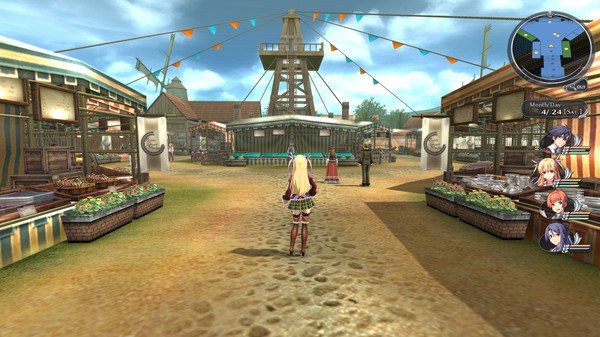
Coverage: Covers the field-study structure and early travel beyond Trista in the first Trails of Cold Steel, without late political revelations.
Leaving campus changes the scale of a lesson
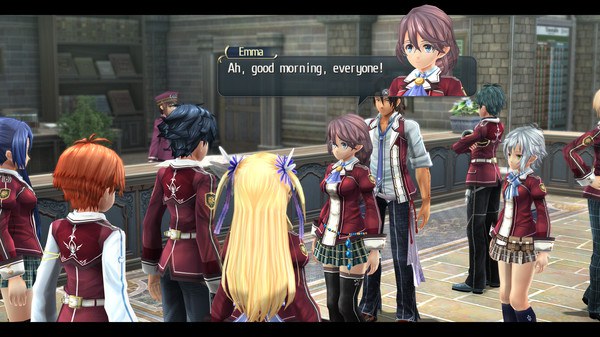
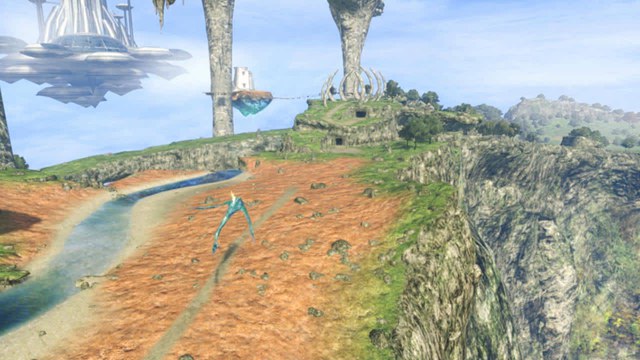
Inside Thors, students can discuss duty, institutions, and the country from the relative safety of a classroom. Field studies change the scale of those ideas. Class VII travels beyond Trista and encounters places where public life is not a diagram but the setting in which people work, make choices, and deal with practical limits. The students are still there as learners, but their surroundings make it harder to treat civic principles as clean abstractions.
That shift gives travel a narrative purpose beyond providing new scenery. A local problem asks the students to understand what a principle means in a particular place, where people may have needs that do not fit neatly into a lesson. The academy can describe a responsibility in general terms; a visit asks what responsibility looks like when someone is waiting for help or when a community faces circumstances the students did not choose. Movement away from campus becomes movement toward consequences.
Local life complicates textbook ideals
The value of a field study lies partly in the contradictions it exposes. An ideal may sound persuasive in class and still prove incomplete when students encounter how daily life is arranged on the ground. Local circumstances can make an apparently straightforward rule feel costly, or reveal that a broad promise reaches people unevenly. The game’s early journeys use this friction to show that learning about society means noticing who benefits from an arrangement and who must live with its limits.
This does not require the students to discover that every principle is false. Rather, the principle has to survive contact with detail. A belief in service, order, or cooperation means more when the students see the different needs gathered under those words. Their experiences outside Trista give them reasons to refine their understanding instead of simply reciting the values they were taught. The textbook remains a starting point, but local life supplies questions it could not answer on its own.
Students arrive with partial perspectives
Class VII does not become omniscient just because its members travel. The students are visitors, and each journey is filtered through what they already know, what they notice, and what their position allows them to see. That limitation is important. It keeps field study from becoming a convenient device in which a brief encounter grants complete authority over a community’s problems. A useful lesson can be genuine while remaining incomplete.
The class’s different backgrounds also shape what draws each student’s attention. A situation that seems self-evident to one person may look different to another, particularly when they carry different expectations about status, responsibility, or how institutions should work. Travel gives those differences a shared object to consider. Instead of arguing only about principles in the abstract, classmates can respond to the same place and compare what they think it asks of them. The study becomes collective interpretation, not just observation.
Experience returns to the classroom with questions
The journey does not replace formal learning; it changes what students can bring back to it. After seeing the variation in local life, a class discussion can no longer feel wholly detached from the people affected by its claims. Experience gives the students particulars to test against broad statements, while the academy gives them concepts with which to interpret what they saw. Each side is incomplete without the other. That exchange is what makes travel educational rather than merely episodic.
Field studies therefore alter the academy’s promise. Thors can teach ideals, but it cannot ensure students understand them by hearing them explained. The early structure of Trails of Cold Steel suggests that understanding grows when learners have to connect a general principle to a specific human setting, then accept that the connection may be difficult. Class VII’s education becomes more demanding because it moves into the world beyond campus. The journey matters when the students return with better questions than the ones they left with.
Primary work & further reading
Primary work: Trails of Cold Steel. Character and story readings are editorial interpretations. The publisher reference below identifies the work and its premise.