Unbalance first, follow-up second: Cold Steel's Combat Links
Combat Links in the first Trails of Cold Steel reward attacks that exploit an enemy’s unbalance susceptibility. Choosing a linked partner matters, but weapon attributes, attack type, link progression, and the immediate threat all shape what a turn can accomplish.
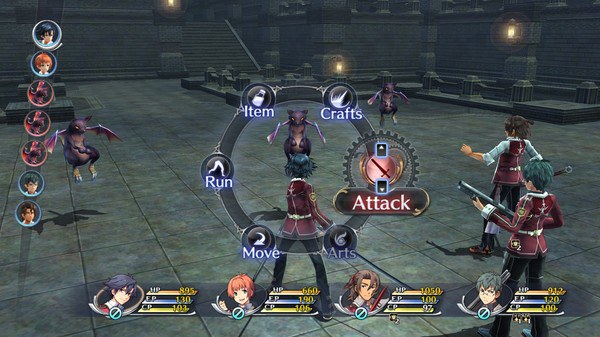
Coverage: Covers the first Trails of Cold Steel’s Combat Link and unbalance systems at a gameplay level, with no story spoilers, exact proc rates, or sequel mechanics.
Read the enemy before choosing a linked attack
A Combat Link follow-up is tied to an unbalance opportunity, not simply to landing a hit. Before committing Rean or another character to an ordinary physical attack, check the target’s unbalance susceptibility and consider whether that character’s weapon attributes and unbalance rating suit the enemy type. An attack that connects may still fail to create the opening a linked partner needs. This makes the target’s defenses part of your turn planning, not a detail to ignore once you have picked a partner.
For example, if Rean’s normal attack is aimed at an enemy type susceptible to the attributes and unbalance rating of his equipped weapon, linking him with a ready ally can make that attack a sensible attempt to open a follow-up opportunity. If the target resists that kind of attack, choosing the same move because Alisa is linked to him does not override the resistance. Switch the attacker, weapon, target, or action to fit the encounter instead of treating the relationship as a substitute for a suitable hit.
Separate ordinary attacks from Arts
Arts and ordinary physical attacks are different choices with different jobs; they are not interchangeable ways to trigger a link response. An Art may be the right way to handle an enemy, but you should not assume it creates the same unbalance opening as a physical strike. When you want to pursue a follow-up, select an attack that can actually challenge the target’s unbalance susceptibility. When the party needs an Art’s effect, use it for that purpose rather than forcing a physical attack into the turn plan.
This distinction gives you a useful decision at the command menu. Suppose a dangerous enemy is vulnerable to a relevant physical attack, and a linked partner can act if an unbalance occurs: a normal attack may serve both immediate damage and the chance to expose an opening. If an Art better answers the threat, choose the Art and take its direct value; do not count on a linked partner automatically repeating or extending it. A follow-up is a particular opportunity created by the battle, not a second copy of every action you select.
Pick Rean and Alisa for what each can do
Rean and Alisa are possible link partners, but a useful pairing is about their available combat tools and the encounter, not a guaranteed special result from those two names. Rean can take a turn aimed at testing an enemy’s physical unbalance susceptibility; Alisa brings her own attacks and Arts for other needs. Look at who is able to target the right enemy with a suitable move, and who will be in position to make a follow-up opportunity useful if one arises. Then choose the pair because their actions complement the plan you are actually using.
A practical choice can change from fight to fight. If Rean’s weapon is better suited to testing a particular target’s unbalance, linking him with Alisa may keep her available to respond while still letting her use her own tools on later turns. If the target is resistant to Rean’s attack, or Alisa has a more urgent task, the same pairing may offer no reason to chase a physical opening. Let the enemy and each character’s job guide the turn; friendship alone does not erase resistance or promise a response.
Let link levels grow through progression
Link levels matter because progression unlocks and improves link abilities. Treat this as a reason to use links when they fit your battle plan, rather than expecting the full set of benefits immediately. As a pair’s link develops, its abilities can become more useful, but the basic tactical check remains the same: can this attack create an unbalance against this enemy, and is the linked character a sensible partner for the current turn? Progression adds options to that judgment; it does not make every action a follow-up trigger.
In a difficult encounter, first decide what must happen now: remove a threat, use an Art, or try a suitable ordinary attack against a vulnerable target. If the attack is a good match and a linked partner is available, the possible follow-up adds value to that choice. If the match is poor, take the action that serves the party better and save the link opportunity for a more suitable opening. That approach makes Combat Links useful as a concrete part of turn planning while keeping each character’s independent actions and the enemy’s defenses in view.
Primary work & further reading
Primary work: Trails of Cold Steel. Character and story readings are editorial interpretations. The publisher reference below identifies the work and its premise.