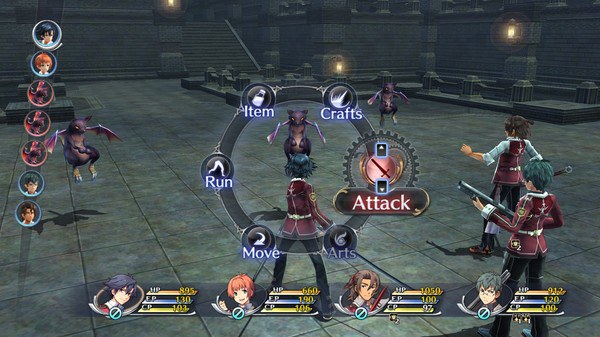
Rean's helpfulness creates a difficult kind of leadership
Rean often steps toward a dispute before anyone has named him its leader. His instinct to help gives Class VII a practical center, while his habit of making himself smaller raises a harder question about what that center costs him.

Coverage: Covers Rean’s early school life in the first Trails of Cold Steel, with no later identity or franchise-wide revelations.
He moves toward the gap between people
Early Rean is most legible in the moments when a conversation or group seems stuck. He tends to notice friction and look for a way to make the next step possible. That responsiveness gives him a quiet form of influence: he does not need to announce authority to become someone classmates can turn toward. In a new class whose members bring distinct backgrounds and temperaments, the person willing to keep listening can become useful before anyone has agreed on a leader.
The quality is generous, but it is also demanding. Mediation asks Rean to attend to what each person is trying to say, then to find language or action that keeps the situation from hardening. Such work can make him appear calm even when the problem is not simple. His helpfulness is not a magic talent for producing agreement; it is a readiness to remain present when agreement has not arrived. That persistence is one of the ways he earns trust.
Self-effacement is part of the method
Rean’s mediating manner often involves placing his own claims second. He can soften an exchange by refusing to make his preferences the main event, and that can be tactful in a group still learning how to speak to one another. It gives other students room to express themselves without having to fight him for attention. In the early school setting, this makes him feel approachable: he offers support without treating every disagreement as a contest he must win.
Yet yielding space is not the same as being without a position. Rean’s restraint can obscure what he wants, leaving classmates with an incomplete picture of the person helping them. His behavior suggests a leadership style built on reducing pressure, but it also raises the possibility that he is carrying more than he admits. When someone consistently makes himself easy to rely on, others may mistake that availability for an unlimited supply. His modesty can protect a conversation while concealing its cost to him.
A helpful student is not a neutral referee
Mediation can sound impartial, but Rean is not a detached judge hovering above Class VII. He has his own reactions and relationships, and his choices about when to intervene shape the group. Even a gentle attempt to bridge a difference can influence which concerns receive attention first or what compromise seems acceptable. His warmth does not remove that responsibility. It makes the consequences of his choices less obvious, because they arrive through care rather than command.
This distinction matters especially when classmates’ conflicts touch on unequal experiences. Rean can encourage people to hear one another, but listening cannot make every position equally grounded or every grievance equally easy to set aside. A leader who wants everyone to feel included still has to recognize when smoothing the mood would leave the underlying issue untouched. The early game presents Rean’s helpfulness as a strength, while leaving room to see that kindness alone cannot decide what fairness requires.
Leadership grows through shared responsibility
Rean’s appeal as a classmate comes from making collective life feel more possible. He helps create the conditions in which others can contribute, and that is a genuine kind of leadership even when he is not claiming the title. But the same instinct can turn into a private burden if he assumes every difficult feeling must be managed by him. A group benefits when its members learn to support one another, not when one dependable person silently absorbs every strain.
His early school life therefore makes helpfulness more interesting than a simple virtue. Rean’s willingness to mediate gives Class VII a center, but his self-effacement keeps that center from becoming unquestioned authority. The question is not whether he should stop caring; it is whether care can include his own needs and the judgment to let others take responsibility. His leadership becomes most durable when his classmates are not merely people he helps, but partners who can help carry the group.
Primary work & further reading
Primary work: Trails of Cold Steel. Character and story readings are editorial interpretations. The publisher reference below identifies the work and its premise.