Ryuji Sakamoto refuses to keep quiet
Ryuji Sakamoto is easy to hear before he is easy to understand. His bluntness and impatience create trouble, but they also make his early loyalty to Joker a visible refusal to let an unfair reputation decide who deserves help.
Coverage: Early story, covering Ryuji’s reputation, his solidarity with Joker and the beginnings of their partnership.
A reputation speaks before he can
Ryuji enters the story already burdened by how other people describe him. At school, his reputation as a delinquent makes his presence easy to read as a problem, and his visible anger can seem to confirm the judgment. The game does not ask the player to mistake his temper for perfect wisdom. It asks us to notice how quickly a label turns a person’s reactions into evidence against him.
His appearance and manner intensify that mismatch. Ryuji is direct, physically expressive and rarely skilled at disguising frustration. Those traits make him conspicuous in a school environment where people are already prepared to see the worst in him. His reputation therefore functions as a filter: others can interpret his every outburst as proof, while the reasons for his anger receive less attention.
Solidarity arrives before strategy
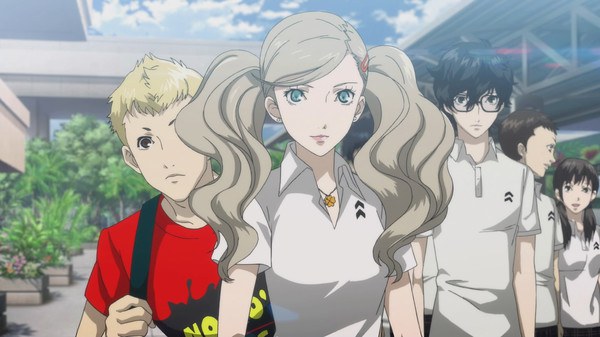
Ryuji’s early connection with Joker begins in a setting where both boys are being treated as outsiders. Ryuji responds to Joker with an openness that is not polished or carefully calculated. He does not first ask whether helping him will improve his own standing. His instinct is to recognize someone in trouble and act, which makes his solidarity a moral choice before it becomes part of the thieves’ larger plans.
That choice matters because Joker is new and socially vulnerable. Ryuji’s willingness to stand beside him gives their partnership a human starting point. His loyalty is not expressed through elegant speeches; it appears in his quick involvement and his readiness to take a risk. The roughness of that response is part of its force. He treats companionship as something to do, not a position to announce.
Impatience is a response to adult power
Ryuji’s anger at adults has a source in the way authority has shaped his life. He sees people with power fail to protect students, and he has little patience for explanations that ask the vulnerable to accept the situation quietly. That impatience can push him toward hasty judgments. It can also cut through the polite language that allows a bad arrangement to continue without anyone naming who benefits.
The distinction matters: the story gives his anger ethical weight without making every expression of it correct. Ryuji can be loud when a quieter response might be more useful, and he sometimes lets urgency outrun judgment. Yet asking him simply to calm down would miss why he speaks so forcefully. His frustration points toward a real imbalance, even when he still has to learn how to act on that insight effectively.
The cost of being impossible to overlook
Ryuji’s volume has consequences. His bluntness can expose the group to unwanted attention and make it harder to move with care. When he speaks first, people may react to his delivery instead of considering the injustice he is trying to identify. The same trait that makes him an unambiguous ally can make him an unpredictable one. Loyalty does not erase the need for timing or restraint.
That tension keeps him from collapsing into comic relief. His comic energy comes partly from how openly he reacts, but the openness has a serious purpose: it refuses to make injustice comfortable for the people who witness it. Ryuji’s growth does not require him to become silent or smooth. It asks him to connect his instinctive solidarity with better judgment. His loudness matters because it begins as protest, then becomes a responsibility to act with others.
Primary work & further reading
Primary work: Persona 5 Royal. Character and story readings are editorial interpretations. The publisher reference below identifies the work and its premise.