Persona 5 Royal’s Grand Cross crossover builds a pocket Palace
The October 29 collaboration announcement pairs Phantom Thieves, Kamoshida, Leblanc-inspired furniture and Royal music in The Seven Deadly Sins: Grand Cross. Its mix of character transfer and setting details shows how a crossover can make a guest world feel briefly inhabitable.
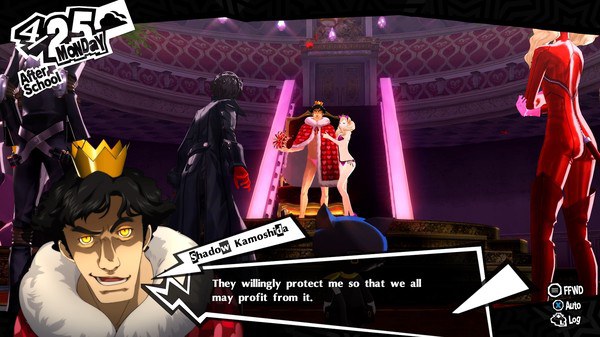
Coverage: Spoiler-light for Persona 5 Royal: discusses the Kamoshida Palace premise and collaboration contents, without later story revelations.
A dated event, not a permanent edition
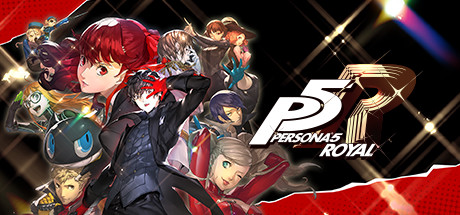
Atlus announced on October 29, 2026 that The Seven Deadly Sins: Grand Cross was running a Persona 5 Royal collaboration through November 19. The listed guests are Joker, Mona, Queen and Violet; the announcement also names a Kamoshida event boss, Royal music and furniture inspired by Café Leblanc. These details make the collaboration a time-bounded crossover with several kinds of borrowed material, rather than a new chapter in Persona 5 Royal itself. [1] [2]
That distinction is useful when approaching a licensed event. It is an encounter between two games’ presentation systems, not a replacement for the original scenes or a claim that the guest characters have become permanent members of the host story. The official notice gives a clear window and feature list. It does not promise that every element will remain accessible after the event ends, so the dates matter as much as the guest roster.
The cast supplies recognition; the surroundings supply context
A crossover can be legible at first glance because a character’s silhouette, name or color palette carries associations from the original game. Here, the announced roster spans four Phantom Thieves, while a Kamoshida boss reaches back to one of Persona 5 Royal’s early Palace conflicts. The pairing does more than place familiar faces in a new battle screen: it gestures toward the social setting that gave their first actions meaning. [1]
The Leblanc-inspired furniture and two Royal music tracks work differently from the character units. They turn recognition into atmosphere. A guest costume is something the player looks at; a room decoration changes the space around the player, and a musical cue can recall a mood without repeating its original scene. The announcement confirms those elements, but not how closely the event reproduces the original locations or when each item appears. It is safer to describe them as references, rather than assume a complete Palace or café reconstruction. [1]
A small reward loop echoes the source game’s invitation
Atlus says ordinary play during the event can yield up to 80 collaboration-pull opportunities, and that a special event can fully strengthen Mona. The notice separately lists login rewards, a coupon, a boss battle and an exploration event themed around Persona 5 Royal. Those are concrete participation hooks, but they belong to Grand Cross’s own event structure. They should not be confused with Persona 5 Royal’s calendar, Confidants or Palace progression. [1]
This separation is part of the appeal. A crossover gives a player a compact route through a host game’s menus and activities, while the visiting characters supply the emotional shorthand. For a returning Persona player, a recognizable name can make the route easier to follow; for a Grand Cross player, the themed boss and decorations can offer an introduction through play. The official notice establishes the available components, while the meaning of that combination is an interpretation of how licensed events communicate across audiences.
Read the collaboration on its own terms
The most satisfying way to read the announcement is to keep both editions visible. Persona 5 Royal contributes the Phantom Thieves, Kamoshida reference, music and Leblanc motif; Grand Cross provides the event framework and its own progression rewards. Atlus’s dated post and Netmarble’s dedicated event page document the crossover from each partner’s side. [1] [2]
That makes the event more than a checklist of units, but less than a new Persona story. Its strongest promise is temporary recombination: familiar people and signs placed in a different game’s rhythm. The November 19 end date gives that recombination a boundary. Treating it as a dated guest edition keeps expectations grounded while leaving room to enjoy the small details that travel well between worlds.
Primary work & further reading
Primary work: Persona 5 Royal. Character and story readings are editorial interpretations. The publisher reference below identifies the work and its premise.