School days, dorm nights, and the Dark Hour in Persona 3 Reload
Persona 3 Reload makes a school calendar and a hidden hour compete for the same days. That friction turns routine into something more than downtime: every ordinary commitment exists beside a danger most people cannot see.
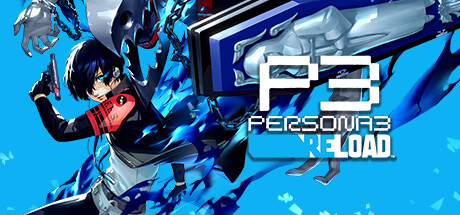
Coverage: Covers the calendar structure, the Dark Hour, Tartarus, and SEES duties without discussing late-story revelations.
A day has two clocks
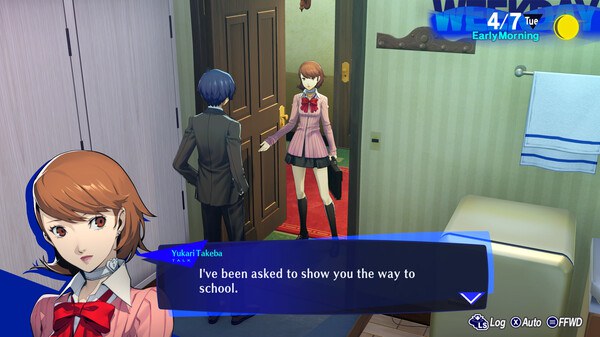
Persona 3 Reload organizes life around a calendar, but the calendar does not tell the whole story. Classes, exams, and after-school choices give days a familiar shape; after midnight, the Dark Hour opens another schedule, one that most of the city cannot perceive. The player learns to read both. A weekday is not simply a stretch of time before the next plot scene. It is a limited space in which ordinary obligations and extraordinary danger press against one another.
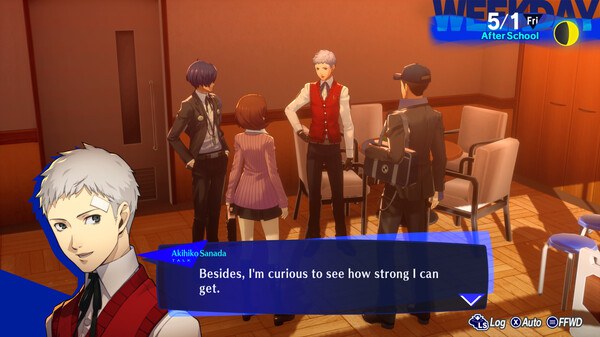
That split gives the game’s routine an unusual tension. School activities ask for attention in the present: show up, make a choice, spend an afternoon. SEES duties ask the same of the night. Neither mode feels like a detachable intermission because the calendar connects them. A day spent cultivating a relationship or preparing for exams still leads toward the next night, while an exhausting Tartarus visit does not cancel tomorrow’s classes. The clock keeps moving even when the protagonist has reason to wish it would stop.
The ordinary world has its own demands
School life is not merely a disguise for the supernatural plot. It makes time feel social and finite. Friends and classmates have schedules; opportunities arrive on particular days, and the player cannot give every person equal attention. These choices place a quiet value on ordinary presence. Being available to someone is itself an action, and choosing one afternoon means letting another possibility pass.
The contrast also changes how the Dark Hour reads. Its danger is not set against an empty world but against a city full of people who continue their routines without knowing what happens at night. The protagonist’s awareness creates a divide: a normal day can be genuinely pleasant while also carrying knowledge of the work waiting beyond it. The game lets these feelings coexist instead of treating happiness as denial or duty as a rejection of happiness.
Tartarus turns time into a practical problem
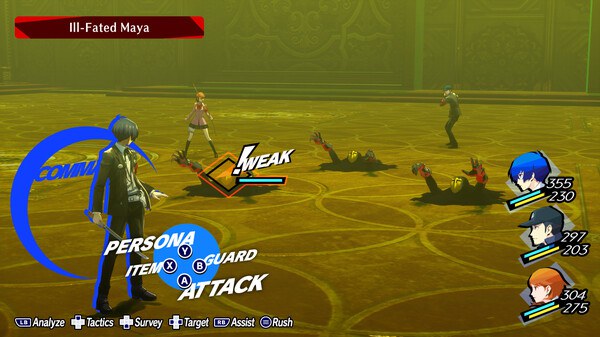
Tartarus gives the hidden hour a physical destination. Its floors and encounters make SEES’s responsibilities concrete, and climbing demands attention to party condition as well as immediate combat. The player can choose how far to press, when to pause, and what resources to preserve. That turns the calendar’s abstract scarcity into a practical question: how much can be done tonight without making the next stretch harder?
This pressure is distinct from school’s social calendar. In Tartarus, progress is measured through exploration and survival; in daily life, it is measured through presence and follow-through. Yet both ask the player to distribute limited time. A long night can leave an impression that carries into the next day, while a missed social opportunity may not be recoverable on demand. The systems make different demands, but their shared clock prevents either from becoming consequence-free.
Duty does not erase a life
The game’s two kinds of time make responsibility feel less like a heroic pose than a recurring negotiation. SEES members have to act because the threat is real, but their lives still contain classes, jokes, meals, awkward encounters, and the small decisions through which trust grows. The routine is not padding around the mission. It is evidence of what the mission is supposed to protect, and of what the characters are trying to preserve in themselves.
Persona 3 Reload therefore makes time its quiet argument about courage. Courage is not only entering Tartarus when night falls; it is also returning to a shared world whose ordinary demands have not disappeared. The calendar never lets the player live wholly in one mode. Each day joins private hopes to public danger, and that friction gives both kinds of time their weight.
Primary work & further reading
Primary work: Persona 3 Reload. Character and story readings are editorial interpretations. The publisher reference below identifies the work and its premise.