Persona 5 Royal: make a free afternoon answer a real need
A practical Persona 5 Royal guide to choosing Confidant visits by the need they meet, using the calendar as a set of tradeoffs rather than a checklist.
Coverage: Spoiler-light; discusses gameplay systems without story outcomes.
A calendar is a choice system
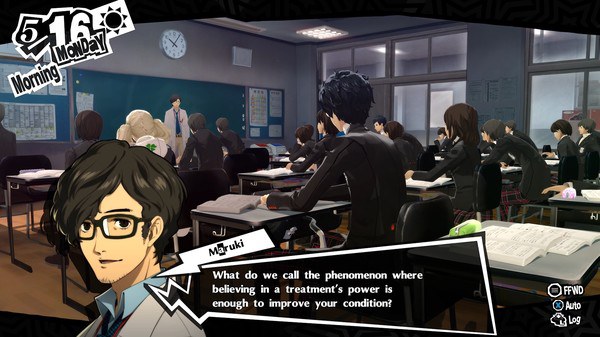
Persona 5 Royal puts school, city life, and Phantom Thief activity on the same calendar. ATLUS presents Confidants as people whose bonds can improve the protagonist’s abilities, while also showing a broad menu of after-school activities. Time spent with one person therefore has both a human and a mechanical dimension. The useful question is not how to complete every bond as early as possible; it is which opportunity best serves the day and the kind of play you want. [1]
Treat an open afternoon as a scarce resource. Before leaving the hideout or school, identify the nearest pressure: a looming Palace deadline, a teammate whose abilities would help your current approach, or a relationship you want to follow because its scenes matter to you. Each is a legitimate reason, but naming one prevents the map from turning into an anxious circuit of every available icon.
Separate urgency from attraction
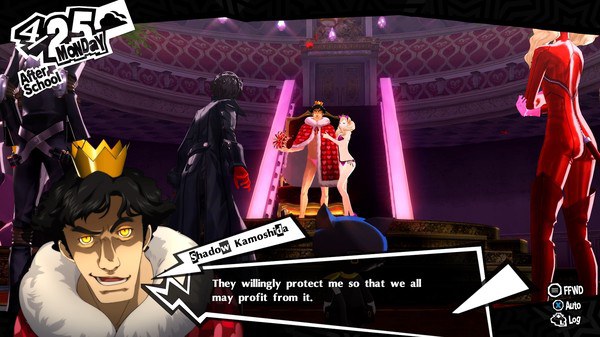
A character being available does not mean their visit is automatically the best use of the slot. PlayStation’s overview emphasizes the game’s social simulation alongside its stylish combat and infiltration; those parts reinforce each other, but they do not have to be optimized at every moment. [2]
Use a simple two-question test. First, will this choice help with a specific challenge you expect soon? Second, would you still want this scene if it offered no mechanical reward? If both answers are yes, it is a strong candidate. If only the first is yes, compare it with other practical options. If only the second is yes, the choice may still be worthwhile: the story is part of the game, not a distraction from it.
Build a small rotation, not a perfect route
A robust schedule can keep three priorities in view: one or two bonds that match your preferred combat style, a personal or narrative thread you are curious about, and enough slack to handle the game’s other demands. Rotate among them instead of assuming one fixed order can survive every deadline and invitation. The official site describes bond benefits in broad terms; it does not promise that one universal sequence is optimal for every player. [1]
For example, if you rely on exploiting weaknesses and chaining turns, you might give priority to a bond whose displayed ability seems relevant to that plan. On another day, a story beat or a practical errand could matter more. This is a planning example, not a claim that a particular rank guarantees success: read the in-game ability description and decide whether it solves a problem you actually encounter.
Let deadlines set boundaries, not dictate every hour
Palace deadlines create a reason to plan visits around infiltration, but overplanning can erase the pleasure of discovering a character at your own pace. Set a boundary for the next major task, then use the remaining days flexibly. If you have completed the immediate objective early, a free day can go to a bond or activity without having to justify itself as an efficiency gain.
The better calendar is one you can explain in a sentence: “I’m spending today here because I want this story” or “because this ability fits the next Palace.” When the reason changes, change the plan. Persona 5 Royal’s social systems reward attention, but the player supplies the priorities that make that attention meaningful.
Primary work & further reading
Primary work: Persona 5 Royal. Character and story readings are editorial interpretations. The publisher reference below identifies the work and its premise.