The questions 9S keeps asking
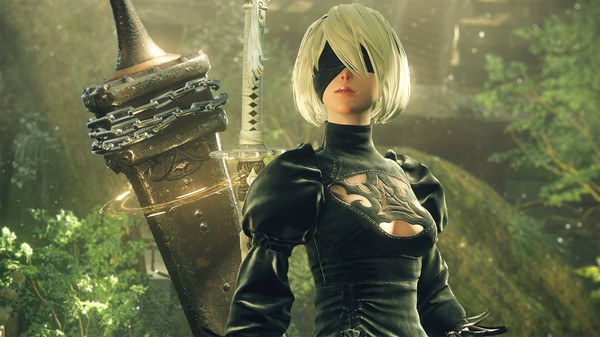
As a scanner android, 9S contributes more than technical support to the early mission. His questions widen the emotional space around 2B’s discipline, while the dangers of their work make curiosity feel like both a strength and a liability.
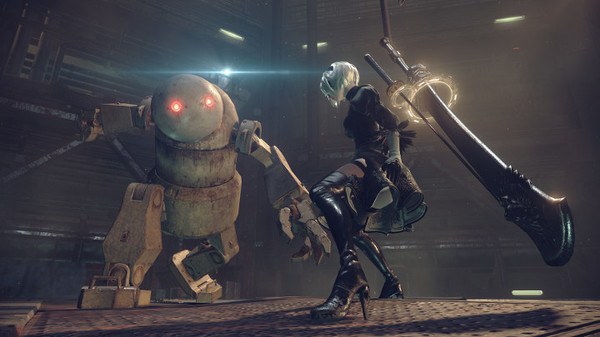
Coverage: Early Route A only; covers 9S’s scanner role and his initial partnership with 2B without late revelations.
The scanner looks beyond the target
The opening establishes 9S as a scanner android, a role that places information gathering alongside combat. He can support 2B in the field, but his attention is not limited to the enemy directly in front of him. A scanner’s usefulness depends on noticing what is present, interpreting it, and finding something the mission has not already made obvious. That makes his curiosity feel occupational as well as personal. He is built into a task that rewards looking closely, even when close attention complicates a clean account of what is happening.
The distinction matters in a world where the immediate objective can dominate every other consideration. 2B’s operational discipline keeps the team moving; 9S is more inclined to engage with questions that arise along the way. The game gives that difference a human scale through their exchanges, rather than making it an abstract division of labor. When 9S asks or notices more, he can seem personable and open. But the same habit has a risk attached: attention can lead somewhere the mission did not intend to go.
Questions change the partnership
9S’s conversational manner puts pressure on 2B’s reserve without turning their partnership into a contest. He speaks with an ease that makes room for response, while 2B often returns to the task at hand. Their contrast gives even brief interactions a shape. One character invites a wider exchange; the other regulates what belongs in the moment. The result is not that 9S is simply right to ask and 2B wrong to withhold. Rather, their different approaches reveal that working together requires more than sharing a battlefield.
For 9S, a question can be a way to connect as well as a way to gather information. That makes his curiosity socially consequential. It asks 2B to decide whether to answer, redirect, or leave the question hanging. Her choices reveal the terms on which she is willing to relate to him, while his persistence shows that he does not treat her silence as the end of the conversation. In the early Route A material, this dynamic remains small and grounded. Its importance lies in establishing two distinct ways of being present, not in announcing what either character will become.
Attention meets a dangerous world
The setting gives 9S’s curiosity a practical edge. The androids operate amid armed machines and unstable surroundings, so observation is tied to danger rather than detached study. To inspect, scan, or ask what something means is to spend attention that might otherwise be fixed on immediate survival. Curiosity can help a team understand its environment, but it can also complicate the clean urgency of combat. The game’s early action makes that tension easy to feel: there is always pressure to return to the next threat.
This is why 9S’s questions do not read as harmless chatter. They come from a character whose work already encourages him to seek information, in circumstances where information might matter and where pursuing it may have consequences. The game does not need to specify every possible consequence for that tension to register. His openness is an asset because he looks beyond the given instruction; it is a liability because instructions are often designed to keep attention narrow. The same impulse can support the team and make its path less predictable.
Curiosity without a simple verdict
A less careful story might frame 9S’s questions as proof that he is the only one who sees clearly, or present discipline as the sole answer to danger. The opening avoids such an easy ranking. 2B’s focus has obvious value in a hostile operation, and 9S’s broader attention gives the partnership a quality that strict efficiency would lack. The contrast lets the reader understand why both modes matter. A team needs someone who can act decisively, and it benefits from someone willing to ask what the action leaves unexplored.
9S therefore makes curiosity feel risky because the game places it between two real demands: learn more, and stay safe enough to act. His scanner role ties inquiry to competence, while his exchanges with 2B show that inquiry can also seek closeness. Neither purpose is reducible to a flaw or a virtue. In the early mission, curiosity keeps the world from shrinking to a list of targets, even as the dangers around him warn that looking further is never entirely neutral.
Primary work & further reading
Primary work: NieR:Automata. Character and story readings are editorial interpretations. The publisher reference below identifies the work and its premise.