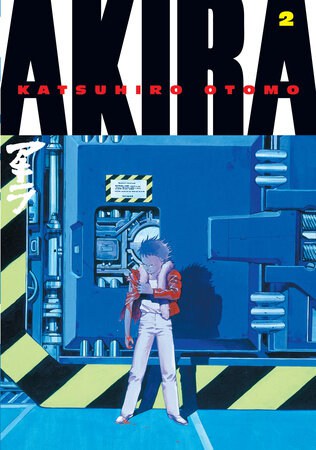
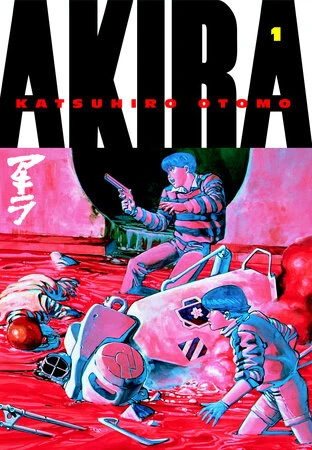
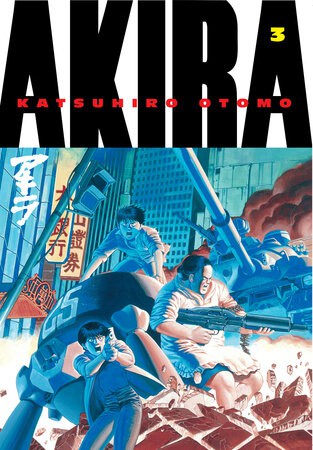
Tetsuo's resentment makes power feel dangerous before it arrives
Tetsuo’s early rivalry with Kaneda gives the accident premise an emotional charge before its consequences unfold. His resentment makes the prospect of sudden power feel dangerous because it meets a young man already alert to the ways he is diminished.
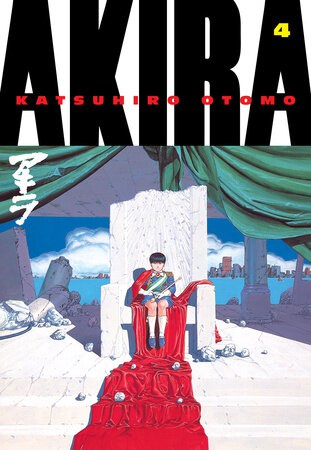
Coverage: Opening volume only; discusses the early rivalry and accident premise without later transformation details or graphic descriptions.
The imbalance is there before the accident
Tetsuo’s resentment does not begin with a sudden change in circumstance. It is already visible in the relationship he has with Kaneda, his friend and the more established figure in their biker circle. Kaneda can act with the ease of someone who expects to be followed; Tetsuo is more conscious of the gap between them. That difference makes ordinary exchanges carry extra weight. A joke, an instruction, or a display of confidence can become evidence in Tetsuo’s private accounting of who has status and who must accept it.
The rivalry matters because it is intimate. Tetsuo is not simply jealous of a distant success he cannot reach; he is measuring himself against someone close enough to know his history and habits. Friendship gives him access to Kaneda, but it also keeps the comparison in front of him. The early conflict therefore feels emotionally credible before any extraordinary event enters the picture. Tetsuo has already learned to read their shared world as a hierarchy, and he is already frustrated by the place it assigns him.
A public role can deepen private embarrassment
The gang makes the difference between the two boys visible. Kaneda’s leadership is acknowledged by the group, while Tetsuo’s place beside him does not carry the same authority. That distinction can turn a personal irritation into a public one. Resentment grows not only from what Tetsuo wants, but from being seen in a position that seems to confirm what he lacks. The social setting gives his feelings an audience, even when no one is deliberately trying to provoke him.
This public dimension helps explain why Tetsuo’s reactions can feel sharper than a specific slight would justify. A moment may matter because it echoes a pattern: Kaneda is the one who gets to lead, and Tetsuo is the one whose frustration is part of the group’s familiar arrangement. Otomo’s early characterization suggests that humiliation can accumulate through ordinary relations, not just through spectacular cruelty. The important pressure is repetition. Tetsuo has to live inside a role that other people may treat as natural, while he experiences it as a judgment on his worth.
The accident gives resentment a new context
The accident that disrupts the boys’ ordinary world arrives against this emotional background. Its force in the opening premise comes partly from the abruptness with which a routine encounter becomes something that draws in institutions and unsettles the gang’s familiar order. Tetsuo is no longer only a boy reacting to Kaneda and his place among the riders. He becomes connected to an event whose significance reaches beyond the street, and the attention surrounding it changes how the rivalry feels.
That change should not be mistaken for a simple explanation of Tetsuo. The accident does not manufacture his resentment from nothing, nor does the premise require his anger to be treated as a moral excuse for whatever follows. Instead, the event creates a new context for feelings that already exist. It makes the contrast between Tetsuo and Kaneda harder to keep within the boundaries of friendship and gang status. Power becomes dangerous in part because the story has established a person who may interpret it through a long experience of being second.
Power enters a relationship already under strain
The idea of sudden power has an unsettling charge before the opening volume spells out its later consequences. Tetsuo’s relationship with Kaneda offers a human scale for that unease: what might happen when a boy who feels overlooked encounters a force that could alter how others respond to him? The question is not merely whether power makes someone stronger. It is whether changing the balance of capability will heal the underlying wound, or give it a more consequential form.
That framing keeps the early story focused on character rather than spectacle. Tetsuo’s resentment is not presented as destiny, and the accident does not turn him into a symbol detached from the friendship that preceded it. Instead, the premise asks readers to consider how an existing imbalance can shape a person’s response to extraordinary circumstances. Power feels dangerous before it arrives because Tetsuo already knows what it is to feel powerless beside someone he cares about. The accident widens that pressure; it does not erase its source.
Primary work & further reading
Primary work: Akira. Character and story readings are editorial interpretations. The publisher reference below identifies the work and its premise.