The House Contractor turns decoration into a reason to return
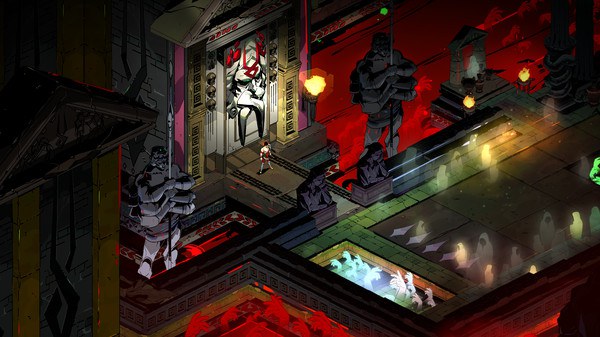
The House Contractor makes the hub feel like a place shaped by Zagreus’s repeated visits. Cosmetic changes alter its atmosphere, while functional work can affect how the player moves through the game, giving renovation a role beyond ornament.
Coverage: Covers the House Contractor, House renovations, and the distinction between cosmetic and functional work; no family revelations.
A house that can be altered
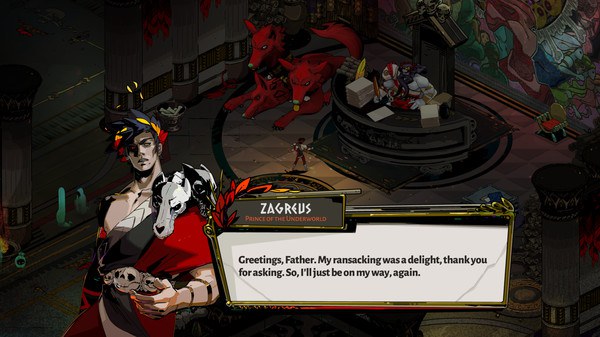
The House of Hades is built as a place Zagreus repeatedly sees, and the Contractor gives that familiarity a visible outlet. Through renovation, the player can change aspects of the environment rather than only pass through it unchanged. That choice matters because the hub already carries the emotional weight of return: it is where Zagreus recovers, speaks with others, and prepares for another attempt. Altering its appearance lets the player leave a trace in a space otherwise governed by the game’s cycle.
Decoration is not automatically deep storytelling, and Hades does not need it to be. Its value lies in how it gives attention a physical focus. A changed room can make the House feel more personal simply because the player has chosen how it should look. The Contractor turns a standard hub into a place with a developing surface, a small record of time spent there. Renovation is thus a quiet form of participation: the player cannot remake the Underworld’s structure, but can influence the room that receives Zagreus after each run.
Separate atmosphere from utility
The Contractor’s options include work with different purposes. Some purchases are cosmetic, changing the look or feel of spaces; other work is functional and can affect play or access to useful features. Keeping those categories distinct helps the player decide what kind of return they want. A cosmetic selection rewards preference and makes the hub more distinctive. A functional renovation has a practical rationale within the game’s systems, even if its appeal is less about visual change.
That difference is worth considering before spending resources. If the player values a more personal home, a decorative change can be satisfying on its own. If a functional option supports a broader goal, it may deserve priority. Neither category invalidates the other, and the game’s social hub makes both feel at home: the House is simultaneously an interface for progression and a setting in which characters live. The Contractor’s menu lets those two uses meet without pretending they are identical.
Resources give renovation a pace
Renovations draw on resources earned during play, connecting the House to the excursions that repeatedly interrupt domestic life. A run is not only a challenge to survive; it also contributes toward what Zagreus can ask the Contractor to do. This creates a secondary rhythm alongside combat. The player may return with a particular improvement in mind, but the resources available determine whether that intention can become an immediate change or remains a future possibility.
That paced relationship gives small purchases a sense of occasion. The player has to decide which improvement is worth pursuing now and which can wait. Because the Contractor offers work of different kinds, the choice can express priorities as much as taste: practical convenience, a more welcoming room, or a visual detail that makes the hub feel less anonymous. The system does not need a dramatic narrative consequence for each renovation. Its significance comes from tying the player’s repeated activity to a place that gradually reflects those decisions.
The hub becomes more than a checkpoint
A purely functional hub would be a pause between runs, a place to collect upgrades and move on. The House of Hades still serves that purpose, but the Contractor gives the player another reason to notice it. Renovation asks the player to look at a room as something that can be shaped, not simply a screen that precedes the next departure. Combined with conversations and familiar routines, those changes make returning feel like an event with its own small possibilities.
The Contractor’s contribution is modest by design: decoration does not remove the danger of the Underworld, and functional improvements do not turn every run into a solved problem. Instead, renovation gives repeated returns a visible consequence. The House becomes a social space and a record of what the player has chosen to value. That makes its role in the game more than practical. Zagreus keeps coming back because the story and structure bring him there; the Contractor makes that return feel like a place can answer, little by little, to the people who inhabit it.
Primary work & further reading
Primary work: Hades. Character and story readings are editorial interpretations. The publisher reference below identifies the work and its premise.