The Item World turns equipment into a journey
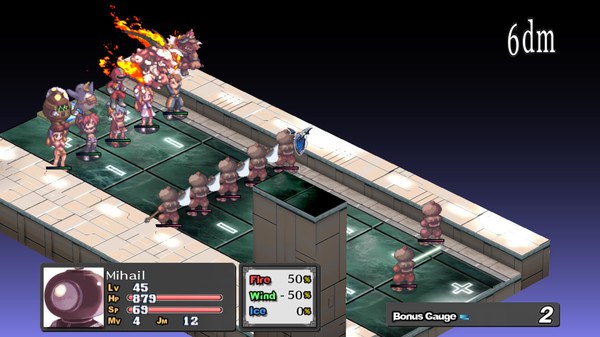
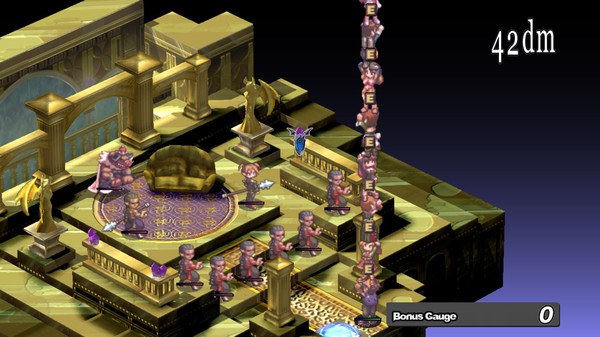
In the original Disgaea, the Item World places random battle floors inside equipment. Its exit gates, ten-floor return milestones, and Mr. Gency’s Exit make leaving part of the plan, while Geo Panels can change how safely you cross each map.
Coverage: Covers the original Disgaea’s Item World floors, exit options, Geo Panels, and item progression; no story spoilers.
Enter a piece of equipment for its floors
Choose an item to enter its Item World and the game takes your party through random battle floors inside that equipment. Each floor is a separate map to navigate and clear. Going deeper develops the item through the expedition, so an item you plan to keep using can become a reason to take on more battles instead of replacing it as soon as another piece of gear appears.
Keep item level separate from character level when deciding whether a trip is worthwhile. Item level describes the equipment’s progression through its Item World; it is not the level of the character carrying it. If your goal is to improve a particular weapon, the relevant question is whether you want to spend time taking that weapon deeper. Character growth and item improvement are different goals, even when the same battles contribute to your progress.
Read the map before crossing Geo Panels
The floors are randomly generated, so inspect each map before moving the party across it. Geo Symbols sit on Geo Panels, and their effects apply across the tiled areas they cover. Their colors and placement can make a route dangerous or useful. Check where the Symbols and Panels are before crossing, then decide whether to break, move, or avoid the relevant objects based on the effect shown on the field.
This map check is especially useful when the direct path to enemies runs over affected panels. Sending the party across without reading the layout can expose several units to the same panel effect. A route around the tiles may take longer in movement, while handling the Geo Symbol may change the affected area. The point is to make that choice on the current floor: random layouts mean a safe path or useful position on one visit cannot be assumed on the next.
Choose the exit gate or keep fighting
An exit gate gives you a way to leave a floor, so using it is a choice to advance and return from the Item World rather than a requirement to defeat every enemy on the map. If the route to the gate is open and your purpose is to continue the item expedition, move toward it. Clearing all enemies can be useful when you want the battle rewards or need to deal with threats blocking the route, but the two choices are not the same objective.
At ten-floor milestones, the game offers a return point, giving you a natural chance to take stock of the run. You can leave after reaching that milestone or choose to continue deeper. For example, if the party has reached a ten-floor return and the weapon has had enough investment for now, taking the return preserves the trip’s progress and frees the party for other tasks. Continuing makes sense when the item remains a priority and the next stretch is worth the extra battles.
Keep Mr. Gency’s Exit for an unscheduled return
Mr. Gency’s Exit is an escape item that lets you leave the Item World when you need to end a run outside the normal return opportunity. Keep it in mind when deciding how far to push: the floor exit gate advances the expedition, while Mr. Gency’s Exit lets you escape and return to the main game. That distinction matters if the party is struggling, you have reached the item improvement you wanted, or you need to stop before the next return point.
Treat the exit item as part of your plan when entering equipment for a longer trip. If the party is handling the floors and the item is still worth improving, press onward toward the next milestone. If continuing would put the run’s purpose at risk, use Mr. Gency’s Exit to leave. The Item World rewards steady progress, but no single item needs every available floor in one visit. Your best stopping point depends on the gear you chose, the maps you encounter, and the party’s condition.
Primary work & further reading
Primary work: Disgaea. Character and story readings are editorial interpretations. The publisher reference below identifies the work and its premise.