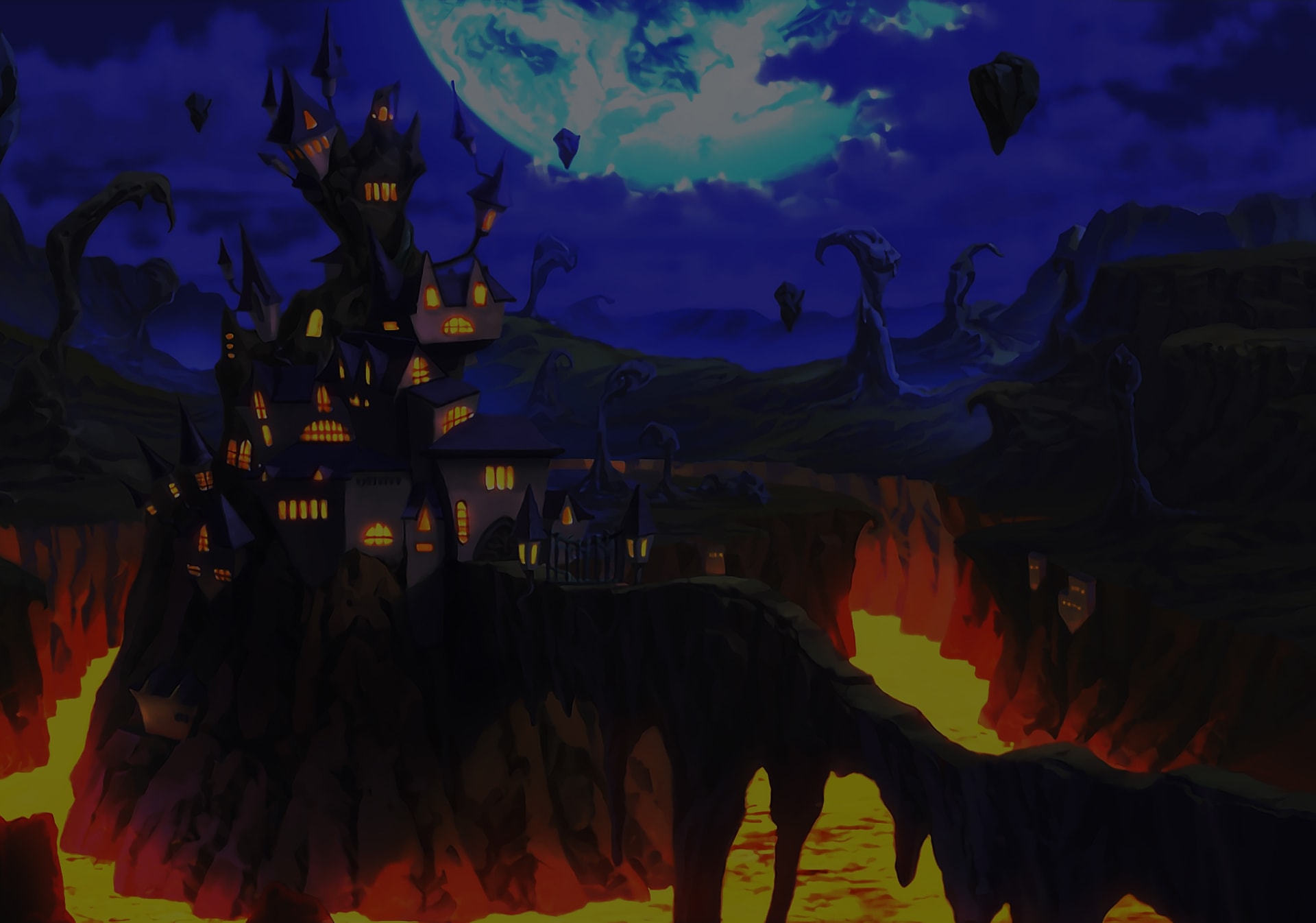
Etna has plans of her own
Etna’s ambition gives the original Disgaea party a practical center. Her control of the Prinnies, sharp irreverence toward Laharl, and uneasy partnership with Flonne keep the story’s competing ideas of power from becoming simple caricatures.
Coverage: Covers Etna’s role and relationships in the opening and early story; no ending events.
The castle runs on her authority
When Laharl wakes after King Krichevskoy’s death, the Netherworld has already spent a long time without its ruler. Etna has been looking after the castle and commanding its Prinnies, which gives her a kind of authority that does not come from inheritance. Her position is practical: she knows the people and routines around the throne. Laharl may arrive with the stronger formal claim, but the story makes clear that the castle did not pause its existence until he returned.
That contrast keeps Etna from being reduced to a schemer who simply wants power. Her ambition is visible, but so is her competence. She can direct the Prinnies because she has established a working relationship with them, however comically exploitative that relationship may be. The game’s joke about demonic labor also has a structural use: it shows that authority is exercised through everyday control, not only grand declarations from a throne.
Irreverence punctures Laharl’s pose
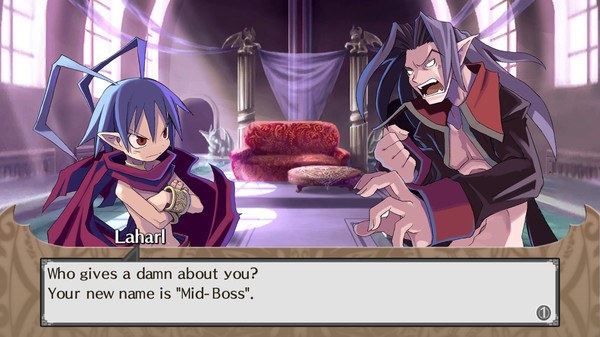
Etna’s manner toward Laharl is central to the party’s balance. She does not treat his boasts as commands that must end discussion. Her teasing and bluntness expose how much of his authority is performance: he insists on being feared, while she answers as someone who has already seen the young demon behind the title. The humor depends on her confidence that she can speak to him without first accepting the image he wants to project.
That familiarity does not mean she has no interest in his position. On the contrary, her proximity to Laharl gives her a front-row place in the struggle for control. Her irreverence can serve her own ends, but it also prevents the story from turning his self-image into the only perspective available. Because Etna can challenge him and remain part of the group, the party makes room for conflict without requiring instant obedience or sentimental reconciliation.
Flonne brings a different kind of pressure
Flonne’s idealism creates a useful counterweight to Etna’s pragmatism. She arrives with a mission to kill the Netherworld’s ruler and a belief in love that repeatedly jars against demon life. Etna is not persuaded simply because Flonne’s intentions are good. She can recognize that an ideal does not automatically solve practical problems, while still having to operate alongside someone whose moral vocabulary unsettles the group.
The two women make Laharl’s party more than a collection of followers. Flonne asks what a ruler ought to be; Etna asks what power can accomplish and how to secure a place near it. Their differences need not become a neat debate with one winner. Instead, each supplies a pressure the other cannot: Flonne can make selfishness look small, while Etna can make lofty virtue confront the conditions in which people actually act.
Ambition gives the comedy a working engine
Etna’s self-interest is part of why the original party feels lively. She has reasons to remain beside Laharl that are not identical to his, and she does not hide that fact behind loyalty speeches. Her ambition creates motion: she observes opportunities, keeps a hand on the castle’s operations, and speaks as though the future might still be negotiated. In a story full of exaggerated declarations, that opportunism is a form of grounded attention.
Calling her a villain would flatten the distinction the game keeps alive. Etna is willing to use people and pursue advantage, but her role is not simply to oppose the party from outside. She helps it function while continually reminding Laharl that leadership has competitors, dependents, and witnesses. The result is a sharper comic ensemble: Flonne’s idealism and Laharl’s pride remain legible because Etna can move between them without pretending to share either one completely.
Primary work & further reading
Primary work: Disgaea. Character and story readings are editorial interpretations. The publisher reference below identifies the work and its premise.