Kaneda's swagger depends on having an audience
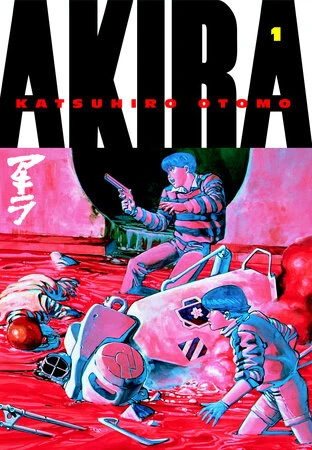
Kaneda’s early confidence is a performance built for the streets and the people who know him. His leadership among the bikers makes the audience around him essential: without friends and rivals to answer, swagger would have little purpose.
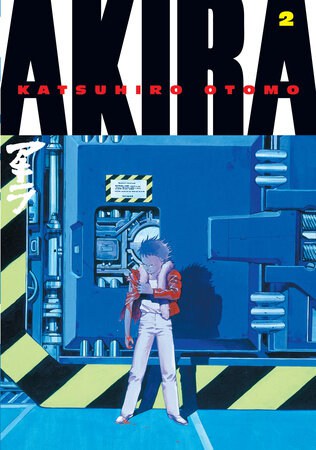
Coverage: Opening volume only; focuses on Kaneda’s early biker leadership, friendship with Tetsuo and impulsive confidence, without later fate spoilers.
Confidence is something Kaneda performs
Kaneda’s swagger is most legible when other people can see it. He moves through the biker gang with the ease of someone accustomed to attention, turning danger and disruption into opportunities to display nerve. His confidence is not simply a private belief that he is capable. It is a public style: the way he takes up space, reacts quickly, and expects his companions to recognize him as their leader. The group gives his bravado somewhere to land.
That audience does not make the performance false. Kaneda’s nerve has practical force in the gang’s immediate world, where hesitation can cost standing and quick choices can keep a situation moving. But the need to be seen adds pressure. A leader who builds authority through boldness has to keep supplying evidence of boldness, especially when someone close to him threatens the role. The swagger is therefore both a resource and a responsibility: it lets Kaneda command attention, while making retreat or uncertainty harder to show.
The gang turns leadership into a social fact
The bikers around Kaneda help establish that his position is not merely self-appointed. Their responses give his actions a social setting: he can lead because other people ride with him, follow his cues, and recognize the shape of his authority. The gang’s identity is collective, but Kaneda occupies its center. That arrangement makes leadership feel immediate rather than abstract. It is expressed through shared movement, rivalry, and the small exchanges that mark who gets to decide what happens next.
At the same time, a group’s loyalty is not identical to unquestioned obedience. The young riders have their own tempers and ambitions, and the street offers many ways to test a leader. Kaneda’s status is maintained in public, where challenge can be witnessed and answered. The manga’s attention to the gang as a social unit makes his confidence more interesting than simple bravado: he is not just showing off; he is managing a position whose meaning depends on other people continuing to accept it.
Friendship complicates the hierarchy
Tetsuo’s relationship with Kaneda brings a private history into that public structure. They are friends, but they do not occupy the same place in the gang. Kaneda’s confidence can read as natural ease; Tetsuo’s frustration draws attention to the gap between being included and being treated as an equal. Their bond contains warmth and familiarity, yet familiarity also gives each boy a sharper view of what the other has. Kaneda may mean his teasing or commands casually, but their effect depends on the imbalance between them.
This is why Kaneda’s friendship cannot be separated from his leadership. He has to relate to Tetsuo as a companion while also inhabiting the role of the more established rider. What looks like easy banter from one side can feel like a reminder of rank from the other. The story does not need to make Kaneda a deliberate bully for that tension to matter. His blind spots are part of his characterization: he can care about his friend and still fail to notice how often their shared world confirms his own advantage.
Impulsiveness reveals the limits of control
Kaneda’s decisiveness is exhilarating because it can make him seem in control of events that are moving too fast for anyone to master. He acts, answers, and presses forward rather than pausing to calculate every consequence. In the gang’s world, that pace can look like courage. It also means that confidence sometimes outruns judgment. The quality that makes him a compelling leader—his ability to turn a moment into action—can push him into situations whose effects extend beyond the audience he understands.
The early portrait leaves Kaneda neither a hollow show-off nor an effortless hero. His swagger has roots in real charisma and social responsibility, but it also depends on a stage of friends, rivals, and familiar streets. The more the situation exceeds that stage, the less his customary performance can guarantee. What makes him readable is the gap between his ability to command a crowd and his ability to understand every person within it. Kaneda’s confidence works because others are watching; its limits emerge when being watched is not the same as being understood.
Primary work & further reading
Primary work: Akira. Character and story readings are editorial interpretations. The publisher reference below identifies the work and its premise.