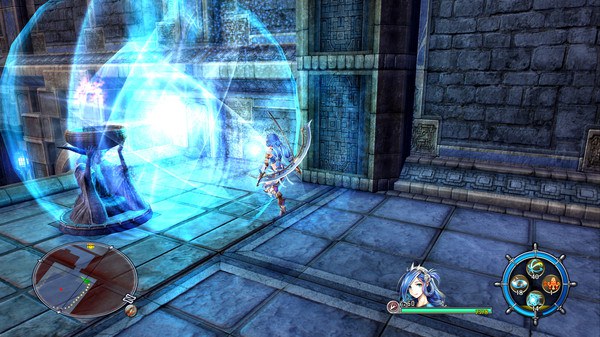
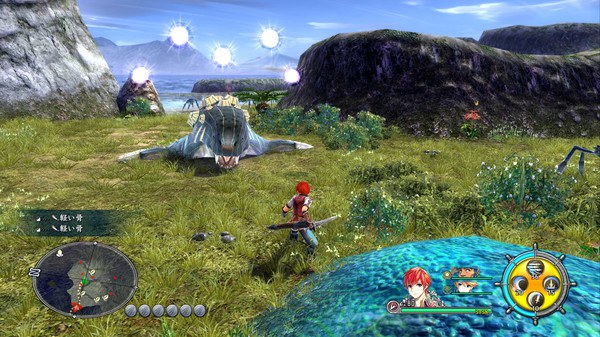
Flash Move and Flash Guard teach different kinds of timing
Flash Move rewards a well-timed evade by slowing the surrounding action; Flash Guard rewards a well-timed guard with a temporary offensive opportunity. Reading an enemy’s tell helps you choose whether to leave the attack’s path or meet it directly.
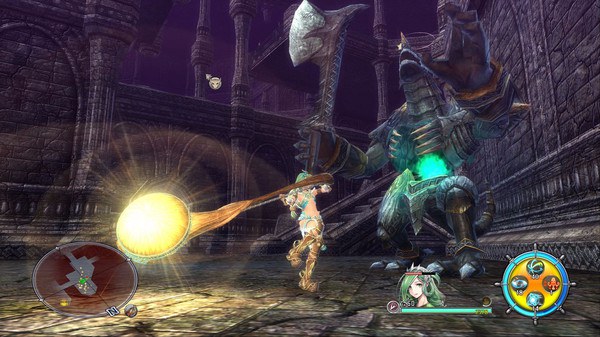
Coverage: Covers early combat concepts, including Flash Move and Flash Guard; excludes later systems and precise timing or damage values.
Read the tell, then choose your response
When an enemy prepares to attack, watch the shape of the threat and the space your character has to move. A wide sweeping tell signals danger across an area; a projectile approach puts pressure on your current position from farther away. These are useful visual distinctions even before you know the enemy well. The question is whether you can leave the threatened space cleanly or whether you want to hold your ground and time a guard.
Flash Move and Flash Guard require different inputs and different decisions. Flash Move is a well-timed evade: when it succeeds, the surrounding action slows, giving you a moment to respond. Flash Guard is a well-timed guard that creates a temporary offensive opportunity. Neither is a passive defense that protects you simply for moving or holding a button. You have to recognize the attack and commit to the matching response at the right moment.
Flash Move turns evasion into a brief opening
Use Flash Move when the attack’s path is easier to escape than to meet head-on. Against a broad sweep, for example, an evade that carries your character beyond the threatened area can avoid the strike and leave room to act. If successful, the slowdown around you gives time to reposition or attack while the enemy’s move resolves. The reward comes from reading the tell and moving through danger at the right instant.
An evade still depends on where you move. If the sweep covers more space than expected, or another enemy occupies the route, a hurried dodge may leave you in trouble. Before committing, look for clear ground and note whether the incoming attack is aimed at your current position or spreading across the space around you. When the escape route is poor, attempting to evade without a plan can cost the chance to respond effectively.
Flash Guard rewards meeting the strike
Flash Guard suits a different read: the player stays in place and guards at the right time. A successful guard creates a temporary opportunity to attack, so it can work well when you are close to an enemy and want to keep pressure on it. You are not trying to run around the blow. You are judging its approach and meeting it with a timed defense.
The tradeoff is that a mistimed guard does not provide that opening and leaves you exposed to the attack. If a foe’s tell is unfamiliar, you may prefer to evade toward clear space and learn how its move travels. Once you can recognize the approach, guarding lets you trade the safety of distance for a chance to act from close range. That is a deliberate risk, not a stronger version of an ordinary guard held without timing.
Match the technique to the attack and your position
Imagine an enemy winding up for a wide sweep while your character stands near its edge. If open ground lies beyond the swing, a well-timed Flash Move takes you out of its path and, on success, slows the surrounding action. If you are close to the enemy and have read the windup, choosing Flash Guard means staying put to meet the strike; a successful guard creates a temporary chance to attack. The first choice trades position for escape, while the second keeps you close for an offensive response.
A projectile approaching your current position presents another kind of tell: look at where it is headed and whether you can evade into safe ground. Choose Flash Move when moving clear is the better answer. Choose Flash Guard when you can read the approach and want to meet it with a timed defense. The combat roles of Adol’s Slash, Laxia’s Pierce, and Sahad’s Strike are distinct, but the basic timing decision belongs to the player: read the threat, then evade or guard with intent.
Primary work & further reading
Primary work: Ys VIII: Lacrimosa of Dana. Character and story readings are editorial interpretations. The publisher reference below identifies the work and its premise.