Dogi and the people building Castaway Village
Early in Ys VIII, rescuing shipwreck survivors does more than bring people back to camp: it gives Castaway Village the hands and know-how to support exploration. Dogi helps turn those rescues into practical progress on Seiren.

Coverage: Covers the shipwreck premise and early chapters, including survivor rescues, Dogi, and Castaway Village’s initial growth; excludes later developments.
The shipwreck makes finding people urgent
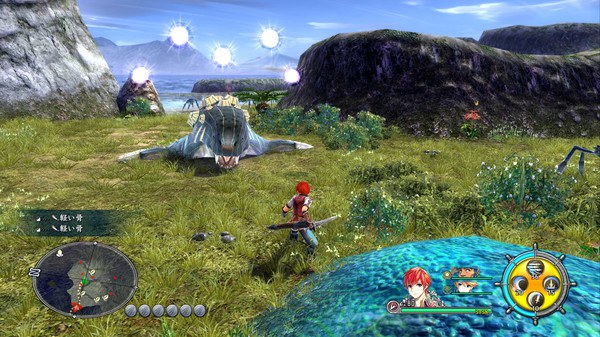
Adol reaches Seiren after the Lombardia shipwreck, but the stranded passengers do not all wash ashore together. As he explores, he finds survivors scattered through unfamiliar terrain, some unable to return to camp on their own. That gives early exploration a concrete purpose: follow the routes available to you, look beyond the main path, and bring people back before pushing farther into the island’s hazards.
The rescue list is more than a measure of how much ground you have covered. Each person recovered becomes part of the group’s attempt to survive without the ship. The castaways need a place to regroup, supplies, and people who can take on useful work. When you encounter someone in trouble, rescuing them adds to the village’s capacity as well as the story’s growing cast.
Dogi turns a camp into a working village
Dogi is central to organizing the survivors at Castaway Village. His practical, hands-on presence gives the settlement a clear coordinator while Adol is away searching Seiren. As people return, the camp develops into a place where the castaways can make preparations and support the next expedition, rather than serving only as a spot to recover between excursions.
Pay attention to the services and facilities that become available as the village grows. Rescued people bring practical capabilities, so finding survivors can change what the group can do from camp. That makes backtracking to check newly accessible parts of the settlement worthwhile: new help may offer useful preparation or support before you head back into the wilderness. The game ties community growth to individual rescues instead of asking you to treat it as an unrelated menu system.
Rescues extend what you can attempt
Seiren is too large for the survivors to handle as one undifferentiated crowd. Adol’s party explores dangerous areas, while the village provides a base and the rescued castaways contribute to the effort from there. As you recover more people, the practical reach of the group grows. Exploration and village development feed into each other: going out finds survivors, and returning with them strengthens the camp’s ability to support further trips.
This connection is useful when deciding how to approach an unfamiliar stretch of the island. Keep exploring routes that lead into new ground, but remember that a rescue can be as valuable as reaching a landmark. If a side path leads to a stranded passenger, following it can pay off in new village capabilities. The island remains dangerous after the rescue; the benefit is that more people can help the castaways respond to it.
Use the village as part of your exploration loop
A practical rhythm emerges early: set out from Castaway Village, explore as far as your party can manage, bring survivors back, then return to camp to see what their presence enables. Dogi’s role and the settlement’s growing services make that return meaningful. Before leaving again, take a moment to check the village and prepare around the support now available. That habit keeps rescue tied to play rather than reducing it to a story beat.
The village’s growth also gives the shipwreck premise a human scale. Adol may be the one moving through Seiren, but his search changes the conditions for everyone left behind. Each survivor contributes a person and a practical capability to a group that started with scattered passengers. In the early chapters, rescue is how the castaways turn a temporary refuge into a base capable of supporting life and exploration.
Primary work & further reading
Primary work: Ys VIII: Lacrimosa of Dana. Character and story readings are editorial interpretations. The publisher reference below identifies the work and its premise.