Reyn is ready to take the next hit
Reyn’s confidence gives Xenoblade’s battles a visible anchor, but his value as a protector depends on more than standing in front. His friendship with Shulk and the logic of enemy attention make protection a shared, active responsibility.
Coverage: Covers Reyn’s early characterization, his friendship with Shulk, and the conceptual role of aggro; no numeric optimization advice.
Confidence has a physical shape
Reyn enters the story with the kind of confidence that makes physical action seem natural. He is comfortable taking up space, moving toward a problem, and putting his strength to work. That presence gives the party an immediate sense of solidity. Shulk’s attention often turns toward questions and mechanisms; Reyn makes the group feel capable of meeting an immediate threat with their bodies.
His confidence is not the same thing as invulnerability. The appeal of Reyn as a protector comes from the fact that he chooses to occupy a risky position, not from an idea that nothing can hurt him. This distinction helps his strength read as a commitment rather than a guarantee. A protector can make danger easier for others to face, but cannot erase the danger itself. Reyn’s physical assurance gives the role its force, while the limits of any one fighter keep it human.
Friendship gives protection its direction
Reyn’s connection with Shulk gives his willingness to act a personal focus. They are friends with different instincts, and their bond makes those differences useful. Reyn’s directness can pull Shulk out of isolation; Shulk’s careful attention gives Reyn someone whose judgment matters. Their relationship lets protection mean more than absorbing a threat. It includes staying close enough to notice what a friend needs and trusting that friend to contribute in return.
That mutuality keeps Reyn from becoming a simple shield character. If his role were only to place himself between danger and everyone else, his personality would shrink to a function. Instead, friendship gives his physical confidence a context: he wants the people beside him to be able to act. His strength matters because it supports a group whose members bring distinct abilities and perspectives. Protection is therefore relational, grounded in companionship rather than a one-way act of rescue.
Aggro makes attention part of defense
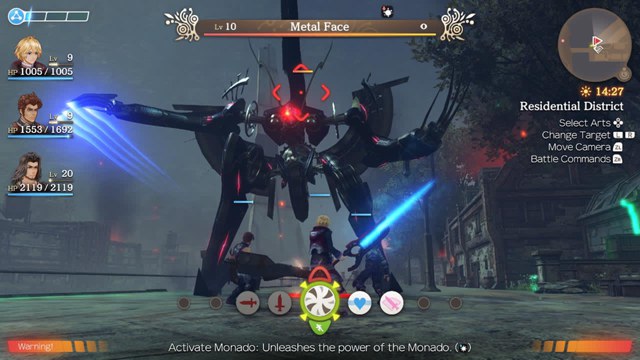
In battle, enemy attention is one of the forces the party has to manage. Aggro describes the way a foe focuses on a combatant, and that focus can be drawn toward a sturdier front-line presence. Thinking about Reyn through that concept clarifies why protection is active. He is not merely standing in a convenient place; his actions can help determine which party member bears the immediate pressure.
The idea also explains why protection cannot be treated as a private accomplishment. If an enemy is focused on Reyn, his companions may have more room to perform their own roles, but their decisions still shape the fight around him. A group needs to recognize when it is exposed, when a threat’s attention has shifted, and how each person can support the others. The mechanic gives a concrete form to the social work Reyn’s character already suggests: defense depends on directing risk, not pretending risk has disappeared.
A protector makes room for the party
Reyn’s strongest contribution is not that he can settle every encounter alone. It is that his presence can make coordinated action possible. When he takes on pressure, his companions have a chance to respond from their own positions. When he needs help, the group’s responsibility returns to the foreground. This back-and-forth makes protection a party role: meaningful because it creates space for others and because it depends on them to keep that space open.
That reading connects Reyn’s character to Xenoblade’s combat without turning either into a numerical checklist. His physical confidence expresses a willingness to take responsibility, and aggro gives the player a way to see responsibility move around the field. Friendship supplies the emotional reason to care about the arrangement. Reyn protects best when he is part of a group that can act together. The party role is not a wall; it is a commitment to share danger so that no one has to face it alone.
Primary work & further reading
Primary work: Xenoblade Chronicles. Character and story readings are editorial interpretations. The publisher reference below identifies the work and its premise.