Estelle Bright starts with the work in front of her
In Rolent, Estelle’s energy can make ordinary errands feel like the beginning of an adventure. Her confidence gives the opening of Trails in the Sky its warmth—and makes service to a community feel like a worthy ambition.
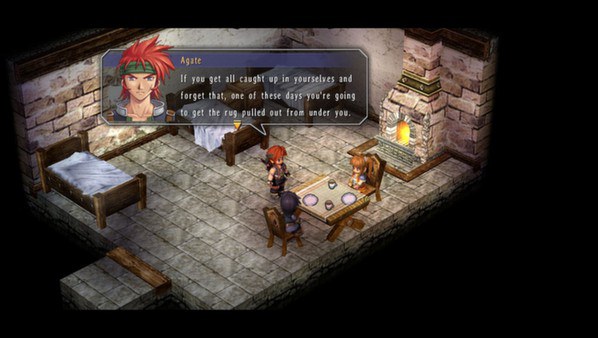
Coverage: Covers Estelle’s junior Bracer training and the opening Rolent portion of Trails in the Sky FC; no later revelations.
A hero in training begins with chores
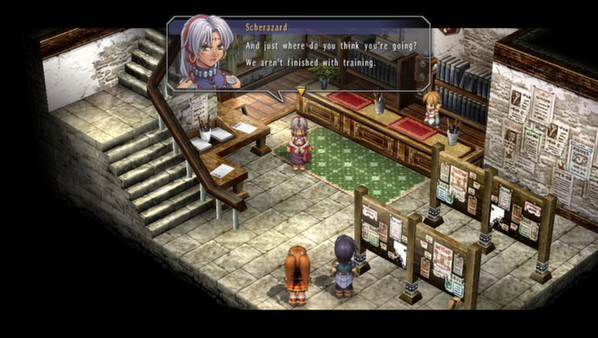
Estelle Bright enters the story with a confident idea of what being a Bracer means: helping people, taking action, and earning the standing her father has already achieved. The game gives that ambition a deliberately modest starting point. She is a trainee, and the early duties around Rolent ask her to learn the work rather than inherit Cassius Bright’s reputation. That gap between the hero she imagines and the responsibility she has actually earned gives the opening its comic spark.
Her enthusiasm does not make the assignments beneath her. Instead, it changes their scale. A request that might look like a detour to someone focused only on the grand adventure is, to Estelle, a chance to prove useful. She approaches the Guild’s work with the same forward momentum whether the task is dramatic or routine. The game can therefore introduce its systems through errands while also showing what she values: a Bracer’s standing is made from concrete acts of service.
Rolent gives confidence somewhere to land
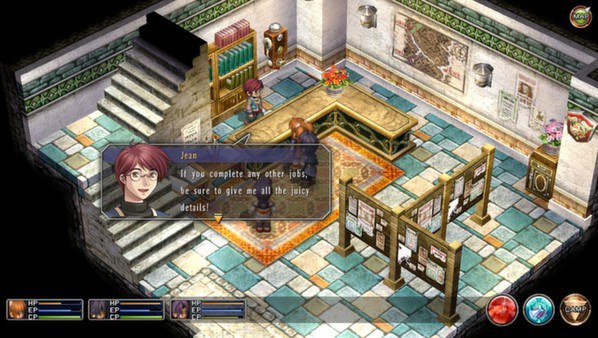
Rolent is a small city in the kingdom of Liberl, and the opening lets its familiar streets and nearby countryside set the pace. Estelle’s home and the local Guild make the world feel close enough to touch. This matters because her confidence is not presented as a lonely performance. She knows people, can speak plainly with them, and has a home base from which she can go out and return. The local scale turns adventure into a relationship with a place.
That sense of place also gives her curiosity room to work. Estelle is quick to engage with what is in front of her, whether it is a person’s concern or an unexpected interruption to the day. Her attention moves outward; the game’s opening encourages the player to do the same by making townspeople and local requests part of the experience. Curiosity becomes more than a personality label: it is the habit that connects the protagonist to the setting.
Boldness is useful because it is imperfect
Estelle’s confidence has a blunt edge. She is eager to act and can be impulsive, while the practical meaning of being a Bracer is still taking shape for her. That tension keeps her from feeling like an already-finished professional. The early work makes a distinction between having the nerve to step forward and knowing exactly what a situation requires. Estelle brings the first quality naturally; training and experience have to build the second.
The distinction is affectionate rather than punitive. The game lets her enthusiasm create momentum, then uses the details of the job to keep that momentum attached to the world. A Bracer cannot help people by admiring the idea of heroism from a distance. They must listen, travel, respond, and handle the immediate matter. Estelle’s roughness is part of the appeal because it gives those responsibilities something to shape. Her confidence is a beginning, not proof that she has nothing left to learn.
Local service becomes the opening’s adventure
The early Rolent material makes a persuasive case for Estelle’s ambitions by keeping them grounded. She wants to become a Bracer, but the story does not ask the player to accept that calling as an abstract virtue. It shows the work in its local form: citizens can turn to the Guild, and a trainee can begin learning how to answer. Estelle’s bright certainty gives that loop emotional force. The errands matter because she treats the people attached to them as worth her time.
That is why the quiet beginning suits her. A more seasoned hero might make the first tasks feel like a pause before the real story. Estelle makes them feel like the first evidence of the life she wants. Her confidence carries the player across the threshold from home into the wider world, but it is her willingness to take ordinary duties seriously that gives the journey a moral center. In Rolent, becoming a hero starts with being available to the people nearby.
Primary work & further reading
Primary work: Trails in the Sky. Character and story readings are editorial interpretations. The publisher reference below identifies the work and its premise.