Before the journey, Shulk is in the workshop
Before Shulk’s journey becomes a contest of strength, his workshop presents him as someone who wants to understand what he handles. That habit gives his early interest in the Monado a practical, questioning character and makes friendship part of the way knowledge works.
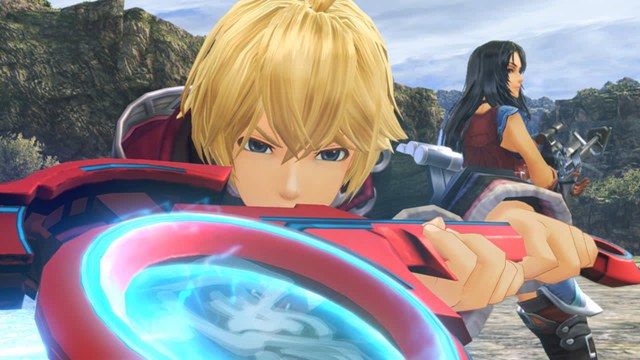
Coverage: Covers Shulk’s early technical curiosity, Monado study, and friendship with Reyn; avoids major opening events and later revelations.
The workshop establishes a way of seeing
Shulk’s workshop tells us how he approaches the world before it tells us what kind of hero he might become. It is a place associated with tools, parts, and attempts to make objects intelligible. The emphasis is on attention: an unfamiliar thing invites inspection, and a problem is something to work through. That orientation makes Shulk’s curiosity feel less like a decorative character trait than a method he carries into the story.
The setting also gives his intelligence a physical scale. Knowledge here is connected to handling and making, not to an abstract claim that Shulk is clever. His interest in technology implies patience with the small, observable details that other people might pass by. The workshop makes him seem most at home when he can bring a question close, examine its parts, and try to understand how they fit together.
The Monado resists ordinary examination
Shulk’s study of the Monado extends that habit into a more complicated object. The blade carries importance beyond its physical presence, but his first response includes the researcher’s desire to learn how it works. That creates a productive gap between the object’s reputation and his method. The Monado is treated as something to investigate, even as the story makes clear that it cannot be reduced to a tool whose purpose is already known.
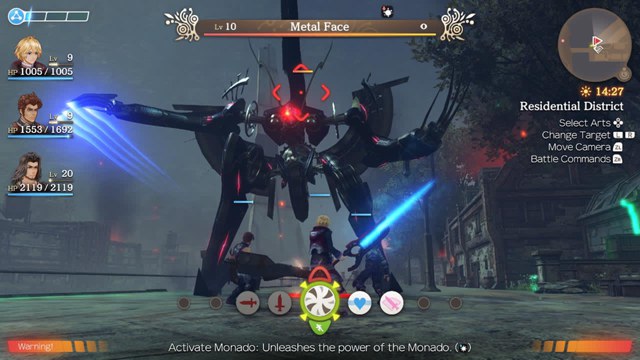
This tension shapes Shulk’s early relationship with power. He is not introduced as someone who simply wants to wield the most impressive weapon available. His attention is drawn to what the Monado can do and what its properties might mean. Curiosity can lead to action, but it does not automatically grant mastery. The blade’s mystery therefore gives his technical temperament a dramatic limit: careful study matters, yet some questions exceed what a workshop and an observant mind can settle.
Reyn brings another kind of knowledge
Shulk’s friendship with Reyn keeps his curiosity from becoming solitary. Reyn’s confidence is more direct and physical, and his presence gives their exchanges a companionable friction. He can make a situation feel immediate when Shulk is absorbed in a question. Their differences are not a simple opposition between thought and strength; Reyn contributes his own practical judgment, while Shulk’s attention can help give a problem shape.
That friendship also makes learning feel social. A researcher may begin with an object, but an adventure involves people who react, decide, and act together. Reyn’s closeness gives Shulk someone to speak with and rely on, rather than leaving him as a mind surrounded by equipment. Their bond suggests that understanding is not achieved only by solitary concentration. It also grows through trust, challenge, and the presence of a friend whose instincts do not mirror one’s own.
Curiosity becomes a form of readiness
Shulk’s early technical interests prepare him for uncertainty without making him seem prepared for everything. He has a way of approaching unfamiliar things: look closely, ask what they do, and resist accepting an explanation too quickly. That disposition is useful in a world where the Monado and the technology around it carry consequences. Its value lies less in making him immediately powerful than in giving him a reasoned response when events become difficult to interpret.
The workshop consequently offers a quieter image of heroism. Shulk’s first defining impulse is not conquest, but inquiry. The Monado can pull him toward action, and Reyn can anchor that action in friendship, but the habit of asking how things work remains central to the person the opening introduces. A hero who begins as a researcher does not stand outside danger; he meets danger with attention, care, and the hope that understanding can change what happens next.
Primary work & further reading
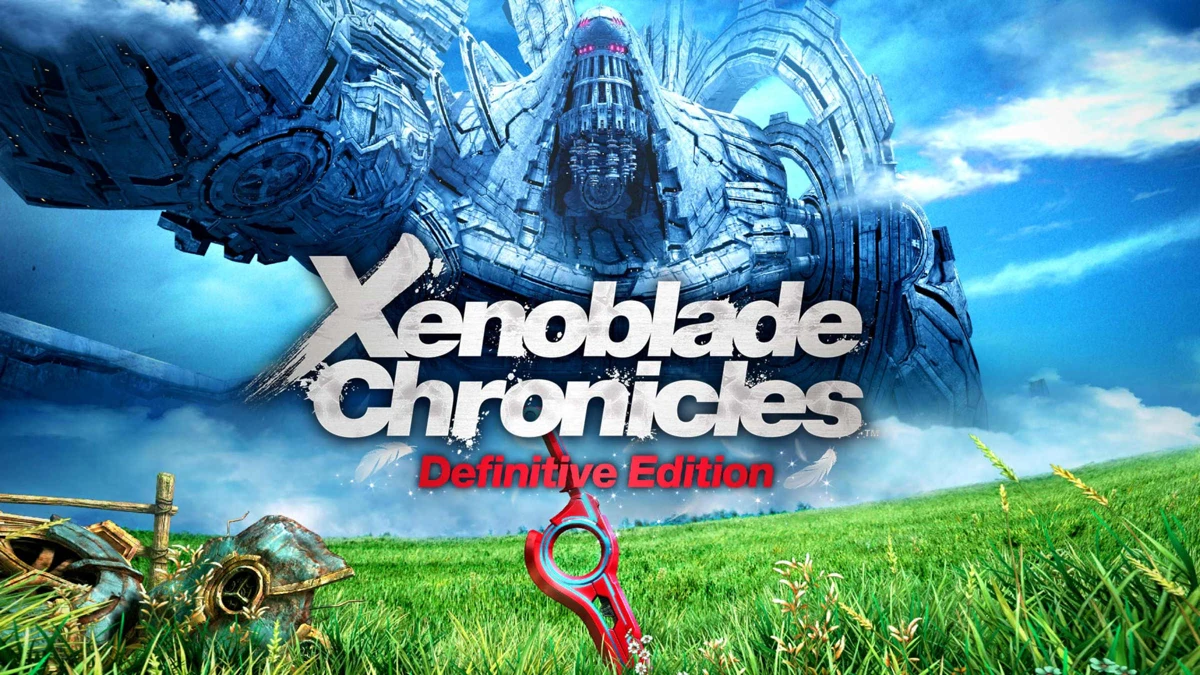
Primary work: Xenoblade Chronicles. Character and story readings are editorial interpretations. The publisher reference below identifies the work and its premise.