Xenoblade Chronicles 3’s Heroes’ Vault makes survival a chain of choices
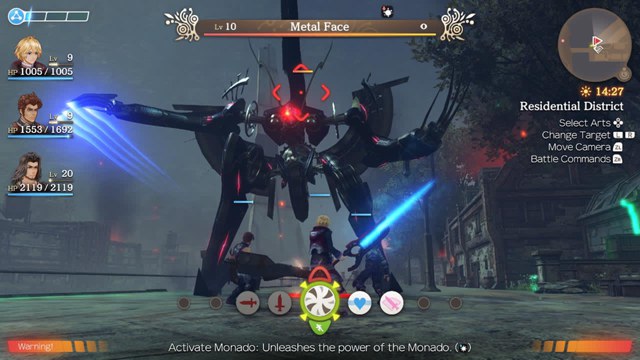
Nintendo’s September 25 announcement for the December 3 Switch 2 edition adds Heroes’ Vault, a defensive mode where defeating waves builds a gauge for strengthening the party. Read as a tactical loop, its promise is about choosing when to spend momentum and when to preserve it for the final foe.
Coverage: Spoiler-light: discusses the announced edition features and combat systems, without story outcomes.
A return built around a new pressure test
On September 25, Nintendo described the Xenoblade Chronicles 3 – Nintendo Switch 2 Edition and its Heroes’ Vault mode. The edition is scheduled for December 3, 2026, and the announcement presents the mode as a defensive battle against successive waves. Defeating enemies fills a gauge that can strengthen the party before a powerful final opponent. Shimmer, a new Hero for this edition, is also described as an Attacker with rapid-fire combos and Foresight. [1] [2]
The announcement is useful because it sketches a sequence rather than merely adding a list of content. The challenge begins with surviving, turns success into a resource, then asks the player to decide how to convert that resource into a stronger party. That structure creates a small tactical story inside a battle: the player earns options by lasting, but the promise of more strength also raises the question of when preparation is enough.
The gauge makes success something to manage
In an ordinary wave defense, a defeated enemy is often only a count toward the next group. Heroes’ Vault gives those victories a second meaning: they feed a gauge used to improve the force. Nintendo says players can enhance abilities or gain additional allies, and the official product page describes the choice as preparation for the final foe. [1] [2]
That turns progress into a budget. A player who spends every opportunity immediately may have a stronger answer to the next wave, but less flexibility if the later encounter asks for a different role. Waiting can preserve room to respond, yet a delayed upgrade is no help if the current wave breaks the line. The interesting decision is not simply “upgrade or do not upgrade”; it is matching the timing of an upgrade to the pressure the party is actually facing.
Think in roles before thinking in raw strength
The announcement names Shimmer as an Attacker who can deliver rapid-fire combos, while the edition page explains that Heroes’ Vault can add allies and strengthen abilities. It does not publish a full roster of Vault choices or exact numerical effects, so there is no evidence for a fixed optimal build. What the announced features do support is a planning habit: identify what the current wave is demanding before selecting the next improvement. [2]
If the active group already clears single targets quickly but struggles to contain several enemies, another damage increase may solve the wrong problem. If a dangerous enemy repeatedly survives long enough to disrupt the party, a concentrated attacker may be more useful than a broad bonus. This is a general reading of the announced system, not a claim about hidden stats. It encourages players to treat the gauge as a way to address a weakness, not as a score to empty automatically.
Shimmer adds a different kind of momentum
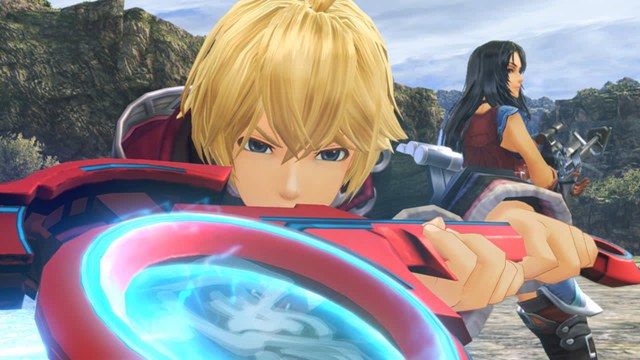
Shimmer’s described role gives the edition another clear axis of change. Nintendo calls her a speedy Attacker and highlights rapid-fire combos; the same official page says she can join the adventure and use Foresight. Those details connect the new character to the edition’s combat identity, but they do not establish that she is required for Heroes’ Vault or that every player should use her. [2]
A new attacker can change the rhythm of a party even when the larger plan remains familiar. Fast sequences invite the player to notice openings and convert them quickly; a defensive mode asks whether those openings are worth pursuing while other enemies remain active. The best question is therefore not whether Shimmer is “strong,” but what sort of decision her speed makes easier. A mode with repeated waves can give that question room to matter across several stages.
A practical way to read each wave
When entering the mode, first look for the immediate risk: an enemy that can threaten the party, a wave that rewards broad control, or a stretch where the current setup already feels stable. After a victory, pause before using the gauge. Ask what the next wave is likely to expose, choose one improvement that responds to that need, and keep enough flexibility for the final encounter. This plan follows the public description of wave progression and party strengthening without assuming details Nintendo has not announced. [1]
The broader appeal is that preparation is folded into the action rather than completed only at a menu. A successful fight creates the next decision, and that decision shapes the next fight. If Heroes’ Vault follows the announced structure, its tension will come from balancing immediate safety against the value of a stronger final approach. The December release remains in the future as of this article’s publication date; the mode’s eventual depth will depend on its playable details, not just the announcement. [2]
Primary work & further reading
Primary work: Xenoblade Chronicles 3. Character and story readings are editorial interpretations. The publisher reference below identifies the work and its premise.