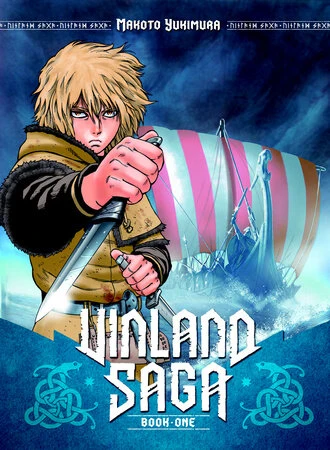
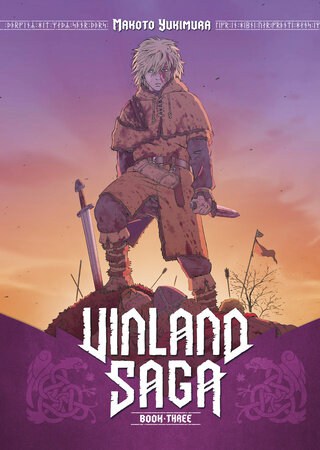
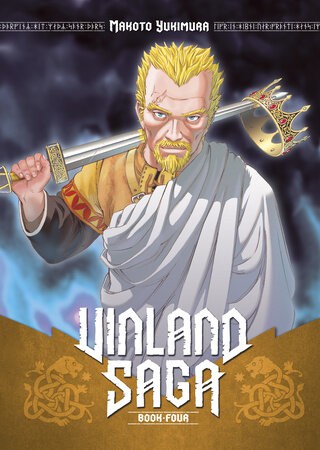
Vinland begins as a place people have to imagine
Before Vinland can serve as a destination, it has to exist in stories passed between people who live amid conflict. The idea of a distant land gains force through the contrast between imagining elsewhere and enduring the present.
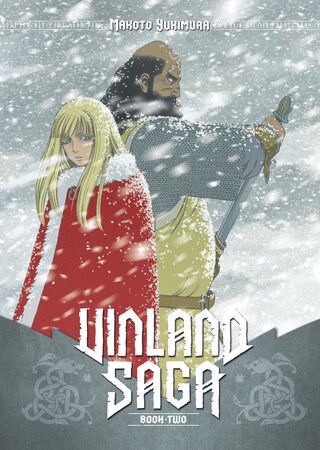
Coverage: Covers early references to voyage stories and the idea of Vinland in contrast with immediate warfare; excludes later destination outcomes.
A place introduced through telling
Vinland enters the early story as an idea carried by people, not as a landscape the reader can inspect. A distant land has to be described before it can become meaningful to those who have never seen it. That dependence on telling gives the place a different kind of presence from the villages, ships, and battlefields close at hand. Vinland is made vivid through the act of imagining what might lie beyond the familiar world.
This framing invites attention to the gap between a place and its description. A voyage story may preserve knowledge, but it also reaches its audience through memory, emphasis, and belief. People who hear it must decide what sort of reality to grant the faraway land. The uncertainty does not make the idea empty. It makes Vinland an opening in the mental map of characters whose daily lives often seem governed by immediate demands.
The pull of elsewhere amid warfare
The contrast between distant land and present conflict is sharp because warfare occupies so much attention in the opening world. Armed groups move through landscapes that are already inhabited and politically contested. Their concerns are immediate: survival, authority, and the next danger. Against that pressure, the thought of a place beyond the known routes can feel almost unreal. It asks the mind to turn away from the next urgent choice and consider a different horizon.
That contrast gives the idea of Vinland emotional weight without requiring it to function as an easy escape. Imagining elsewhere does not erase the violence around the characters, and a distant possibility cannot settle the problems of the present by itself. Instead, the story places two scales beside one another. A person can be caught in a local struggle while still hearing about a world larger than that struggle. The tension between those scales makes the imagined land matter.
Historical setting and fictional lives
Vinland’s place in the manga draws on the broader historical setting of Viking-age voyages, while its central characters and their relationships belong to the work’s fiction. Keeping those layers distinct helps explain the effect of the story. The wider past supplies a world in which travel, raiding, and tales of faraway lands can be imagined as part of human experience. The manga then uses fictional lives to examine what those possibilities mean to particular people.
That distinction also guards against treating the narrative as a transparent record. The presence of historical geography does not make every scene or character a documented account. The story’s purpose here is literary: it makes the idea of a distant shore available as a question within a fictional world shaped by conflict. Readers can recognize the historical frame while attending to how the characters receive, repeat, or respond to the story of Vinland.
Imagination as a first kind of movement
A voyage begins in one sense before anyone boards a ship. Someone must imagine that there is somewhere worth reaching, and someone else must accept that the description might be true. The early references to Vinland make this mental movement part of the story’s subject. The land matters as a possibility that can interrupt the assumption that the world consists only of the places already known and the conflicts already underway.
That possibility remains fragile precisely because it is carried by stories. A tale of another shore can inspire curiosity, but it cannot guarantee what a traveler will find or what reaching it would demand. The manga lets Vinland begin in that uncertainty. Before it becomes a concrete destination, it offers a way to think beyond the immediate battlefield. Its first power is not that it promises a perfect world, but that it makes another future imaginable at all.
Primary work & further reading
Primary work: Vinland Saga. Character and story readings are editorial interpretations. The publisher reference below identifies the work and its premise.