ACT changes the question a battle asks
Undertale’s ACT option shifts combat from a contest of damage into an exercise in attention. Reading an opponent’s behavior can open a peaceful possibility, but the game makes each encounter its own problem.
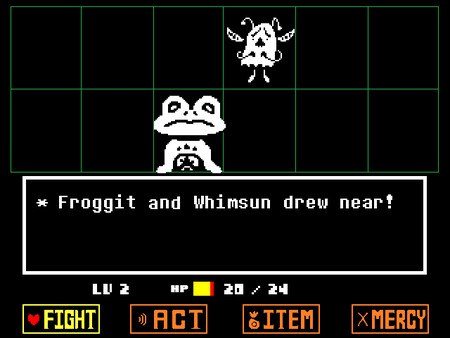
Coverage: Covers the basic battle menu and early nonviolent options; excludes late route revelations and route endings.
A menu that widens the goal
Many role-playing battles begin with an implied question: how can the opponent be defeated? Undertale puts that familiar aim beside another possibility. The ACT command offers ways to respond to the particular monster in front of the player, while MERCY provides a route out of combat when the encounter permits it. Together, they make the battle menu less like a list of attacks and more like a set of possible relationships. The player is still in danger, but damage is no longer the only measure of useful action.
That change asks for a different kind of preparation. A player who only checks health and chooses an attack may miss what the encounter is communicating. ACT encourages attention to appearance, behavior, and the opponent’s response to earlier choices. The practical decision is to treat the first turn as a chance to learn, not necessarily as a chance to maximize harm. This is not a promise that every enemy can be handled with one universal move. It is a reason to examine the choices the game actually presents.
Behavior is information
In battle, an opponent’s attack pattern is more than a hazard to survive. The player moves a heart through incoming projectiles, and their shape and timing give the encounter a distinct feel. At the same time, an enemy’s actions and reactions can hint at what kind of response might matter. The game connects reading behavior with taking action: watch what the monster does, choose an ACT option that seems relevant, and notice whether the next exchange changes. Attention becomes part of the turn structure.
This makes experimentation useful, but not careless. The player has limited health, so trying actions while ignoring the bullet patterns can turn curiosity into avoidable risk. A good approach is to keep the heart safe first, then use a turn to test a plausible response. If an action produces a meaningful reaction, that is information; if it does not, the encounter may require another approach. The key is to read results rather than assume that a sympathetic intention automatically solves the problem.
MERCY depends on the encounter
MERCY makes the peaceful route visible, but its presence does not mean it is always ready to end a fight immediately. The player has to attend to the state of the encounter and the available menu signals. Sometimes a nonviolent action changes the opponent’s attitude; sometimes the player needs to understand more before the option becomes useful. That conditional design keeps mercy from becoming a button that bypasses the enemy as a character. It is a decision made in response to what has happened.
A hypothetical example shows the difference between a rule and a method. Imagine entering an early encounter with an unfamiliar monster. Instead of assuming that an attack is required, the player dodges the first pattern, inspects the available ACT choices, and tries the one that seems best connected to the monster’s visible behavior. If the response indicates a change, the player can check whether MERCY is now available. If nothing shifts, they can return to observing and choose differently. The method is deliberate, but the answer belongs to that particular encounter.
A useful turn can be nonviolent
The ACT system changes what counts as progress. A turn that deals no damage may still teach the player something, reduce the pressure of the fight, or make a peaceful resolution possible. That can feel unfamiliar to players trained to treat every turn as a transaction in health. Undertale’s battle design instead lets information and response have consequences. The player’s task is not to be nice in the abstract; it is to understand the specific opponent well enough to choose what kind of action could work.
The practical lesson is to separate patience from passivity. Keep dodging, inspect the menu, and use ACT with a reason grounded in what the encounter shows. Then let the enemy’s reaction guide the next decision rather than expecting a fixed script to succeed everywhere. MERCY matters because the player can leave combat without winning through damage, but that possibility becomes meaningful through attention. ACT turns the battle’s question from “How do I beat this?” toward “What is happening here, and what response does it invite?”
Primary work & further reading
Primary work: Undertale. Character and story readings are editorial interpretations. The publisher reference below identifies the work and its premise.