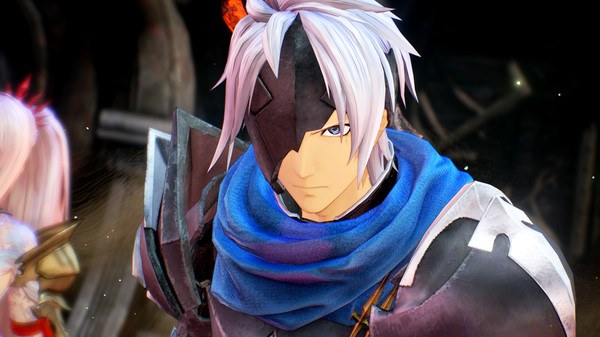
Shionne's distance is built into Tales of Arise's premise
Shionne's thorns make touch dangerous from the moment she meets Alphen in Calaglia. Their early alliance asks what cooperation can mean when trust and closeness cannot begin with an ordinary gesture.
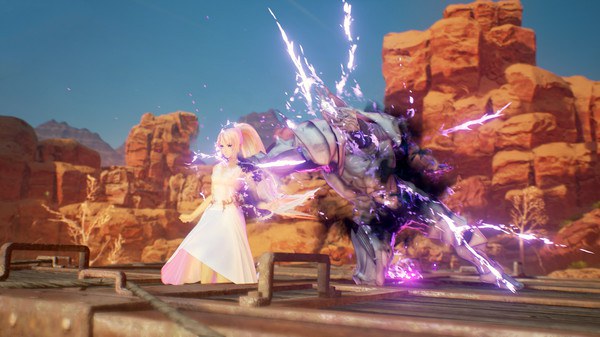
Coverage: Covers Shionne’s introduction and early cooperation with Alphen in Calaglia; excludes late power explanations and relationship outcomes.
Touch arrives as a risk
In many adventure stories, a hand offered to someone in danger is a near-universal shorthand for help. Shionne's thorns make that gesture hazardous. Anyone who touches her can be hurt, so the simplest way of reassuring another person is precisely what she cannot safely offer. Her body sets a boundary before a conversation can establish one. In Calaglia, where the world already sorts people by power and usefulness, this boundary also shapes how others approach her.
The thorns are not just an obstacle in combat or a visual marker of unusualness. They turn intimacy into a question of consequences. A person can mean well and still cause pain by moving too quickly. Shionne's distance is therefore built into the premise at the level of action: whether someone can stand near her, reach for her, or treat her as an ordinary companion cannot be assumed. The story begins their relationship by making that assumption fail.
Distance does not explain distrust
Shionne's physical danger might invite a simple reading in which everyone keeps away because they fear being hurt. But her early interactions with Alphen suggest a more complicated distance. She is guarded, purposeful, and not inclined to treat him as an automatic ally. They come from opposing sides of the divide between Renans and Dahnans, and their interests do not suddenly align because they share a scene. Trust is not the same problem as touch, even though the two are tangled together.
That distinction gives Shionne's reserve weight. If her thorns alone explained every barrier, then one technical solution could settle the relationship. Instead, the premise puts bodily risk alongside political distrust and personal caution. Alphen cannot earn trust merely by being physically present, nor can Shionne's need for help erase her judgment about who he is. The game lets suspicion remain part of the partnership rather than treating it as a misunderstanding that kindness instantly dissolves.
Cooperation before comfort
Their alliance takes shape because the situation in Calaglia demands action. Alphen has lived within Dahnan enslavement; Shionne is a Renan whose aims place her against the local order. The difference between them matters, but so does the fact that neither can simply ignore the other. Their cooperation develops through shared objectives and practical dependence, not through the guarantee that they already understand one another.
This is a sharper basis for companionship than instant ease. Working together means accepting that the other person remains partly unreadable. Alphen's response to danger does not tell him what Shionne wants; Shionne's guardedness does not make her motives self-evident to him. The pair must act while carrying uncertainty. Their physical distance gives that uncertainty a visible form, but the more significant test is whether each can respect the other's agency when convenience might favor treating the other as a means to an end.
A boundary can make relation more precise
The opening premise makes closeness something the characters have to negotiate rather than something the story can grant through a single tender image. Shionne's thorns ask others to notice the risk she embodies. That does not make her responsible for soothing everyone around her, and it does not make the people who fear contact automatically cruel. It does mean that care has to be expressed in forms other than reflexive touch. Attention, restraint, and reliable action carry more of the burden.
For Alphen and Shionne, this changes the shape of necessary cooperation. They can move toward a common purpose without pretending their differences have vanished or that bodily safety guarantees trust. The distance is real, and so is the possibility of working across it. By making touch consequential from the outset, Tales of Arise gives their early partnership a concrete question: can two people take one another seriously before comfort is possible? In Calaglia, the answer begins with shared action and a boundary neither can ignore.
Primary work & further reading
Primary work: Tales of Arise. Character and story readings are editorial interpretations. The publisher reference below identifies the work and its premise.