Who gets to wear authority in Tales of Arise?
In early Calaglia, clothing helps make the divide between Renans and Dahnans legible before anyone explains it. The contrast does not merely decorate the world; it shows how power organizes who is seen as a person and who is treated as labor.
Coverage: Discusses visual hierarchy and Dahnan enslavement in the opening Calaglia setting only.
The eye reads a hierarchy
Tales of Arise introduces a world organized around Renans ruling Dahnans, and costume helps the player read that order quickly. The visual contrast between people who command and people made to labor turns social rank into something apparent at a glance. Clothing is part of the setting's grammar: before the player has learned every name or institution, appearance cues who moves through the world with authority and who has to answer to it.
That legibility is useful, but it is not neutral. A hierarchy becomes easier to understand when it can be seen, yet a clear visual code can also make oppression seem like a tidy arrangement of character designs. The early Calaglia setting keeps that danger in view by grounding the contrast in slavery. The point is not that Renans and Dahnans simply have different styles. Their visible difference sits inside a coercive relationship, and the image of rank matters because one group can impose terms on the other.
Work clothes cannot tell the whole story
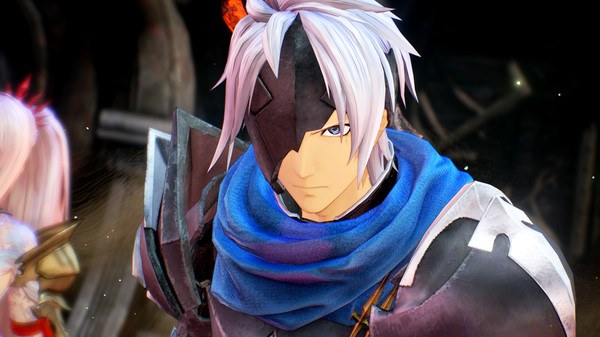
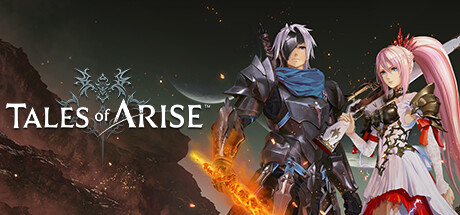
Alphen's Iron Mask offers an especially concentrated example of costume carrying political information. His face is concealed, and he is identified through a label that reduces him to a condition rather than a personal history. The mask makes his status as a controlled Dahnan visible while leaving the person behind it unknown. That design echoes the logic of enslavement: an individual becomes legible mainly through the role imposed upon him.
The concealment also limits what the viewer can read. A face often invites interpretation of emotion, age, or identity; the mask withholds those ordinary signs. It does not turn Alphen into an empty figure, but it shows how little room his circumstances leave for self-presentation. His body can be recognized as a worker and a captive while his particularity remains obscured. Costume here describes not just what someone wears but what the social order permits other people to know about him.
Shionne's appearance marks a different position
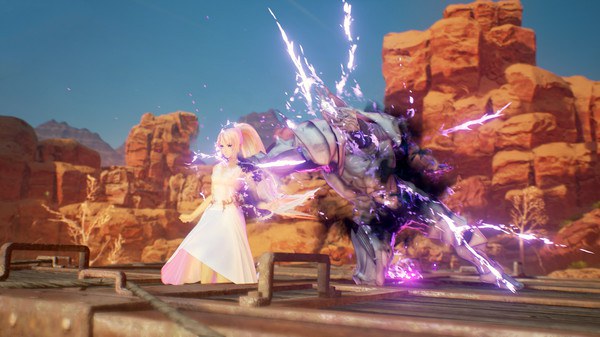
Shionne enters Calaglia as a Renan, but the story does not make her equivalent to the people who govern or benefit from Dahnan labor simply because she belongs to the ruling side of the divide. Her presence gives the visual hierarchy a person who is difficult to place by appearance alone. She is socially marked by her origin, yet her actions and aims complicate the assumption that every Renan will act in the same way.
Her thorns also turn the body into a conspicuous boundary. This is not the same visual information as a uniform or a badge of office: the thorns signal risk in contact, not a rank that grants authority. Keeping those signs distinct matters. A world may train its inhabitants to read group identity as destiny, but the early story asks the player to notice individual circumstances within those categories. Shionne's presence can complicate the divide without softening the violence that structures it.
Readable design should sharpen the politics
The visual hierarchy of Calaglia works best when it helps the player see the pressure exerted on Dahnans, rather than treating oppression as an attractive backdrop for adventure. Costume gives the story a fast way to establish distinctions, but the moral meaning comes from what those distinctions permit: who is ordered to work, who can claim power, and whose identity is compressed into a function. The game’s images become political information when they point beyond appearance to the unequal conditions beneath it.
That is why the Iron Mask is a compelling opening image. It makes the system's reduction of a person visible, while the story's attention to Alphen as an agent contests that reduction. Shionne, meanwhile, shows that a mark on the body can signal a personal limit without serving as proof of political innocence or guilt. Read together, these designs keep costume from being mere decoration. They ask the player to see the hierarchy clearly and then to examine what that clarity does—and does not—explain.
Primary work & further reading
Primary work: Tales of Arise. Character and story readings are editorial interpretations. The publisher reference below identifies the work and its premise.