Mugen versus Jin: two bodies in motion
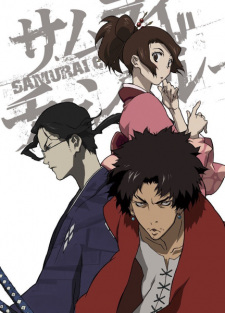
Mugen and Jin share a road but seem to occupy different physical worlds. Their clashes make improvisation and discipline legible through timing, space, and the way each man responds when a fight refuses to follow his terms.
Coverage: Covers the opening premise and early encounters; avoids later revelations and outcomes.
Two bodies, two rhythms
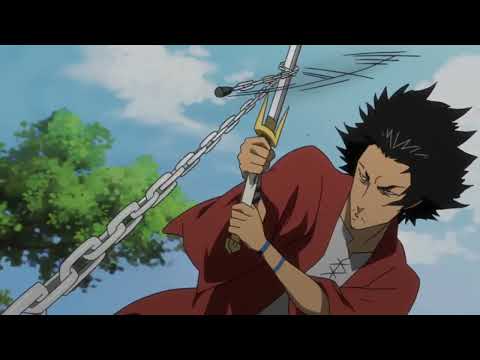
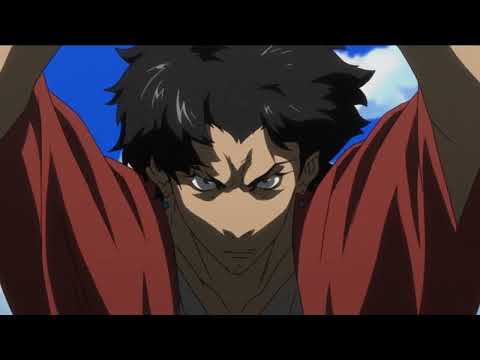
Mugen fights as if the next movement has not yet been decided. His balance looks provisional: a twist, a low angle, a sudden change of direction can turn apparent disorder into an attack. The animation gives his body a loose, elastic quality. He does not seem to travel along a clean line toward an opponent; he spills across the space between them, making the route itself part of the threat.
Jin’s movement offers a striking counter-image. His posture stays composed, and his actions read as deliberate choices rather than improvisations surfacing in real time. Where Mugen’s motion keeps changing its shape, Jin’s makes a clear line and commits to it. Their opposition is not simply wildness against skill. It is a difference in how each treats uncertainty: Mugen absorbs it into motion, while Jin tries to make the encounter intelligible through control.
The fight as an argument about space
That contrast shapes how the series stages their fights. Mugen’s restless movement unsettles the frame. He can come in low, turn awkwardly, or exploit a gap that appears only because his opponent expects a more familiar approach. The eye has to keep recalibrating where he is and what counts as an attack. His body makes the space feel unstable, as though the rules of distance might change with each beat.
Jin’s relative stillness makes space seem measurable. His discipline implies that a fight can be read: distance can be judged, an opening recognized, an answer delivered. This clarity is not safety. It can become a constraint when the opponent refuses to make the expected move. Putting the two together lets the show treat a duel as a clash between different ways of seeing, rather than a simple contest in which one fighter’s technique must be declared superior.
Editing refuses a single winner’s tempo
The visual rhythm does not let either man own the action for long. A sequence may let Mugen’s unpredictable bursts dominate, then give Jin’s economy the sharper emphasis. Cuts and pauses matter as much as motion: a beat of apparent calm can make the next lunge feel abrupt, while a flurry can become almost readable once the opponent finds its pattern. The editing turns tempo into pressure. The viewer is asked to feel the difference between choosing a rhythm and being forced to answer one.
This shifting emphasis also keeps their rivalry from becoming a diagram. If every exchange confirmed Mugen as freedom and Jin as order, their styles would be labels in motion. Instead, each man’s method contains a vulnerability. Improvisation can leave Mugen exposed to a clean response; disciplined expectation can be thrown off by an attack that arrives from an unusual angle. The fights make their strengths visible while also showing that a method only works in relation to what the other fighter does.
A shared road without a shared method
Their journey begins under circumstances that force the two men into the same story, but their physical disagreement remains vivid. They do not become interchangeable partners simply because they travel together. Even when the immediate danger passes, the contrast persists in how they occupy a room, approach a threat, and seem to imagine what should happen next. Their bodies carry the argument beyond the fight itself.
The result is a useful kind of friction. Mugen and Jin do not need a long explanation to establish their difference because the animation lets the viewer read it in every shift of weight and every decision about distance. Neither style is treated as a final answer. Their opposition gives the series a moving question: can a person act freely without becoming careless, or remain controlled without becoming rigid? By making that question physical, the show makes each encounter feel like more than a demonstration of swordplay.
Primary work & further reading
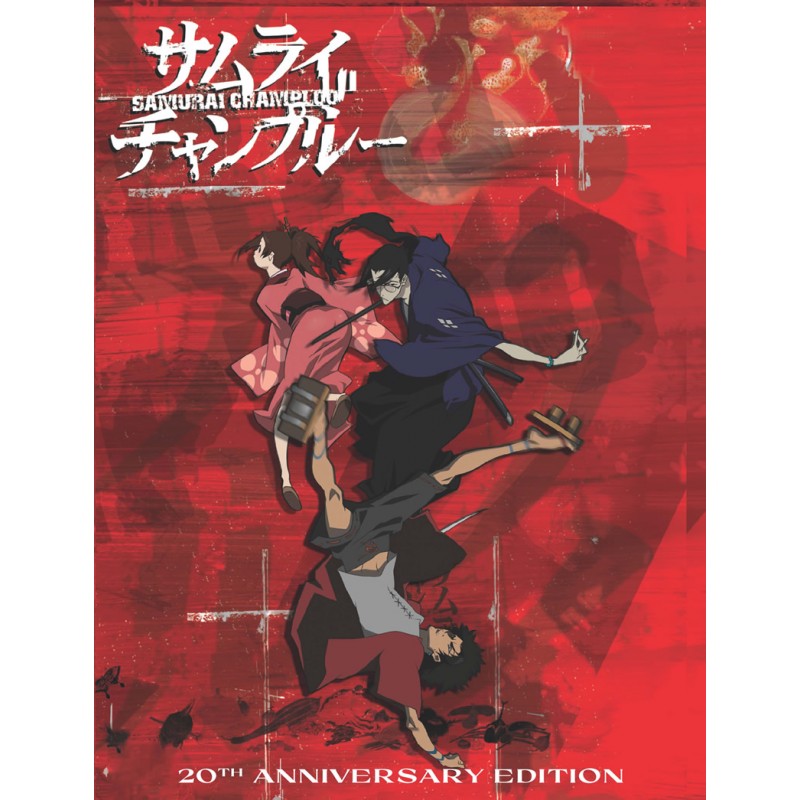
Primary work: Samurai Champloo. Character and story readings are editorial interpretations. The publisher reference below identifies the work and its premise.