Food keeps interrupting Samurai Champloo's heroic journey
Early in the journey, meals and money keep reminding the travelers that movement has a material cost. Food is not a comic detour from Samurai Champloo’s adventure; it shows how dependence and survival shape the group’s daily life.
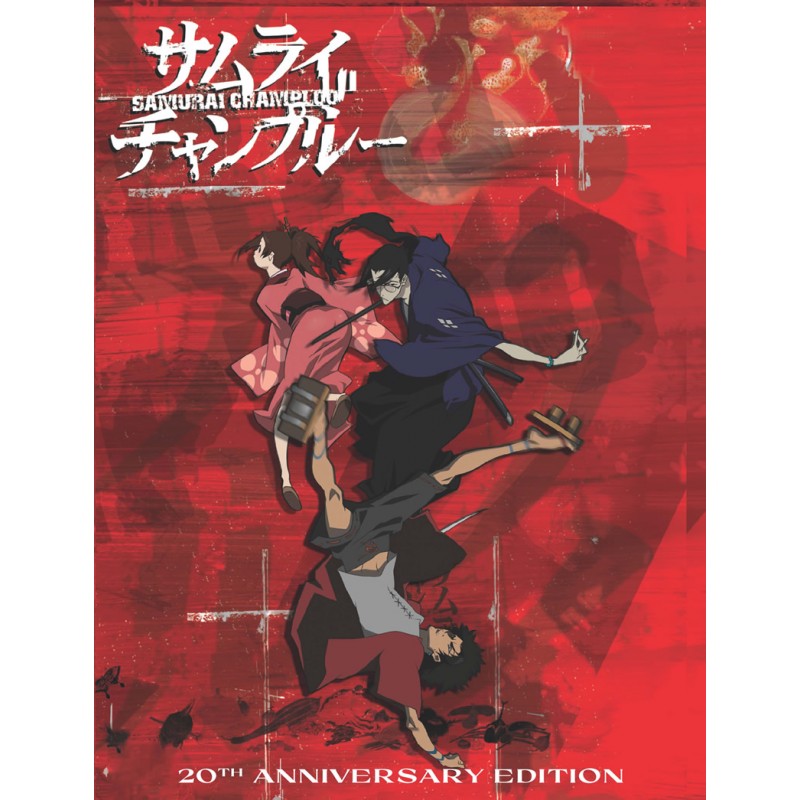
Coverage: Covers practical pressures of food and money in the opening stretch of the series; avoids later character outcomes and specific episode plots.
A journey has to eat
Adventure stories often make travel look frictionless. Characters leave one place, arrive at another, and the distance between them becomes a blank space reserved for scenery or summary. Samurai Champloo repeatedly gives that blank space weight by returning attention to food. Hunger is immediate, ordinary, and difficult to romanticize. It reminds the viewer that the journey is being made by bodies with needs, not by symbols moving across a map.
That emphasis changes the scale of the story. The group’s larger direction may be uncertain, but the next meal is a concrete problem. A goal can remain in the distance while an appetite insists on being answered now. Food therefore interrupts the heroic register without cancelling it. The interruption asks what it takes to keep traveling long enough for a quest to matter: not only courage or skill, but the means to get through another day.
Money turns appetite into negotiation
Once a meal must be paid for, hunger becomes part of the group’s social arrangement. Money sets limits on what the travelers can do and makes dependence visible. Their resources are not simply a background detail that the story can assume away; they affect how easily the companions can continue together. Even when the series treats these pressures with comedy, the practical stakes remain recognizable. Being hungry is funny only up to the point at which someone must solve it.
This makes the group’s cooperation less abstract. The travelers do not share identical motives, yet they still have to contend with overlapping needs. Who can secure food, who can pay, and who benefits from someone else’s effort are questions embedded in the trip’s ordinary rhythm. The show need not stage every instance as a moral reckoning. The repeated presence of cost is enough to show that movement depends on arrangements between people, even when no one has made a grand declaration of trust.
Meals interrupt the heroic image
The title of a journey can suggest noble purpose, but meals return the story to the awkward body. A traveler needs to stop, find food, and account for the fact that resources run out. Those pauses puncture the image of the self-sufficient wanderer. Mugen and Jin may be formidable, yet their strength does not remove the need for material support. Fuu’s place in the traveling group also becomes legible through the practical work that keeps the arrangement functioning.
This is not a claim that food defines the characters completely. It is a way the series measures the distance between heroic appearance and daily dependence. A dramatic fight can make a person seem briefly independent of ordinary life; the next hunger makes that independence temporary. By returning to meals, the show lets survival coexist with spectacle. The travelers can be dangerous and resourceful while still needing what any journeying person needs.
Practical dependence becomes the journey’s texture
Food’s recurring interruptions also shape the viewer’s sense of pace. They break up travel and conflict with needs that are not arranged to build toward a climactic answer. This gives the early journey a lopsided, lived-in rhythm: danger may demand immediate action, while hunger follows its own timetable. The contrast keeps the series from making every scene serve a single heroic arc. Some pressures persist because life persists.
Those pauses resolve into a quiet argument about adventure. The journey is not sustained by purpose alone; it depends on money, meals, and the cooperation required to obtain them. The companions’ practical dependence does not make their quest less meaningful. It gives meaning somewhere to take hold—in repeated exchanges, shared constraints, and the effort to keep going. By letting food interrupt the heroic journey, Samurai Champloo makes travel feel less like a clean line toward destiny and more like a life that must be maintained along the way.
Primary work & further reading
Primary work: Samurai Champloo. Character and story readings are editorial interpretations. The publisher reference below identifies the work and its premise.