Atom's reputation arrives before the boy himself
In Pluto’s opening investigation, Atom is already a name weighted with cultural memory before the story fully turns toward him. His place in Urasawa’s reworking of Tezuka makes reputation part of the mystery’s atmosphere.
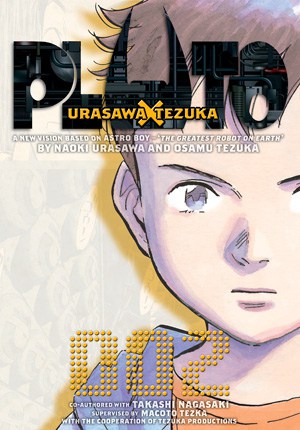
Coverage: Opening investigation only: discusses Atom’s legendary status, his connection to Tezuka’s Astro Boy, and his place in the case; avoids later memories and the final conflict.
A famous name enters the case first
Atom’s significance in Pluto begins before the reader needs a full account of him. The opening investigation follows Gesicht through crimes tied to the world’s most advanced robots, and Atom belongs to that extraordinary circle. His name carries a charge that exceeds an ordinary introduction: he is both a character within the case and a figure readers may recognize from another work. Reputation precedes personal detail, shaping expectations before the boy himself can do so.
That delay suits a detective story. Investigators encounter people through reports, relationships, and public standing before they encounter them face to face. Atom’s stature is part of the evidence surrounding the case, but it is not the same thing as knowing him. The distinction gives the opening a useful tension. The more important his name sounds, the more the reader has to separate the cultural legend from the individual whose place in the story is still being established.
Tezuka’s legacy shapes the act of recognition
Pluto is Naoki Urasawa’s reworking of Osamu Tezuka’s Astro Boy, and Atom connects the two works at the level of character as well as inheritance. For readers who know Tezuka’s creation, Atom arrives carrying an existing image: a legendary boy robot with a place in manga history. Urasawa’s mystery framing makes that familiarity active. Rather than treating the inherited figure as a self-explanatory icon, it asks what it means to meet him inside a world built around suspicion and loss.
For readers arriving without that familiarity, the same reputation works as a sign of importance within the story. Either way, the name creates a threshold between what is already known and what the opening investigation can reveal. The reference to Tezuka is not a reason to assume that every earlier version maps neatly onto this one. Pluto is its own telling, and its use of Atom asks the reader to see a familiar figure in a different narrative position.
Legend cannot substitute for a person
The danger of a celebrated reputation is that it can flatten the figure it describes. Calling Atom legendary tells us how the world regards him, but says little on its own about his temperament, choices, or relationships. Pluto’s opening context leaves room between that public status and the boy’s personal presence. The gap is productive: the reader can feel the importance assigned to him while remaining alert to the limits of what reputation can explain.
That distinction mirrors the investigation’s broader concern with the standing of robots. A character can be reduced to a title, capability, or public symbol, even when the case demands attention to individual lives. Atom’s fame makes him especially vulnerable to that reduction. He may represent a legacy to readers and a remarkable robot to the people around him, but neither role should end the act of looking. The opening makes his recognition a question: can a famous name give way to a particular person?
The opening keeps expectation in motion
Atom’s early place in Pluto works because the story does not have to spend every page explaining his importance. The case and the reactions it generates create an atmosphere in which his name matters before the narrative has exhausted what he means. This is a controlled use of anticipation: the reader senses that the celebrated figure belongs near the center of the inquiry, yet the investigation remains rooted in the evidence and the people Gesicht encounters.
The result is a meeting between two kinds of memory. Tezuka’s cultural legacy gives Atom a history outside Pluto, while Urasawa’s opening investigation supplies the immediate conditions in which this version must be understood. Neither cancels the other. The familiar name invites recognition; the detective structure asks for patience. Atom’s reputation may arrive ahead of him, but the story’s real work is to let the boy emerge from the symbol rather than disappear inside it.
Primary work & further reading
Primary work: Pluto. Character and story readings are editorial interpretations. The publisher reference below identifies the work and its premise.