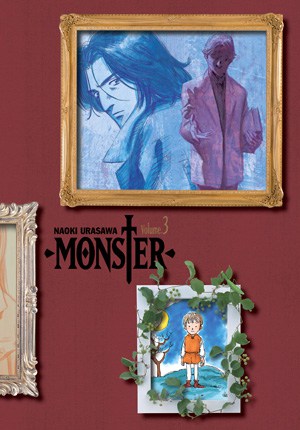
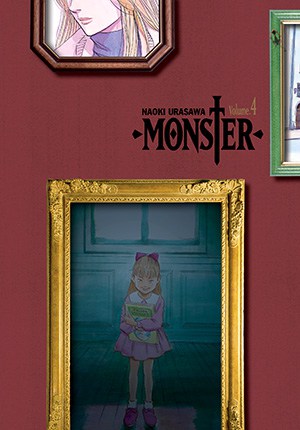
A doctor's choice: Tenma at the beginning of Monster
A surgeon’s decision to treat a gravely wounded boy over a politically favored patient turns an abstract oath into a test of who deserves care. Monster makes that choice the measure of both professional courage and institutional pressure.

Coverage: Opening premise only; discusses Tenma’s decision to operate on the boy rather than the mayor, without revealing later crimes or plot turns.
An oath meets a ranking system
At the start of Naoki Urasawa’s Monster, Kenzo Tenma is not choosing between medicine and cruelty. He is choosing between two patients, each of whom needs him, while the hospital’s leadership has already signaled which life carries greater institutional value. A politically important patient has been assigned priority; then a boy arrives with a grave head injury. Tenma’s decision to operate on the child makes the story’s ethical question immediate: what does a physician’s duty mean when the hospital treats influence as a reason to reorder care?
The conflict matters because Tenma’s professional position is secure enough to make obedience attractive. He is a gifted surgeon, valued by senior colleagues and engaged to the hospital director’s daughter. His status has been built inside the same hierarchy that asks him to honor its priorities. The choice therefore costs something before its consequences are known. Tenma does not merely state a principle; he risks the approval and future that have made his career feel orderly.
The boy is not an argument
Urasawa gives the boy a human presence before he becomes a symbol in anyone’s debate. He arrives with a real injury and a family caught in fear. Tenma’s attention is directed toward the person in front of him, not toward the status that another patient might confer on the hospital. That focus is the ethical force of the scene: a life does not become more urgent because a powerful person can reward the institution for saving it.
This also keeps Tenma’s action from reading as a simple performance of heroism. He is not making a speech to expose corruption, and the boy is not presented as an instrument for Tenma’s moral self-image. The surgery is work that must be done under pressure. The manga’s directness makes the principle practical: the patient is not a case for an argument about fairness, but someone whose chance depends on a doctor’s hands.
Power speaks through ordinary procedure
The hospital’s pressure is effective precisely because it takes institutional form. No villain needs to declare that rich or influential people matter more. The preference is communicated through who gets attention, whose needs are treated as urgent, and which choice is expected from a doctor whose advancement depends on staying in favor. In that setting, hierarchy can shape a decision without appearing to be a decision at all.
Tenma’s refusal reveals that professional routines are never entirely neutral when someone controls the order of attention. The scene makes a hospital corridor feel like a political space because reputations and access travel through it alongside patients. It does not require a detailed account of hospital policy to make the point. A powerful patient’s priority, a child’s emergency and a surgeon’s divided obligation are enough to show how status can enter a place devoted to care.
A choice that cannot promise certainty
The decision does not give Tenma a guarantee that the world will reward the right action. That distinction is central to Monster’s moral design. He can decide whom to treat, but he cannot know everything that will follow from saving a life. The act is principled because of what he can see and answer for in that moment, not because the narrative promises him a clean outcome.
By placing the first major ethical conflict inside a familiar professional setting, the manga gives its larger question a concrete scale. Tenma’s oath is not tested by a grand theory of good and evil, but by a boy on an operating table and a hierarchy urging him elsewhere. His first choice defines responsibility as attention to the person whose need is present, even when power offers a more comfortable direction. Monster begins by making that obligation visible; its unease comes from how little certainty can accompany it.
Primary work & further reading
Primary work: Monster. Character and story readings are editorial interpretations. The publisher reference below identifies the work and its premise.