Pluto makes a robot's face into a question of attention
Pluto’s robot designs invite the reader to look past the idea of a single machine appearance. Through restrained expressions and sharply varied forms, the manga makes recognition an act of attention rather than a reward for looking human.

Coverage: Opening volume visual analysis only; discusses the robot designs and expressive restraint without revealing the culprit, concealed identities, or later conflicts.
There is no single face called robot
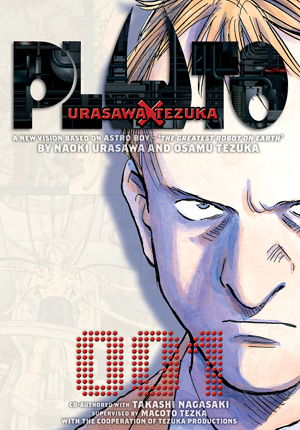
Pluto offers no uniform template for what a robot should look like. Gesicht’s composed, humanlike appearance differs sharply from the imposing presence associated with Mont Blanc and the forms of other advanced robots introduced in the opening volume. Those differences matter before any character speaks. A reader must adjust from one body to another, reconsidering what counts as a familiar face and what makes a machine legible as an individual.
The variation also keeps design from functioning as a simple ranking of humanity. A robot who resembles a person does not automatically feel more deserving of attention than one whose body signals strength or specialized purpose. The manga places them in the same social world and asks the reader to encounter each as a character. A face may encourage recognition, but design alone cannot settle the question of personhood.
Restraint gives small expressions room
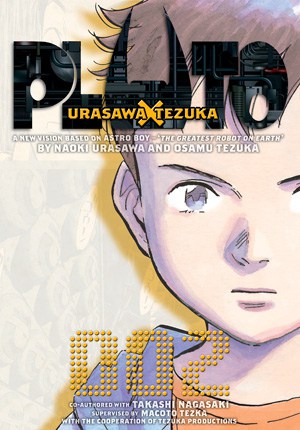
Many of Pluto’s expressions are held close to the surface. A face may remain composed through a tense exchange, or shift only slightly as a character receives difficult information. This restraint gives the reader time to notice posture and context instead of relying on an exaggerated emotional cue. The effect is especially pointed for robot characters, whose feelings may already be doubted by the society around them. Their expressions do not arrive as a test they must pass.
The quietness does not make the characters unreadable. It changes the reader’s task. A slight alteration in the eyes, angle of the head, or spacing between figures can carry more weight because the page has not spent its force on constant display. The manga trusts that attention can accumulate. The reader is asked to stay with a face long enough to notice that stillness may signal thought, uncertainty, or care rather than a lack of feeling.
Bodies tell different stories about use and identity
Robot design in Pluto often places a character’s physical presence beside the role associated with them. A powerful body can evoke a history of service or conflict; a more conventionally human silhouette can invite assumptions about social belonging. Yet the narrative does not let those first impressions serve as complete biographies. The visual contrast opens a question about how much of a person’s identity is assigned by their body, their work, or the memories others attach to them.
That question is visible in the contrast between public importance and private presence. Mont Blanc is introduced through his stature in the robot world and the shock of his destruction; Gesicht’s work, by contrast, unfolds through the measured gestures of an investigator. These forms generate different expectations, but both draw the reader toward an individual life. Pluto’s variety of robot bodies is not decorative world-building alone. It makes the act of looking a way to test the assumptions that accompany appearance.
Recognition depends on looking beyond the first impression
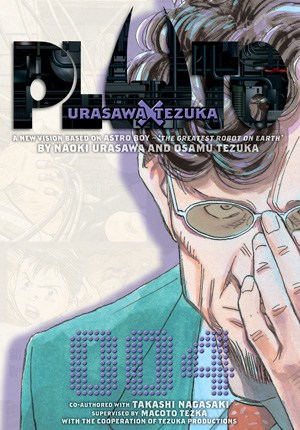
The manga’s expressive restraint is most effective when a visual cue refuses to explain itself. A face may be familiar in shape yet guarded in expression, while a less humanlike design can still carry a strong sense of presence. That friction keeps emotion from being reduced to resemblance. The reader has to connect expression with action and circumstance, just as Gesicht must connect evidence with a particular life rather than treating the victims as interchangeable entries in a case.
This makes Pluto’s visual approach part of its argument about robot grief. If the reader waits for a perfectly human face before recognizing feeling, the story has already exposed a limit in that standard. Its designs offer no shortcut: they ask for sustained attention across different bodies and degrees of expression. Recognition becomes something the reader practices, not a quality the character earns by looking familiar. The faces matter because the manga gives us reason to keep looking.
Primary work & further reading
Primary work: Pluto. Character and story readings are editorial interpretations. The publisher reference below identifies the work and its premise.