The weather forecast is a storytelling device in Persona 4
Persona 4 Golden makes a routine glance at the forecast carry unusual weight. Weather shapes daily plans, feeds the Midnight Channel’s unease, and gives rescue deadlines a rhythm the player can feel without knowing the whole mystery.

Coverage: Discusses the forecast, rainy conditions, the Midnight Channel, and rescue deadlines in general terms; does not reveal the culprit or final mystery resolution.
A forecast makes the ordinary day legible
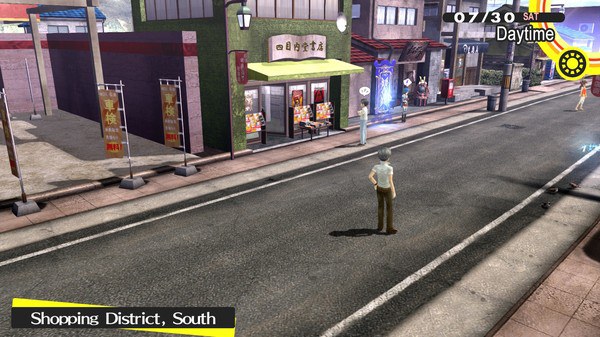
Checking the weather is a small act of planning: it helps someone decide what to wear, where to go, and whether the day may be inconvenient. Persona 4 Golden uses that familiar habit as part of its storytelling rhythm. The forecast gives the player a recurring point of orientation in a life shaped by school, errands, and social plans. Because it belongs to ordinary routine, its presence can carry tension without announcing that a major scene is beginning.
The forecast also makes time feel concrete. A day is not just one more turn in an abstract calendar; conditions outside can shape how the town feels and what possibilities seem close. Rain can make an otherwise familiar environment feel less settled, while the forecast lets the player anticipate that change. The effect is quiet but useful: the story trains attention on a commonplace detail, then lets that detail acquire significance through repetition.
Rain links the broadcast to anticipation
The Midnight Channel gives rainy nights an eerie charge. The premise turns television viewing into a strange event tied to weather, so a domestic routine becomes something the characters watch with expectation. The forecast is therefore not mere atmosphere. It helps create a pattern the player can recognize, and recognition brings its own unease: when conditions suggest that the channel may matter, an ordinary evening begins to feel like a question waiting to be answered.
That anticipation is stronger because the broadcast remains mysterious. The player can know that weather matters without knowing exactly what the image means or what its appearance will lead to. The game allows practical information and incomplete understanding to coexist. A forecast can make someone alert without making them omniscient, which is precisely the feeling the story wants: watching for a sign while lacking the tools to interpret it fully.
Deadlines turn planning into responsibility
Rescue deadlines make the calendar’s forward motion consequential. When someone is in danger, waiting has a cost, and the player must decide how to use the available days. That pressure gives the forecast a practical role alongside its mood. It helps the player read the passage of time and consider whether conditions are moving toward a moment when action matters. The routine of checking becomes a small part of deciding how urgently to respond.
This structure also links the mystery to the protagonist’s everyday commitments. Time spent with people, attending to school, or preparing for danger competes for the same limited days. The game turns scheduling into a question of responsibility: what can be done now, and what must wait? The forecast cannot make that choice for the player, but its repeated presence keeps the outside world in view while the player weighs personal plans against the need to help someone.
Routine is what gives the warning force
A recurring forecast gains force because it is embedded in ordinary life before the player needs to treat it as a warning. If every sign arrived with dramatic music and a clear explanation, there would be little room for anxious interpretation. Instead, the player learns to read weather as one piece of a pattern that includes household screens, public routines, and looming deadlines. What once seemed like background information can become charged, even though it remains a forecast about the same town.
That shift is the device’s storytelling achievement. The weather does not explain the mystery or guarantee that the player understands what comes next. It changes how familiar time feels. Rainy conditions, a possible broadcast, and a rescue deadline connect the uncanny to the work of planning a day. By making attention itself part of the tension, Persona 4 gives a routine check more narrative weight: the player looks at the forecast and feels the ordinary world counting down.
Primary work & further reading
Primary work: Persona 4 Golden. Character and story readings are editorial interpretations. The publisher reference below identifies the work and its premise.