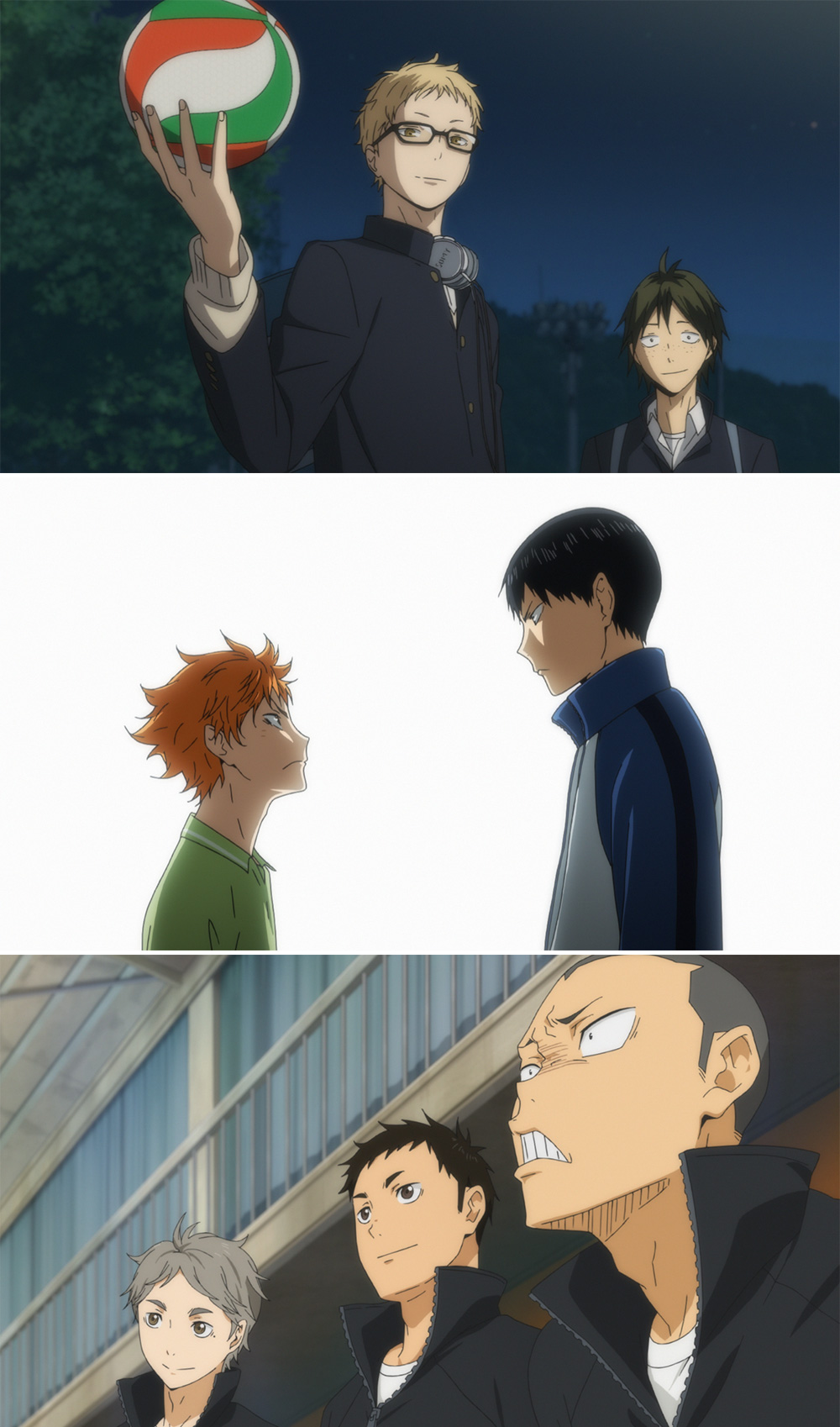
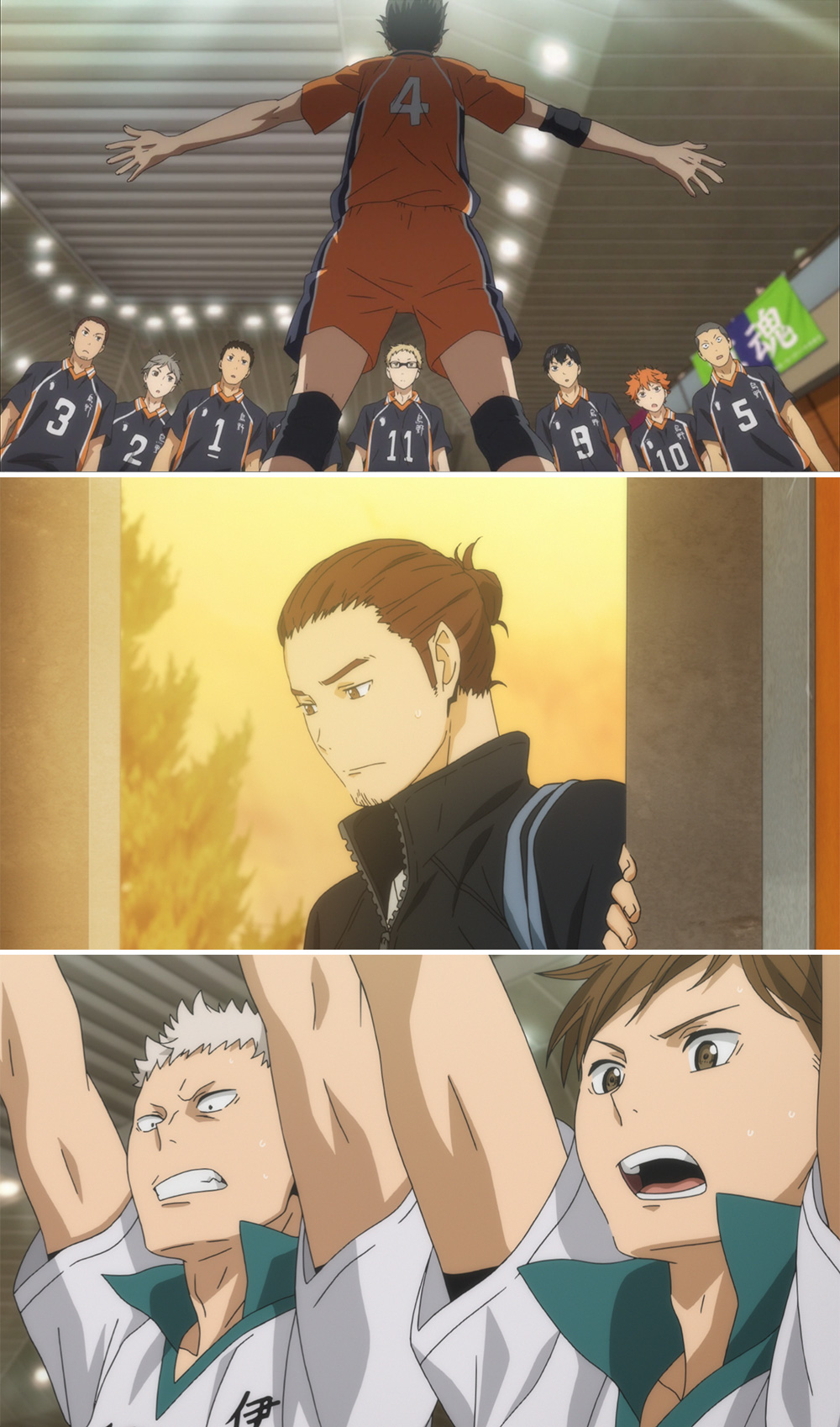
The first quick attack is a trust exercise
Hinata and Kageyama’s early quick attack is striking because it depends on two players surrendering part of their control. Its timing reveals both the promise of their connection and the narrow limits of what they yet understand.
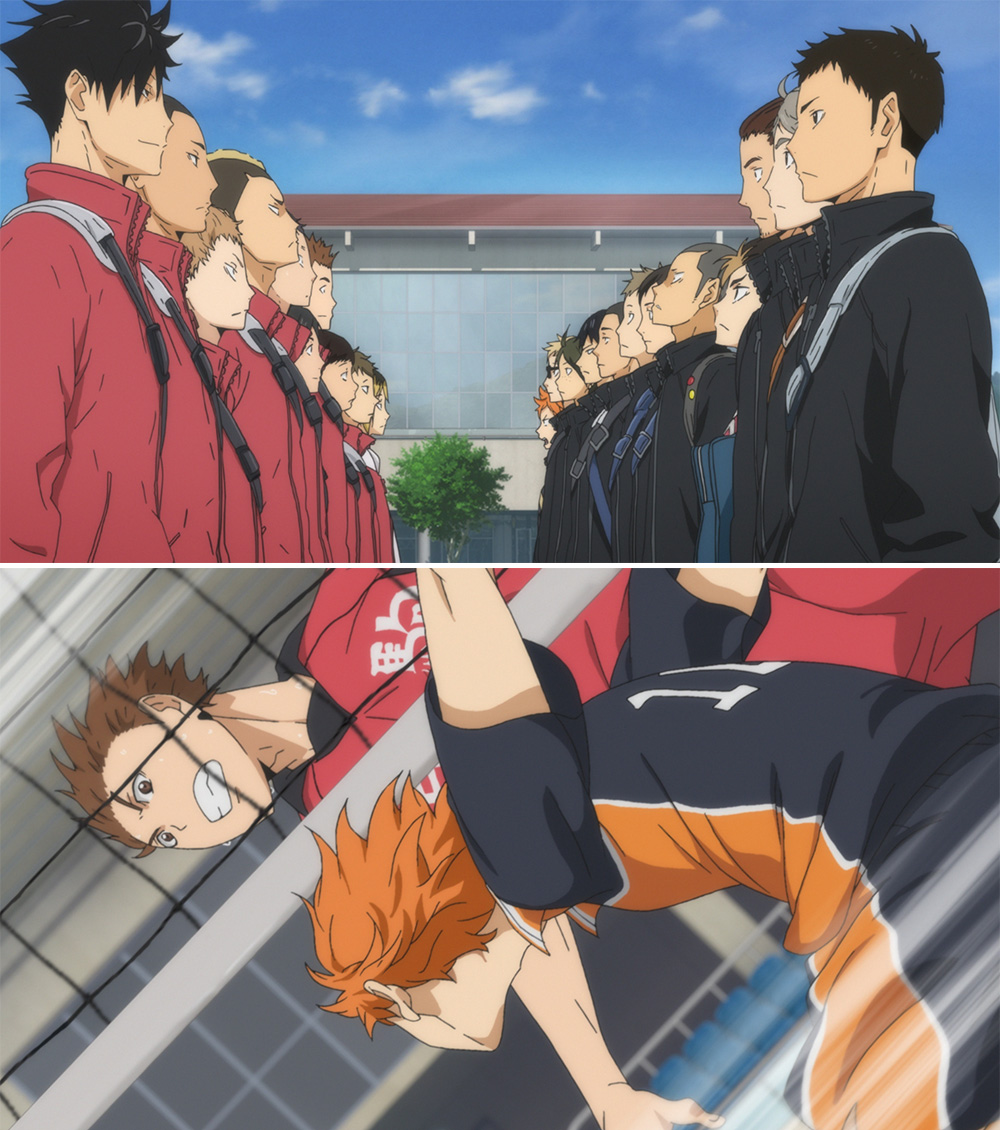
Coverage: Covers Hinata and Kageyama’s first quick attack and their early cooperation at Karasuno; no later match outcomes.
Speed makes coordination visible
The first quick attack turns an abstract team idea into a physical problem. Hinata has to move toward the ball at the right moment, while Kageyama has to deliver it into the space that movement will create. Their actions happen so close together that neither can wait to see the whole play unfold before committing. Speed is the visible effect, but coordination is the real achievement: each player begins before the other’s part is complete.
That compressed timing makes the attack feel different from a simple demonstration of Hinata’s jumping ability or Kageyama’s accuracy. The result belongs to the relationship between them. A high jump without a useful delivery is not enough, and a well-placed ball without an attacker ready to meet it cannot produce the same threat. The scene makes teamwork legible by showing how one player’s decision changes the meaning of the other’s movement.
Trust is built into the risk
For Hinata, the play asks him to commit his body before he has full control over the ball’s path. For Kageyama, it asks him to send the ball in reliance on Hinata’s movement rather than treating the set as a self-contained act. Neither can guarantee the other’s part. Their trust is therefore practical and immediate: each accepts a risk because the other is participating in a shared plan.
The sequence should not be mistaken for ordinary advice that attackers ought to close their eyes or ignore the ball. Its force comes from the particular connection the boys are trying to form, and from the dramatic concentration the story gives that attempt. The key is not blindness as a technique; it is the pair’s willingness to coordinate around a timing they are still learning. The quick attack makes that uncertainty exciting, but uncertainty remains part of the bargain.
A successful connection does not settle every difference
The attack gives Hinata and Kageyama a compelling proof of what their combined abilities might do. It does not mean they already understand each other in every way. Hinata brings speed and a powerful desire to reach the ball; Kageyama brings control and a demand for exactness. Their connection can produce a striking play while leaving plenty of room for conflict about who sets the terms and how each player is expected to respond.
That tension keeps the quick attack from being a magic solution to their partnership. The move is effective because it narrows the problem to a defined relationship between approach, delivery, and timing. It cannot resolve every challenge of playing on a team, where different personalities and changing situations require attention. The scene’s excitement rests partly on how much it does not solve: the pair have found a point of contact, not a complete vocabulary.
The play changes what cooperation can mean
Before the connection, Hinata and Kageyama can each treat volleyball as a contest of individual will: one wants to leap and score, the other wants to dictate the ball’s path. The quick attack forces their ambitions into the same brief interval. Hinata’s movement only matters if Kageyama anticipates it, and Kageyama’s precision only matters if Hinata can act on it. Their separate strengths become useful through mutual dependence.
This is why the first quick attack reads as a trust exercise rather than just a clever play. Trust here does not mean the boys are suddenly comfortable or that all doubt disappears. It means they are willing to make a consequential movement on the expectation that the other will meet them halfway. The attack gives that expectation a visible shape. Its speed is thrilling, but its deeper value is that both players begin to discover what their skill can accomplish when neither of them owns the whole action.
Primary work & further reading
Primary work: Haikyu!!. Character and story readings are editorial interpretations. The publisher reference below identifies the work and its premise.