Haikyu!! ALL Challengers turns player development into team design
The October 20 announcement opened store pre-registration for Haikyu!!’s first full-scale mobile training simulation. Its confirmed focus on development policies, player stats and custom team-building makes the game’s central question one of how individual growth shapes a lineup.
Coverage: Spoiler-light: discusses an officially announced mobile game and its disclosed systems, without match or story outcomes.
A sports sim framed around growth
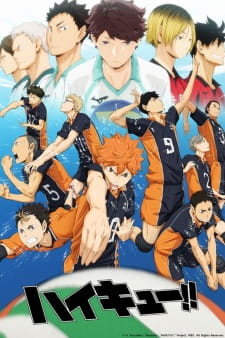
On October 20, 2026, the Haikyu!! anime portal announced store pre-registration for ALL Challengers, described as the franchise’s first full-scale smartphone training simulation. The notice says players can set development policies for more than 34 athletes, raise their stats, assemble a personal team and take it into matches. It also confirms a retelling of the story, an original app story and newly recorded voices. Those are the announced features; the portal did not give a release date or a detailed account of match controls. [1]
That outline points to a game organized around preparation. A development policy is a decision about what a player should become, while a lineup is a decision about how several players fit together. Putting those choices side by side gives the title a different emphasis from simply collecting familiar characters: its public pitch asks fans to imagine how training choices affect a team. The actual balance and depth of that system remain unknown until more gameplay detail arrives.
Development policy is a useful lens
The official description’s sequence—choose a policy, raise stats, form a team, then play matches—suggests a readable loop. First decide what a player needs to contribute; next develop that player toward the chosen role; finally see whether the team benefits from that decision. The portal does not name the policies or the statistics involved, so it would be premature to assign positions, optimal builds or specific numerical effects. But even at this high level, development is presented as a team-building input rather than an isolated level-up screen. [1]
A simple hypothetical illustrates the design question. If a lineup needs a reliable receiver, a player might direct growth toward the qualities the game makes relevant to receiving, then compare that option with another athlete who offers more attack. This is an example of how to think about a disclosed team-building system, not a claim that the app has those exact attributes or roles. A useful management game lets the player see the consequence of a choice clearly enough to revise it.
The roster meets the story
The announcement also promises both a return through the original story and new app-specific narrative. That pairing can serve two audiences: viewers who want to revisit the emotional arc of the anime, and players who want a reason for a new team to exist beyond repeating familiar scenes. The portal confirms those two story components but says nothing about their length, chronology or how they connect. Treating them as separate confirmed features keeps anticipation grounded without inventing a plot structure. [1]
For a volleyball series, team management naturally creates a bridge between character and system. A player’s development has meaning because another player shares the court, and a lineup becomes more than a list when its members cover different needs. The promise of original voices reinforces the connection to the anime cast, while the management framing gives the game a way to ask fans to make decisions of their own. Whether the app succeeds will depend on how well these pieces work together, not simply on how many familiar names it includes.
What the announcement leaves open
The official notice establishes pre-registration on the App Store and Google Play beginning October 20, a main visual, a promotional video, more than 34 athletes, development policies, team formation, matches, a story retelling, original story content and new voice recordings. It does not establish a launch date, supported regions, monetization model, match format, multiplayer features or how roster additions will work. These questions matter to anyone deciding how closely to follow the game, and the current announcement does not answer them. [1]
For now, ALL Challengers is most interesting as a translation of Haikyu!! from a story about coordinated play into a management premise built around choices before the whistle. The confirmed loop gives fans a reason to watch for further detail: what does a development policy change, how does an individual’s growth alter a lineup, and what feedback does a match give the manager? Those are better questions than assuming a favorite character will automatically be the strongest pick. The October announcement has introduced the framework; later official material will show how much agency sits inside it.
Primary work & further reading
Primary work: Haikyu!! ALL Challengers. Character and story readings are editorial interpretations. The publisher reference below identifies the work and its premise.