Why Spira needs Tidus's awkward questions
Tidus arrives in Spira with the confidence of a sports celebrity and the questions of a stranger. His confusion makes familiar customs newly visible, while blitzball gives him a way to connect before he knows the rules.
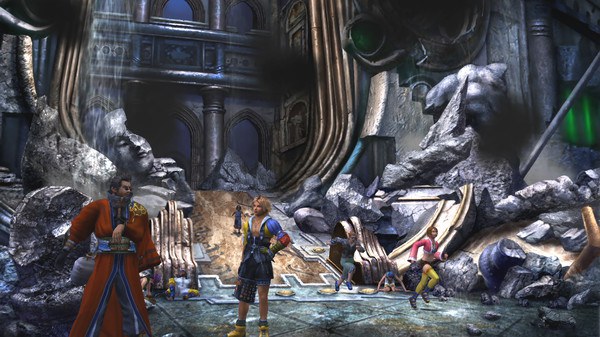
Coverage: Covers Tidus’s arrival in Spira and the early pilgrimage, including blitzball and his questions about local customs. No major identity or ending revelations.
A stranger makes the familiar strange
Tidus’s first usefulness in Spira is not strength or wisdom. It is that he does not know what everyone else has learned to accept. When he asks basic questions about the world, the answers expose how much local life depends on shared assumptions. Other characters can move through those assumptions without naming them; Tidus cannot. His bewilderment gives the audience a place to stand outside the culture and examine it.
That outsider position also limits him. Tidus can mistake patience for agreement and ceremony for needless fuss, because he has not yet learned what those customs mean to the people around him. The story does not make his ignorance a virtue on its own. It makes it useful when his questions create a moment of explanation, or when his instinctive reaction reveals the human cost of treating a custom as beyond discussion.
Blitzball is his first language
Before Tidus understands Spira’s religious vocabulary, he understands the attention gathered around a blitzball match. He arrives as a celebrated player, accustomed to crowds, competition and the physical grammar of the sport. Those skills are not just biographical decoration. Blitzball offers him a social identity that survives the shock of displacement: even in a place where he knows almost nothing, he can still recognize a contest and imagine what it means to play.
The sport also gives his confidence a public shape. Tidus is used to being watched, and that familiarity helps him participate when the world around him feels unreadable. His talent cannot explain Spira, but it lets him approach people without beginning from helplessness. The contrast matters: he can be conspicuously competent in one arena while remaining a novice in nearly every custom that surrounds it.
Questions meet the pilgrimage
As Tidus travels with Yuna and her guardians, his questions press against the pilgrimage’s established language. People treat the journey as a solemn duty with a recognized purpose; Tidus hears the certainty of that description before he understands its place in daily life. His interruptions make the group articulate what might otherwise pass as obvious. A ritual or expectation becomes more than background when someone asks why it is done and who is expected to follow it.
His questions do not instantly change anyone’s mind, and the story gains texture from that restraint. The guardians have histories and responsibilities Tidus lacks. Their answers can be practical, protective or impatient, rather than invitations to debate the whole culture. Tidus’s presence nonetheless widens the conversation. By asking from outside the tradition, he can voice discomfort that insiders might have learned to manage quietly.
Understanding begins with listening
The outsider role would be thin if Tidus only supplied the audience with easy objections. His greater challenge is to let other people’s answers complicate his first reactions. Spira is not a puzzle he can solve by spotting one irrational rule. It is a home to the people traveling beside him, shaped by grief, belief and obligations that he has not yet shared. Learning that difference asks him to listen as well as challenge.
That balance gives Tidus an unusual place in the early pilgrimage. His unfamiliarity keeps Spira’s customs visible, his sporting identity gives him a way to enter social life, and his questions keep the journey from feeling like a sealed tradition. He is useful because he neither knows enough to take everything for granted nor stands so far away that he cannot care. His role is to make room for both curiosity and attachment.
Primary work & further reading
Primary work: Final Fantasy X. Character and story readings are editorial interpretations. The publisher reference below identifies the work and its premise.