Steiner and the trouble with unquestioning duty
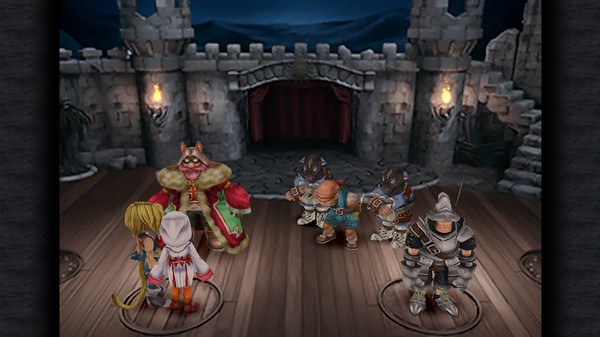
Steiner’s opening scenes turn royal service into a physical performance: armor clatters, movement becomes cumbersome, and each effort to control events risks comic disruption. The comedy also reveals a protective loyalty beneath his rigidity.
Coverage: Covers Steiner’s opening appearances and his loyalty to Garnet; avoids his later character arc.
The body announces the office
Steiner is introduced through the sound and bulk of his armor. The equipment makes his position legible before he needs to explain it: he is a knight, a representative of royal order, and a person who expects rules to guide action. But the armor also changes how he moves. It turns simple gestures into effort and makes his body occupy the scene with a clatter that can undercut his authority. He carries the institution on his person, quite literally, and the burden is difficult to ignore.
That physical comedy gives the character a useful contradiction. Steiner wants to be taken seriously, yet the game stages him in ways that make solemnity unstable. His movements can be earnest and awkward at once. The humor does not suggest he is secretly insincere; it shows how far his idea of duty is from effortless command. He has invested himself so completely in the role of royal guard that even his body seems obliged to perform it, whether or not the moment calls for ceremony.
Rigid rules meet a changing situation
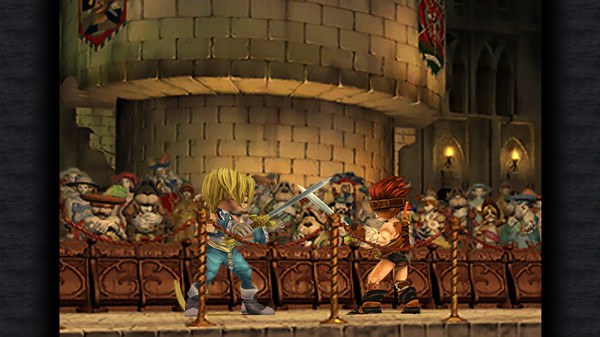
The Alexandria opening puts Steiner’s sense of order under pressure. He understands his responsibilities through rank, protocol, and the security of the royal household. These are not empty values: the queen’s court and Princess Garnet’s position carry real consequences, and someone charged with protection cannot treat danger casually. Yet the opening’s pace gives him little time to arrange events according to his preferred rules. He must react to a situation that is already moving beyond his control.
His rigidity is funny because it keeps colliding with circumstances, but it is also a practical limitation. A person who assumes that proper procedure will settle every problem may struggle when a person he serves has plans of her own. The game lets his objections and efforts become part of the scene’s momentum. His formal language and armored presence make him seem like an obstacle to improvisation, even as the story shows that his concern is sincere. Duty, in his hands, is both a compass and a set of blinders.
Loyalty becomes a kind of protection
Steiner’s loyalty to Garnet is more interesting than simple obedience because it gives his formality an emotional purpose. He is not attached to order only for the satisfaction of seeing rules followed. His office asks him to protect someone, and his attention to her safety shapes his decisions. That protectiveness can make him overbearing, especially when he reads a change in circumstances as a threat to be contained. Still, the impulse beneath the posture is care, not indifference.
This is where the comedy becomes affectionate without excusing his mistakes. A knight who clanks after a princess may look absurd, but the image also communicates persistence. Steiner keeps trying to remain near the person he believes he must guard, even when the scene refuses to let him occupy the clean, commanding position he imagines. His armor makes every attempt conspicuous. It can turn protection into a public performance, exposing how much he wants his role to be recognized. At the same time, his repeated effort suggests a loyalty that survives embarrassment.
The joke makes room for tenderness
Steiner’s opening characterization depends on the space between how he sees himself and how the player sees him. He believes in the dignity of his office; the game lets the armor, timing, and physical comedy test that dignity. Neither perspective cancels the other. If he were only ridiculous, his devotion would have no force. If he were only noble, the visual joke would lose its point. Instead, the humor invites the player to notice a person trying to do right through a role that leaves him few graceful options.
That combination makes his noisy armor more than a running gag. It is a visible sign of the price of treating duty as a complete identity: there is little room to move without announcing the role, and little room to distinguish obedience from protection. Steiner’s loyalty to Garnet gives the role a human center, even when his methods are stiff. In the opening, the joke is that a knight cannot move quietly. The more enduring insight is that he cannot care quietly either.
Primary work & further reading
Primary work: Final Fantasy IX. Character and story readings are editorial interpretations. The publisher reference below identifies the work and its premise.