Ranni's first meeting works because it is incomplete
Ranni’s optional appearance at the Church of Elleh offers a name, a gift, and a limited exchange. Its restraint makes the encounter memorable: the player receives something useful while the stranger remains difficult to place.
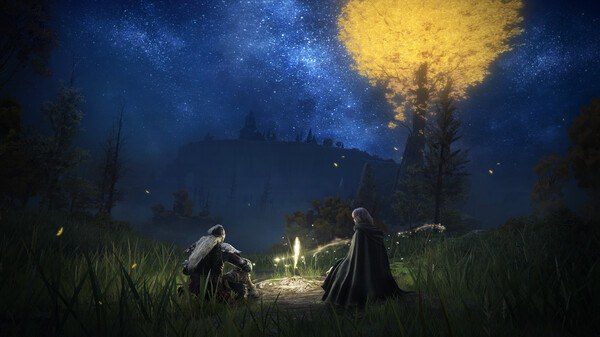
Coverage: Ranni’s early optional meeting at the Church of Elleh, her use of the name Renna, and the Spirit Calling Bell; no later quest or identity revelations.
An optional arrival leaves room for uncertainty
Ranni’s first meeting at the Church of Elleh is easy to miss, and that conditional presence shapes how it feels. The player may return to a place already associated with early exploration and find a stranger there, rather than meeting her through a compulsory scene that explains why she matters. The encounter can depend on the player’s progress and circumstances, so it feels like something that has become available rather than an interruption the game insists every visitor experience. Its optional quality invites attention without demanding allegiance.
The church itself gives the meeting a modest scale. This is not a grand audience or a dramatic introduction arranged around a crowd. Ranni appears in a place the player can recognize, and the conversation remains brief. Familiar ground becomes newly uncertain because someone unfamiliar has chosen to occupy it. The scene gains its quiet tension from that mismatch: the player has reason to feel oriented in the church, but the visitor’s presence and purpose resist an easy explanation.
The name Renna is an answer with limits
In the exchange, Ranni gives the name Renna. The alias supplies the player with something concrete to remember, yet it does not settle the larger question of who is speaking or why she has chosen this moment to appear. That partial answer suits a game in which conversations often sit beside silence and incomplete knowledge. A name can establish a social foothold without becoming a full account of a person. The player can address the stranger while remaining unsure what the encounter means.
The scene’s restraint also keeps the player’s response open. Ranni does not arrive with a long explanation that dictates how her appearance should be understood. Her manner reads as composed and self-contained, while the information she shares remains selective. That combination encourages curiosity, but it does not require the player to treat curiosity as certainty. The encounter offers a first impression rather than a verdict. Its incompleteness is not a puzzle the player must solve on the spot; it is a boundary around what this meeting is prepared to reveal.
The bell turns an encounter into a tool
Ranni gives the player the Spirit Calling Bell and the means to call upon spirit ashes. That gift makes the scene materially important without requiring a grand speech about its significance. The player leaves with an object that can change how certain encounters are approached, so the stranger’s visit has an effect beyond atmosphere. Yet the item does not explain the giver. Practical usefulness and personal mystery coexist: one can understand what the gift allows while still wondering why this person chose to offer it.
This pairing is carefully effective because the reward does not erase the strangeness of the meeting. If Ranni only appeared to explain herself, the scene would be a conventional introduction. If she only left an item behind, the player might treat the exchange as a delivery mechanism. Instead, the bell ties the encounter to the player’s future actions, while Ranni remains a distinct presence rather than a label attached to equipment. Her generosity offers a reason to remember her, but not enough evidence to decide what kind of relationship that generosity implies.
What remains unsaid gives the scene its shape
The first meeting works because it stops at a productive point. It makes Ranni noticeable through the contrast between her quiet arrival and the practical gift she provides, then leaves the player to carry both details forward. The church is still a place in Limgrave, but it has become a place where an unfamiliar person appeared under another name. The bell is useful, but its usefulness does not close the question of the giver’s intentions. Each element points beyond itself without resolving what lies there.
That incomplete shape gives the scene room to matter without overstating what it has shown. Ranni is introduced through a brief exchange in which recognition remains provisional: the player has a name to use, a gift to accept, and no complete account of the stranger. The encounter’s strength lies in letting those facts stand together. A first meeting need not explain a character to make that character memorable. Here, the unanswered space is not a missing ending; it is the precise boundary that makes the beginning feel alive.
Primary work & further reading
Primary work: Elden Ring. Character and story readings are editorial interpretations. The publisher reference below identifies the work and its premise.