Limgrave teaches Elden Ring through things you can walk past
Limgrave makes curiosity practical by putting danger, shelter, and alternate destinations within sight of one another. Its opening lessons emerge through choices the player can postpone, abandon, or approach from another direction.
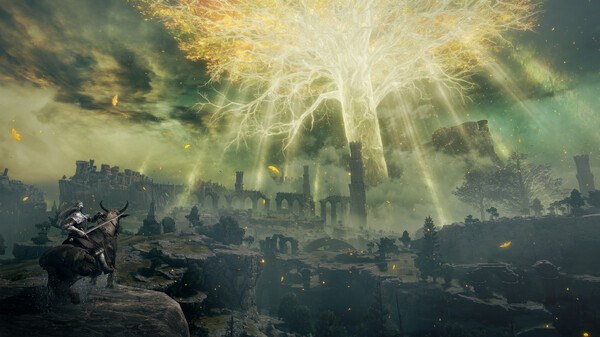
Coverage: Early Limgrave exploration, including the Tree Sentinel, Sites of Grace, and routes toward Stormveil Castle; no later story revelations.
A warning with room around it
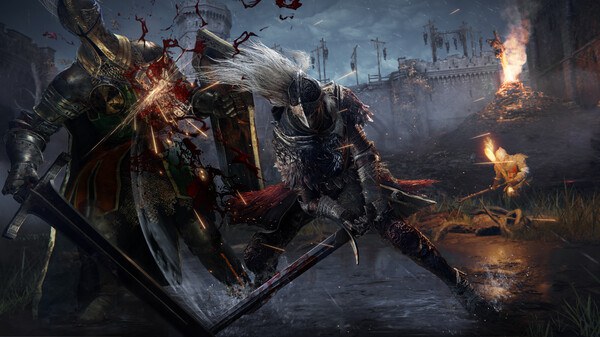
The Tree Sentinel is one of Limgrave’s first unmistakable statements about what kind of journey Elden Ring offers. The gold-armored rider moves across open ground near the starting approach, large enough to command attention and exposed enough to invite a challenge. The game does not make defeating him the price of seeing the next stretch of the world. A player can fight, retreat, circle wide, or leave him for another time. That gap between invitation and obligation is the lesson: a visible threat is a decision, not an order.
This is a different kind of opening from a corridor that seals itself behind a boss. Limgrave gives the player room to learn that noticing an enemy does not settle what to do about it. The Sentinel’s scale and speed make an early confrontation feel daunting, but his position also teaches that landscape can be part of a response. Distance, cover, and the ability to move elsewhere become useful before the player has mastered every weapon or spell. The encounter introduces risk as something to weigh, rather than a gate that must immediately be forced.
The landscape keeps offering alternatives
Limgrave’s open routes make that first choice matter beyond the Sentinel. Roads, slopes, ruins, and scattered landmarks suggest destinations without turning every suggestion into a mandatory sequence. The world’s invitations compete for attention: a path may seem promising, while an enemy camp or a distant structure raises new questions. Because the player can often turn aside, exploration becomes an act of selection. The question is not only whether a place can be reached, but whether it is the place worth approaching now.
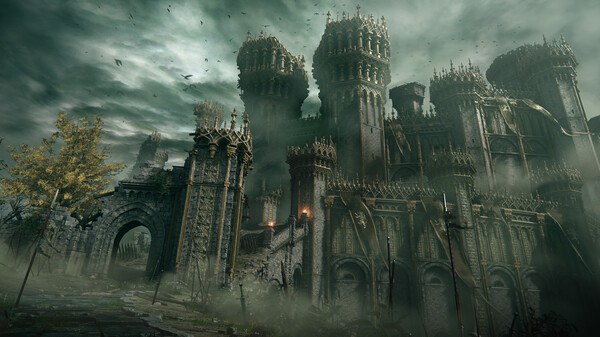
That flexibility makes getting lost feel different from failing to follow instructions. A detour may bring a fight, a discovery, or simply a new view of familiar ground. Even when the player decides to pursue the main direction toward Stormveil Castle, that direction gains meaning because other possibilities remain visible. Limgrave does not need to hide its alternatives to create momentum. It lets the player feel the pull of a destination while keeping the surrounding world available as a genuine competing choice.
Grace marks pauses, not a route map
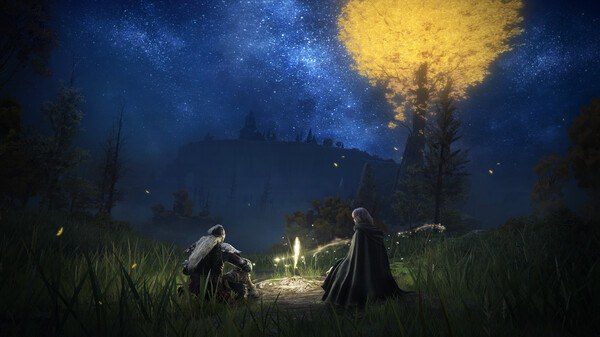
Sites of Grace help make this freedom legible. Their guidance can point toward an onward direction, but it does not replace the player’s judgment about when to follow it. A resting place offers a pause and a sense of orientation in a world that rarely stops to explain itself. The contrast is important: grace may suggest where the larger journey points, while nearby terrain continues to hold its own local questions. The player can acknowledge a direction without committing every step to it.
Because a Site of Grace is also a place to stop and recover, it shapes the pace of exploration as much as its geography. A dangerous stretch feels different when a known resting point is nearby; a detour feels more manageable when the player can regroup. Yet grace cannot tell the player whether a hostile patrol, a ruin, or an empty hillside deserves attention. That uncertainty is productive. The guidance supplies a broad current, while the player decides which smaller experiences to follow before being carried onward.
Progress begins with choosing what can wait
The Tree Sentinel, the branching terrain, and the guidance of grace all support one idea: progress in Limgrave is partly the skill of postponement. Turning away from a difficult enemy does not erase the encounter. It preserves the possibility of returning after learning more about combat, finding a better approach, or simply wanting to test oneself. Likewise, taking a side route does not necessarily mean abandoning the larger journey. It means the player has decided that another question is more compelling at this moment.
That structure gives the opening its particular patience. Limgrave teaches by putting readable choices in front of the player and allowing their consequences to unfold through movement. It does not make every landmark a lesson with a single correct answer. Instead, it establishes a habit: look, judge, and remember that a destination can wait. The world feels open because its alternatives have practical weight, and the player’s freedom feels earned because it requires choosing where attention goes.
Primary work & further reading
Primary work: Elden Ring. Character and story readings are editorial interpretations. The publisher reference below identifies the work and its premise.