Elden Ring: use the map to choose a direction, then explore
A practical Elden Ring guide to combining Guidance of Grace, map markers, and landmarks into a flexible exploration plan without treating every icon as an obligation.
Coverage: Spoiler-light; discusses gameplay systems without story outcomes.
A marker is a question, not an order
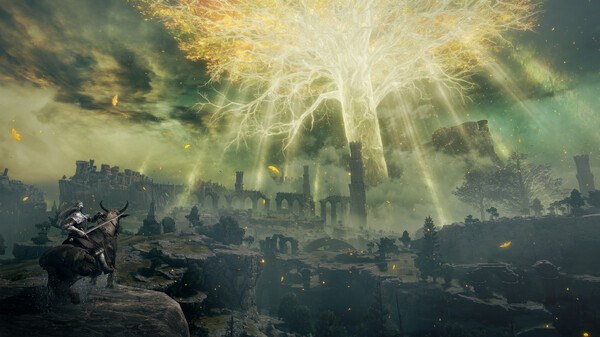
Elden Ring’s open world can make direction feel like a choice between following the main route and wandering without a plan. Bandai Namco explains that Guidance of Grace points toward key locations and appears on the map after the area’s map fragment is found. The same guide describes map markers and beacons as tools for remembering places and orienting yourself. Together, these features make the map a way to frame a next step, rather than a checklist that decides the whole journey. [1]
Start by asking what kind of session you want. If you want story progress, use the golden guidance as a broad direction. If you want equipment or a change of pace, choose a visible landmark or mark a place you passed. You can set one destination without promising yourself that every detour on the way must be cleared.
Read the terrain and the icon together
The official guide distinguishes several map locations by their likely contents: caves, tunnels, catacombs, churches, ruins, and other places each suggest different kinds of exploration. It also notes that not every boss or encounter is marked. An icon is therefore a hint about the kind of activity nearby, not a complete inventory of everything the landscape contains. [1]
A useful route has a main intention and a fallback. You might head toward a Grace trail while checking one cave or ruin that lies nearby. If the detour becomes costly or uninteresting, return to the route. If it offers a useful item or a satisfying challenge, mark the place and continue. This keeps exploration purposeful without turning curiosity into a debt of unfinished symbols.
Use a beacon to preserve your own discoveries
Bandai Namco describes placing a beacon on a map marker so that its location appears on the compass and as a visible light in the world. This is especially helpful when a remembered point is not a formal objective: a route you want to retry, a landmark you have not reached, or a place whose entrance was easy to lose among the terrain. [1]
For example, if you spot a structure while following the Grace trail but do not want to leave your current route, mark it and keep moving. Later, when you have more time or a different build, the beacon turns a fleeting observation into a deliberate choice. It also lets you distinguish your personal plan from the game’s own guidance.
Let difficulty inform the route
The Bandai Namco guide warns that enemies in different zones can be markedly more dangerous and suggests using the runes gained from common enemies as one rough clue when comparing areas. That is an informal heuristic rather than a guaranteed difficulty scale: enemy type, equipment, and play style all affect how an encounter feels. Still, if one region consistently overwhelms you, that is useful information. [1]
Choose a nearby alternative, improve your equipment or flask resources, or simply return later. The point of an open map is that progress can come from changing the question. A strong exploration routine is small: pick a direction, notice one meaningful detour, leave a beacon when you want to remember it, and reassess when the world pushes back. The map helps you keep agency; it does not need to remove uncertainty.
Primary work & further reading
Primary work: Elden Ring. Character and story readings are editorial interpretations. The publisher reference below identifies the work and its premise.