Elden Ring jump attacks make height and stamina part of the opening
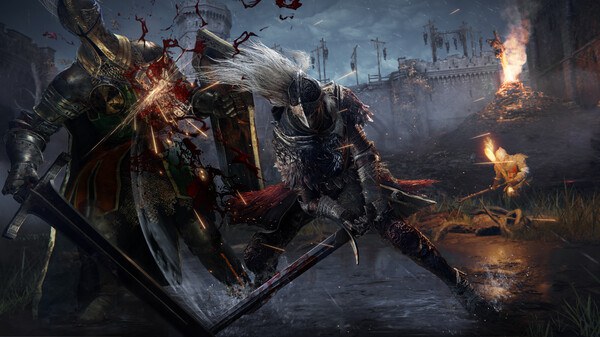
A jump attack in Elden Ring can do more than add another strike. It changes spacing, avoids some incoming attacks, and contributes stance damage, making the moment of takeoff part of the decision.
Coverage: Spoiler-light: this guide discusses mechanics without major story revelations.
A jump is an approach, not a promise
Bandai Namco’s combat guide describes jumping as a way to avoid some attacks and close distance, while warning that it costs a sizeable amount of stamina. A jump therefore trades a resource for a change in position. It can be useful when an enemy’s attack leaves a clear arc or when a gap makes an ordinary swing unlikely to connect, but it is not a universal dodge button. The attack that follows still commits the character to an animation. [1]
The same guide explains that jumping attacks increase stance damage and can be combined with some charged attacks. This gives the move two possible jobs: reach an opponent and pressure its stance. Those jobs overlap, but they are not identical. A jump may put you closer without creating a safe hit, and a stance-focused attack may be a poor choice if the enemy is already beginning a fast follow-up. Think about the landing point as carefully as the takeoff. [1]
Look for a readable attack window
A practical opening is one where you can see both the incoming threat and the recovery that follows it. Against a broad swing that passes above or beside you, a jump can preserve forward motion and leave you close enough to answer. Bandai Namco notes that jumping may avoid some attacks, not all of them; use the enemy’s actual motion as evidence. If the hitbox catches the jump, if the attack tracks your landing, or if a second strike arrives quickly, the same choice may be punished. [1]
This is why a jump attack is best treated as a response to a particular move rather than a default opener. Watch one sequence first. Does the enemy pause after a heavy swing? Does the attack travel at a height that a jump can clear? Can you land within reach without crossing another hazard? The answers vary by enemy and weapon, so a short observation can be more valuable than repeating the same jump on every approach.
Count the commitment and the exit
The developer-publisher’s guide emphasizes that Elden Ring queues inputs and asks the player to commit: after a heavy attack begins, another action may have to wait for the animation to finish. That warning applies to jump attacks too. Landing a hit is only half the exchange; ask whether you can recover, dodge, or move clear before the next enemy action. A jump that deals stance pressure but leaves you trapped in a long recovery may be a poor trade. [1]
Stamina makes the exit part of the calculation. If the jump and attack consume most of the available reserve, you may have little left for a follow-up defense. The official starter guide notes that stamina limits actions that consume it and refills over time. Before jumping, consider whether you are spending the reserve needed to respond after landing. A modest attack with room to retreat can be more productive than an ambitious strike that leaves no answer. [2]
Use a repeatable test, not a guaranteed combo
When learning an enemy, test the idea in a controlled way: watch a single attack pattern, jump only when the wind-up is clear, and note whether the resulting strike connects and leaves room to move. If it works once, try again only when the setup is comparable. Enemy position, stamina, weapon reach and the timing of the next attack can all change the result. The test is a way to learn a window, not proof that every jump attack will break stance or interrupt the opponent.
The useful lesson is that Elden Ring’s jump combines movement and offense, but asks you to pay for both with timing and stamina. Use it to cross a known gap, avoid a specific attack, or build stance pressure when the landing is safe enough. If the reason for jumping is only that the button is available, pause and read the enemy first. The opening is something you recognize; the game does not make it safe merely because you went airborne.
Primary work & further reading
Primary work: Elden Ring. Character and story readings are editorial interpretations. The publisher reference below identifies the work and its premise.