Elden Ring: read the opening before spending a guard counter
A practical Elden Ring guide to treating a guard counter as a deliberate response: block a readable attack, check for a follow-up, and spend the heavy counter only when the opening is real.
Coverage: Spoiler-light; discusses combat controls and enemy openings without story outcomes.
A counter is a commitment, not a reflex button
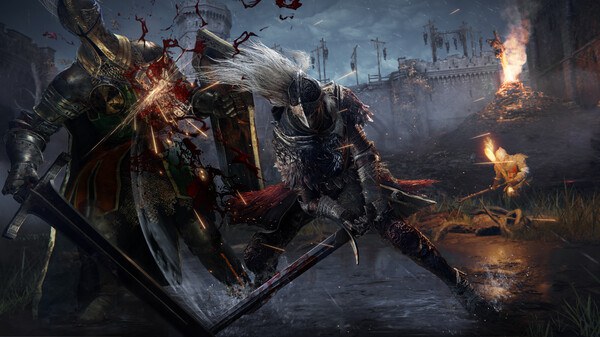
Elden Ring’s guard counter is easy to understand and easy to overuse. Bandai Namco’s starter guide describes the input as a heavy attack immediately after guarding an enemy strike, and says it can break an opponent’s stance. The combat guide adds the important condition: a counter has a slow, powerful swing, and using one after every block can leave you open to the next attack. The mechanic rewards recognition, not just reaction. [1] [2]
Think of the block as gathering information. It tells you that one attack has reached your defense; it does not guarantee that the whole enemy sequence is finished. Before pressing the heavy-attack button, ask whether the opponent has recovered, whether another blow is already beginning, and whether your stamina can support the exchange. The useful opening is the interval in which your answer can finish before the enemy’s next threat.
Read the sequence, not only the first impact
A simple practice routine is to defend once and watch what follows. Some enemies end a short move with a visible recovery. Others continue into another swing, change direction, or delay their next hit. The guide’s warning about follow-up attacks matters because the counter animation is a commitment: once you start it, you cannot instantly cancel into a dodge. The opponent’s whole sequence, rather than the first contact, determines whether the counter is safe. [2]
For example, picture a large foe that brings a weapon down once, pauses, then sweeps across the floor. If the pause is only the space between those two attacks, countering there can trade your health for a chance at stance damage. If you wait through the sweep and see the foe settle afterward, the same input may become a purposeful punish. You are not trying to memorize a universal timing. You are learning to distinguish an animation that looks finished from a sequence that is finished.
Spend stamina on the exchange you want
Blocking has a resource cost too. Bandai Namco explains that a shield’s Guard Boost affects how much stamina is drained when it absorbs a hit, and that running out while blocking can leave the player vulnerable. Its guide also distinguishes shields by blocking and parrying strengths. Those details make the counter a three-part choice: can your equipment absorb this attack, will enough stamina remain, and is the follow-up window long enough for the heavy swing? [2]
A shield that makes a block possible does not make every block free. If a string of attacks has already consumed much of the stamina bar, create distance or use another defense rather than adding a counter to an exhausted position. A strong counter after a depleted guard can be less valuable than preserving enough stamina to avoid the next hit. The point is to judge the whole exchange, not just the damage the counter might deal.
Use the stance break as a result, not a promise
The official guide says guard counters can cause substantial stance damage, but it does not promise that each counter will break every enemy. It also identifies charged heavy attacks and jumping heavy attacks as other ways to build stance pressure. Treat a counter as one part of a plan: repeated safe opportunities may create a break, while a dangerous opportunity may cost more than it returns. [2]
A compact decision check helps: first identify the enemy’s complete attack pattern; next decide whether your block left enough stamina; then confirm that the opponent has actually entered recovery; finally choose counter, retreat, or another response. If the break happens, move into position for the critical hit the game allows. If it does not, reset and observe instead of forcing another swing. This turns guard countering from a button habit into a readable combat choice.
Primary work & further reading
Primary work: Elden Ring. Character and story readings are editorial interpretations. The publisher reference below identifies the work and its premise.