Chilchuck is here to do a job
Chilchuck’s early role shows how a party depends on specialist judgment before danger turns into spectacle. His boundaries and trap expertise make invisible labor visible as skilled work with real responsibility.
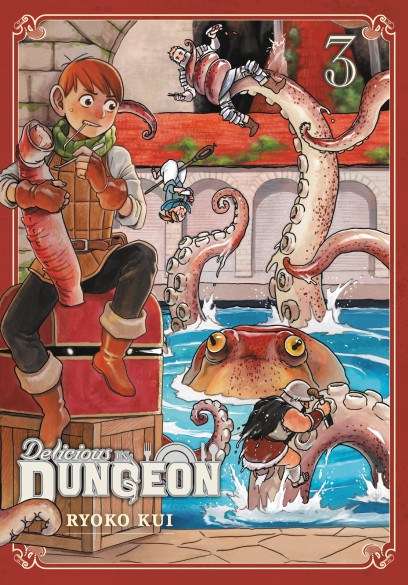
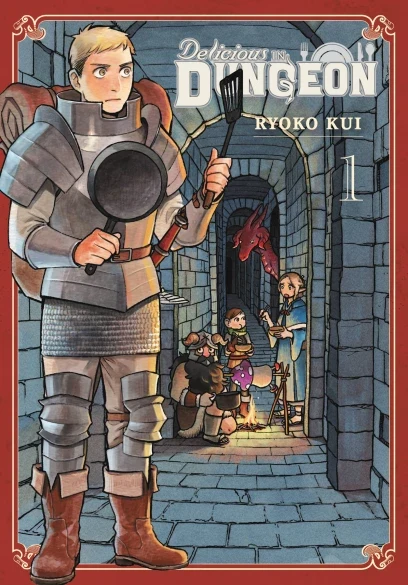
Coverage: Opening volume and early party scenes; covers Chilchuck’s trap work and role in the group without later personal revelations.
Danger often begins before the fight
A dungeon party can look brave when it faces a monster in the open. Trap work belongs to an earlier, less visible stage: noticing that a corridor or doorway may be dangerous before the group blunders into it. Chilchuck’s role matters because he attends to that threshold. His expertise changes what the others are able to do next, even when his work produces no dramatic clash for the story to celebrate.
This is a useful distinction in an adventure built around exploration. The party’s progress depends on recognizing hazards as part of the environment rather than treating every threat as an opponent that can be met with force. Chilchuck contributes specialized judgment to that process. The work calls for careful observation and a sense of how spaces can be made dangerous. By placing him in this role, the manga gives prevention a place alongside combat as a form of courage and competence.
A specialist is not a portable tool
Chilchuck’s work is skilled labor, not an interchangeable service the rest of the party can demand without limit. His boundaries make that distinction legible. He has his own view of what he is responsible for and how his expertise should be treated. The group benefits from his ability, but benefit does not make him an instrument. His professionalism includes the terms on which he offers his work.
That emphasis gives the party’s relationships more texture. In a crisis, it is tempting to assume that everyone should simply do whatever the group needs. Chilchuck’s manner resists that assumption. He can be committed to the expedition while remaining clear about his role and expectations. The combination is more interesting than either total detachment or unquestioning compliance. It presents cooperation as something adults negotiate, with respect for the person whose specialized knowledge is making the plan possible.
Precision creates room for everyone else
When Chilchuck handles traps, he gives the other adventurers a chance to avoid spending their energy on a preventable emergency. That contribution is easy to underestimate because successful prevention tends to look like nothing happened. Yet the absence of a sprung trap is an outcome produced by someone’s attention. The story’s early party scenes let the reader see why such work matters: safety depends on people taking seriously the risks that others may not notice.
His role also clarifies the division of labor within the group. Laios may focus on monsters, Marcille on magic, and Senshi on preparing food; Chilchuck’s specialty addresses another condition of survival. These roles are not a ranking of who matters most. They are ways the party’s different kinds of knowledge fit together. The expedition gains resilience when it does not ask one person to cover every problem, and Chilchuck’s work makes that interdependence concrete.
Professional care without sentimentality
Chilchuck does not need to frame his trap work as an act of affection for it to help the party. The care is present in the quality of attention he brings to a shared danger, while his practical attitude keeps the relationship grounded. This is not a story of a specialist who forgets himself for the sake of the group. He contributes through competence and retains his own perspective on the arrangement.
That balance is what makes his role feel like a profession. A professional has knowledge that others rely on, and that reliance should come with recognition of the work and the worker. The manga’s early portrayal of Chilchuck asks the reader to notice what adventure often leaves in the background: someone must assess the route before the heroic advance begins. His boundaries do not weaken the party. They help define a fairer, more functional form of cooperation, one in which expertise can be trusted because the person providing it remains visible.
Primary work & further reading
Primary work: Delicious in Dungeon. Character and story readings are editorial interpretations. The publisher reference below identifies the work and its premise.