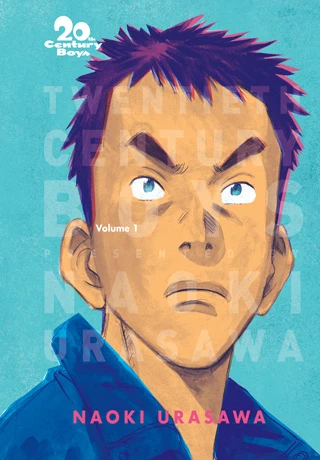
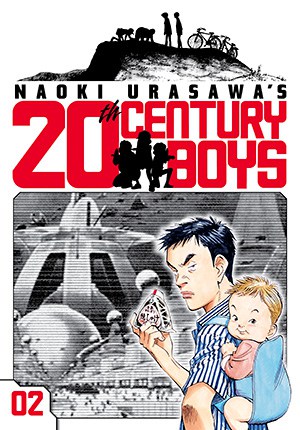
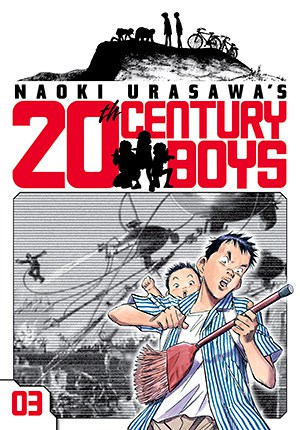
The childhood Kenji and his friends don't remember alike
The old days in Kenji’s circle are not a settled record but a collection of memories with different owners. The manga draws suspense from what its characters recall, overlook and cannot quite agree on.
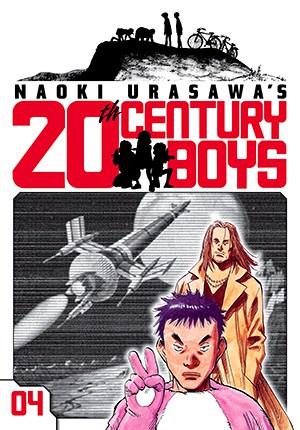
Coverage: Opening memories and premise-level recollection among the childhood friends; no definitive mystery solution.
Memory arrives with the warmth of a story
The childhood past in 20th Century Boys has the appealing shape of a tale repeatedly told among friends. There are games, ambitions and a sense that the group once shared a world all its own. Looking back, those elements can feel clearer than the years that followed. Nostalgia compresses a messy childhood into a few vivid scenes and objects, making the past seem like a place the adults can visit together.
That warmth is also a source of suspicion. A memory that has been made pleasant and coherent may have acquired its shape through retelling. The manga makes the remembered years emotionally accessible without treating them as a neutral archive. Its adults are not simply retrieving a childhood intact; they are reconstructing it from fragments that have become meaningful over time.
Shared history does not produce identical accounts
Kenji and his friends have the advantage of having been present for many of the same experiences. But shared presence cannot settle what each person noticed or decided an event meant. One friend may remember a game as a communal adventure, while another holds onto a different detail or a different sense of who was involved. The gap between accounts is not an obstacle the story can quickly erase; it is part of how the past remains active.
This distinction matters because people often mistake agreement about the broad outline for agreement about the whole. Friends can remember the same setting and still disagree about motives, responsibility or what went unsaid. By placing recollections beside one another, the manga suggests that memory is relational: each account is shaped by the people who repeat it, and by what they have come to believe about one another.
A child's invention leaves room for revision
The group's childhood game offers a particularly revealing kind of memory. It was invented, so its details were never bound to the fixed record of a public event. Its meanings could be extended as the children played, and later recollection can preserve the feeling of that invention more clearly than its exact construction. The game gives the friends a shared vocabulary, but it also gives them many opportunities to remember different versions of the same idea.
That flexibility makes the game powerful as evidence and dangerous as proof. A symbol remembered from play can resonate with something in adult life, but resonance alone cannot establish exactly how the connection formed. The reader is invited to notice the pattern without treating the characters' recognition as a final verdict. The past may explain the present, but the available memories remain partial.
Nostalgia can guide inquiry and distort it
Returning to childhood is useful because it gives the friends a place to begin asking questions. Their recollections contain details that the present alone cannot supply, and familiarity helps them recognize why certain symbols feel charged. Yet the same emotional force that makes memory vivid can distort proportion. A formative moment may eclipse quieter experiences; an old grievance can make a minor detail seem decisive.
The manga's tension therefore depends on keeping two ideas in view at once: memory deserves attention, and memory needs scrutiny. The characters cannot solve an adult mystery by simply trusting the most comforting version of their shared past. Nor can they discard recollection without losing the clues that make the mystery intelligible. Nostalgia becomes unreliable evidence precisely because it matters so much. The story's opening asks its friends to compare what they remember, while leaving room for the truth to be larger than any one account.
Primary work & further reading
Primary work: 20th Century Boys. Character and story readings are editorial interpretations. The publisher reference below identifies the work and its premise.