The farm layout is a daily route, not just a picture
A useful farm layout keeps routes clear between crops, storage, animals, and the exit. Separating Scarecrow coverage from watering coverage helps you plan fields that are protected, watered, and reachable during everyday work.
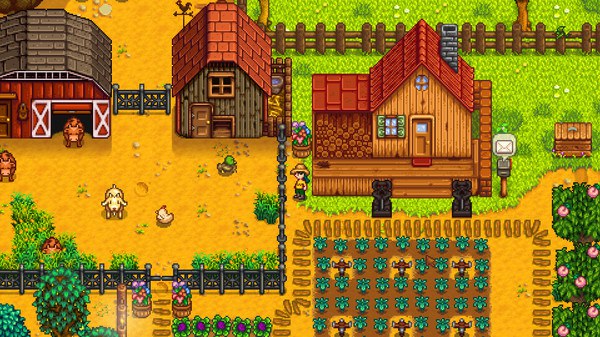
Coverage: Discusses farm walking routes, crop access, Scarecrow and Sprinkler coverage, storage, and a hypothetical small farm; avoids optimal-layout claims and version-specific systems.
Plan the routes you walk every day
A farm is experienced as a route: leave the house, reach crops, check the barn or coop, collect supplies from chests, and pass the shipping bin on the way out. Every obstruction can add a detour to that routine. When planning a new field, trace how you will enter it, move along its rows, and leave with the harvest. Keep a walking lane open even when filling nearby tiles with crops seems like an efficient use of space.
Think of a small farm with a crop patch between the farmhouse and barn. If planting fills the lane to the barn door, daily animal care now requires weaving through the field. Leave a clear path to that door, and preserve access to the shipping bin so harvested produce can be shipped without circling the plot. The route may use a little ground that could hold crops, but it keeps repeated chores direct and makes the whole farm easier to work.
Separate protection from watering coverage
A Scarecrow protects nearby crops; it does not water them. Place it so the crop area you want protected falls within its coverage, while keeping the field accessible. Watering is a separate job handled by the player or Sprinklers. Confusing those roles can leave a field protected but still waiting for a morning watering pass, so plan each device around the work it actually does.
Sprinklers water tiles around themselves: a Regular Sprinkler reaches four adjacent tiles, a Quality Sprinkler reaches the eight surrounding tiles, and an Iridium Sprinkler reaches twenty-four. Those patterns shape where crop rows can go and which tiles still need manual watering. On a compact field, mark out the Sprinkler’s watered area, leave paths through or around the rows, then position Scarecrows to cover the crop patch. A visually neat grid is useful only if its coverage and walking access both work.
Keep storage close to the work it serves
Chests save walking when they sit near the place where their contents are used. A chest beside the crops can hold seeds or tools for planting and field work; one near the barn or coop can keep animal-related supplies within reach. Another near a processing area can reduce trips across the farm when loading or collecting goods. Give each chest a clear purpose and leave room to stand beside it, open it, and move past it.
Imagine a small farm with one crop patch, a barn, a coop, and the shipping bin near the exit. Put a crop chest at the field edge, keep the path to both animal doors open, and leave a direct route to the bin. That arrangement means a harvest can go from row to chest or shipping bin without a full crossing, while animal checks remain easy to fit in. The chest reduces repeated trips; it does not by itself automate crafting or move items between work areas.
Rearrange the farm as its routine changes
A layout should respond to what the farm does now. A small early field may expand, a new building may change the path to the exit, or Sprinklers may replace hand watering in part of the plot. When that happens, revisit the routes and coverage: can you still reach every crop row, the shipping bin, and the barn and coop doors? Are Scarecrows protecting the crops you actually planted? Do watering devices cover the intended tiles? These checks keep a once-convenient setup from turning into a daily obstacle.
Suppose a farmer expands a crop patch after placing a Quality Sprinkler and discovers the new outer row sits beyond its watered area. The choices are to keep the row and water those tiles manually, or rearrange the planting around the sprinkler’s coverage and retain an open lane. The first choice trades convenience for the extra crops; the second favors a more compact watering routine. Neither calls for a universal best layout. As buildings, crops, and habits change, adjust the farm so protection, watering, storage, and walking routes support the work you actually repeat.
Primary work & further reading
Primary work: Stardew Valley. Character and story readings are editorial interpretations. The publisher reference below identifies the work and its premise.